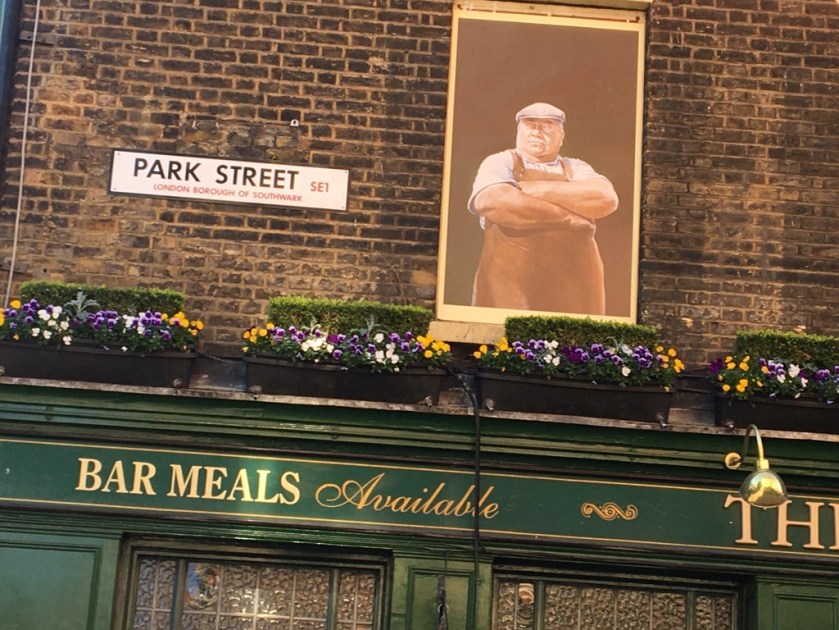
 Day 2 and the sun is shining. It’s amazing how perverse the British weather can be. No attempt at pathetic fallacy.
To combine the twin obligations of shopping and a bit of exercise, I headed to the local Borough Market next to London Bridge.
The former wholesale potato market turned foodie heaven has shut down the fast food stalls – “venison offal paté with a quince drizzle, anyone?” – but most of the traders are there, distance-selling fruit, veg and meat.
(A word to the wise, while I’m at it: yes, you can go out for a short, brisk walk and combine it with some food shopping. But stay two metres from others, particularly people like the market traders who are keeping things going. You don’t want to catch the bug and neither do they. End of lecture.)
We all have to accept sacrifices in these difficult times, but Nescafe should not be one of them. Thankfully, Monmouth Coffee was open and I managed to pick up a kilo of an amusing little Fazenda Santa Lucia from Brazil.
The Monmouth staff have helpfully chalked circles on the pavement outside so everyone can queue at a safe distance. They should think of keeping them once the crisis is over. There’s nothing worse than standing in the regular queue behind some tosser whose droning on about the subtle cinnamon notes of the Guatemalan expresso roast he ends up not buying.
The market’s had to endure other crises. It was shut down for weeks in 2017 while police and forensic teams dealt with the aftermath of the London Bridge terror attack. Some of the victims were stabbed outside the Market Porter which you can see in today’s picture. The day it reopened it was as packed as ever.
The Cross Bones graveyard across the road, a memorial to the thousands of prostitutes who lived and died in Southwark in the days when the Bishop of Winchester was the landlord of the area’s many brothels, is also thought to have been used as a plague pit in the Great Plague of 1665.
Borough Market was already at least 200 years old when bubonic plague struck in 1348.
As Paul Slade wrote in The Black Death: “The filthy state of Southwark in those days ensured other disease was quick to spread there too. The Borough’s streets were still unpaved and there were no sewers. Residents who were out and about relieved their bladder (and bowels) in any quiet alleyway, while stay-at-homes emptied their brimming chamber pots at the nearest window.
“The informal street names coined by the locals give us a clue to what their lives were like. The area’s sex trade gave it place names like Codpiece Lane, Cuckold Court and Sluts’ Hole, while the sheer amount of filth in its streets christened Dirty Lane, Foul Lane and Pissing Lane.”
This March 23, Southwark secured the unenviable title of being the London Borough hardest hit by coronavirus in a city which is the epicentre of the UK outbreak.
But locals shouldn’t panic that its dark history is about to repeat itself. Southwark has given its name to a sprawling metropolitan area that now stretches for miles and is home to around 320,000 people.
It houses two of the country’s top hospitals, including Guy’s, not far from where King Edward II founded the Lock Hospital for “lepers” in 1321.
Southwark’s cleaned up its act since the old days. It’s safe to walk there now. Locals and vital workers only for the time being of course. Just keep it short and keep your distance.
 Idle Thoughts on London Walks
One of the great pubs – The Market Porter
LikeLike