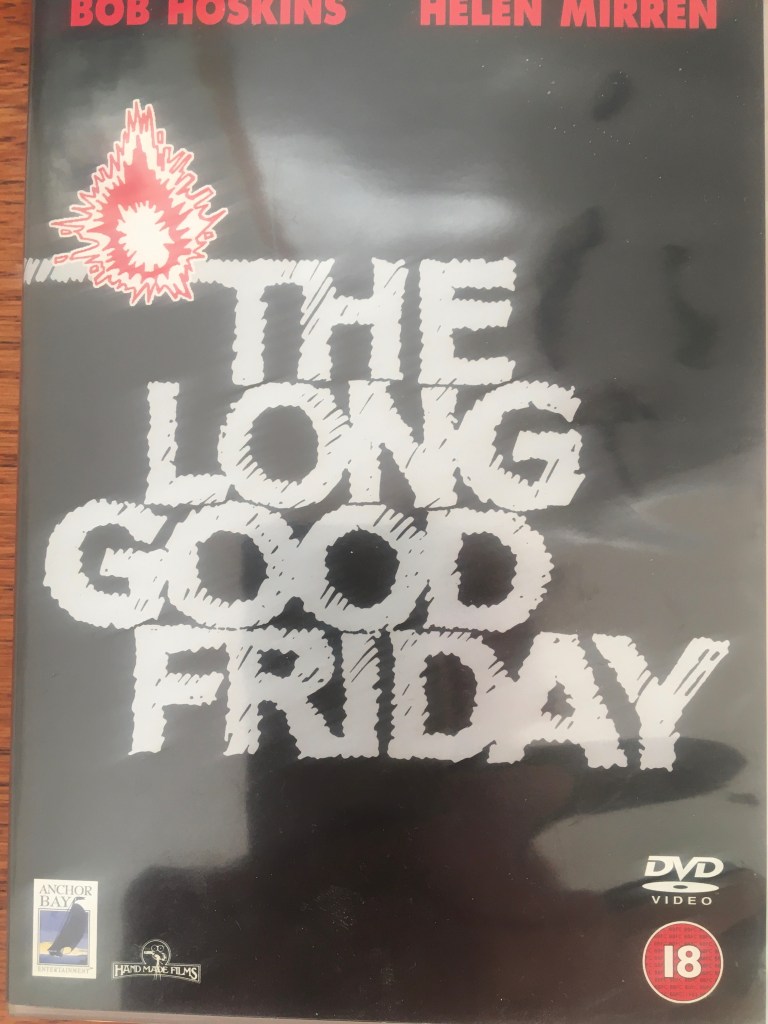
I SAW the day in by rewatching The Long Good Friday, which seemed appropriate on a Good Friday that is likely to seem longer than usual while we’re all stuck at home.
The 1980 London-based thriller regularly features among Britain’s 100 best films. I would put it squarely in the top 10.
The late Bob Hoskins stars as the cockney mobster Harold Shand, with Helen Mirren as his upper-class gangster moll. Harold is top dog in London’s East End and wants to go legit by redeveloping the city’s docklands with the help of American mafia investment.
In a film that gives supporting roles to crooked city councillors and dodgy coppers, Shand’s project flounders after his minions cross the Irish Republican Army at the time it was waging a bombing campaign in mainland Britain.
I won’t spoil it if you haven’t seen it yet, but it doesn’t end well.
It’s a bit of a period piece now. When Harold returns from a trip to New York, it’s aboard a Concorde.
Filmed in 1979, the year Margaret Thatcher came to power, it touches on Britain’s then aspiration to be at the heart of Europe.
“I’m not a politician,” Harold tells his guests aboard his yacht near Tower Bridge. “I’m a businessman. I’m a Londoner. Our country’s not an island anymore. We’re a leading European state.”
Sounds like a Remoaner to me.
The script was written by Barrie Keeffe who, like me, started out as a journalist in the East End. We lived in the same street in Greenwich around the time he did the film. In those days the view north from Greenwich Park was towards the abandoned docks before the era of the skyscrapers that would replace them.
Harold Shand’s fictional project never got under way. But, in real life, the docklands were indeed redeveloped. After the docks closed, the government adopted policies to stimulate redevelopment of the area, including the creation of the London Docklands Development Corporation.
That rather shadowy outfit had carte blanche to redraw the map of a vast swathe of the East End and Thamesside south London outside the usual planning restraints.
The Canary Wharf complex initially looked like a white elephant – who wanted to move out to the Isle of Dogs? – but eventually became the focus of European finance. Now, it even has a local international airport.
As Harold told his prospective mafia partners: “We’re in the Common Market now. Our future’s in Europe!”
In the four decades since Keeffe’s screenplay hit the screens, docklands has been transformed into a mega-modern outpost of the City of London, largely on the back of being part of Europe. The indigenous locals have been mostly squeezed out.
Many still believe it was an opportunity wasted. Too many luxury riverside penthouses and not enough housing for the majority, they would argue.
Post-Brexit, the future was already looking dodgy as the international bankocracy pondered moving out of London. Given the current crisis, prospects may be even worse.
Britain – well, not all of us – turned its back on Europe before Covid-19 struck. Brexiters tell us we’ll be better off on our own.
I don’t buy it. Come back, Harold!…All is forgiven!
 Idle Thoughts on London Walks