“BANKING was conceived in iniquity and was born in sin,” according to the late Sir Josiah Stamp.
As Britain’s then second richest man and director of the Bank of England during the Great Depression, he must have known what he was talking about.
A notable cynic about the capitalist system in which he made his pile, Sir Josiah mused that, if you took away the power of banks to create money, “all the great fortunes like mine will disappear and they ought to disappear, for this would be a happier and better world to live in.”
He must have been the life and soul of the party whenever the Bank of England’s Court of Directors met.
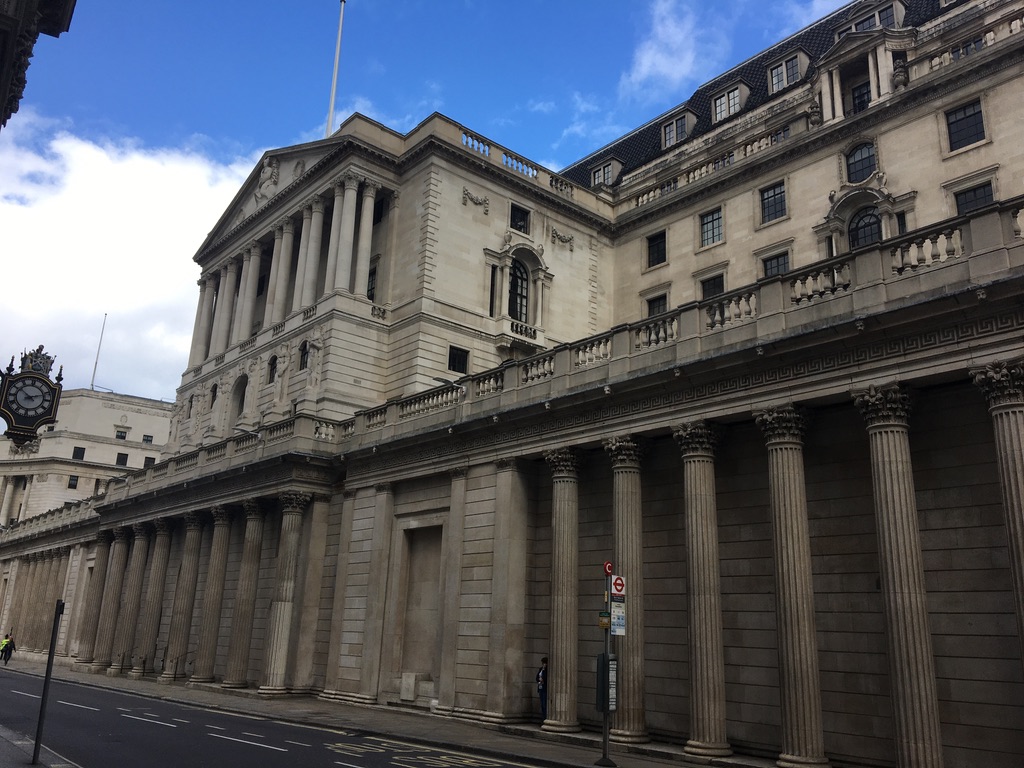
Britain’s central bank still dominates its corner of the square mile at Threadneedle Street where it has been since 1734. It was founded across the road at Walbrook in 1694.
Among the few people around today were two men from the City of London police on the lookout for dawdlers and other lockdown felons.
Not a central banker in sight. Maybe they were in the cellars printing out the wads of cash that the government is promising to dole out to keep the economy ticking over.
Bankers in general have had a bad rap since the 2008 financial crisis when the taxpayer coughed up to pay for their bad decisions and to prevent them from going to the wall.
Faced with the opportunity to redeem themselves in the present crisis, it looks like the bankers are keeping a firm grip on the dosh as the rest of the country goes to the wall. Half the state aid destined for the stricken care home sector has already been swallowed up by interest payments to lenders. It’s an ill wind…, as they say.
I first got to know the City well as a part-time messenger boy in the days when some of the City “gents” still wore top hats. They would turn up mid-morning to put in a couple of hours before heading to Sweetings for some oysters, fish pie and glass of bubbly. A nap in the afternoon and then off to the club.
That all got overturned with Margaret Thatcher’s 1983 Big Bang. The old guard were replaced by the “loadsamoney” generation of likely lads who moved into the banks and trading rooms, dropping thousands on their gold cards for a bottle of Chateau Petrus to take the edge off the coke.
The City “gent” generation they replaced was a bit of a myth. The hard graft, even in the days of jobbers and brokers, had always been in the hands of the craftiest of cockneys.
At my inner London grammar school, the teachers were told to be on the look out for bright school-leavers who might be useful at Lloyd’s. It was something to do with the City-connected Masonic mafia that ran our board of governors.
In those day, an alternative for a talented youngster was the related skill of bookies settler. The ability to calculate instantly the payout on doubles and trebles and each-way accumulators is up there with quantum mechanics.
The traders and the bookmakers’ settlers are essentially the same breed in the same business. We’ll no doubt be relying on them when the City weighs in to unscramble the economic mess left by coronavirus.
But don’t hold your breath. I’m not sure many of them share Sir Josiah Stamp’s belief in the virtues of abolishing great fortunes.
He was quite a character and would have had a thing or two to say about the flurry of sometimes conflicting facts and figures tumbling out of the daily press conferences on the government’s handling of the crisis.
In what became known as Stamp’s Law, he declared: “The government are very keen on amassing statistics. They collect them, add them, raise them to the nth power, take the cube root and prepare wonderful diagrams.
“But you must never forget that every one of these figures comes in the first instance from the chowky dar [a village watchman in India], who just puts down what he damn pleases.”
 Idle Thoughts on London Walks