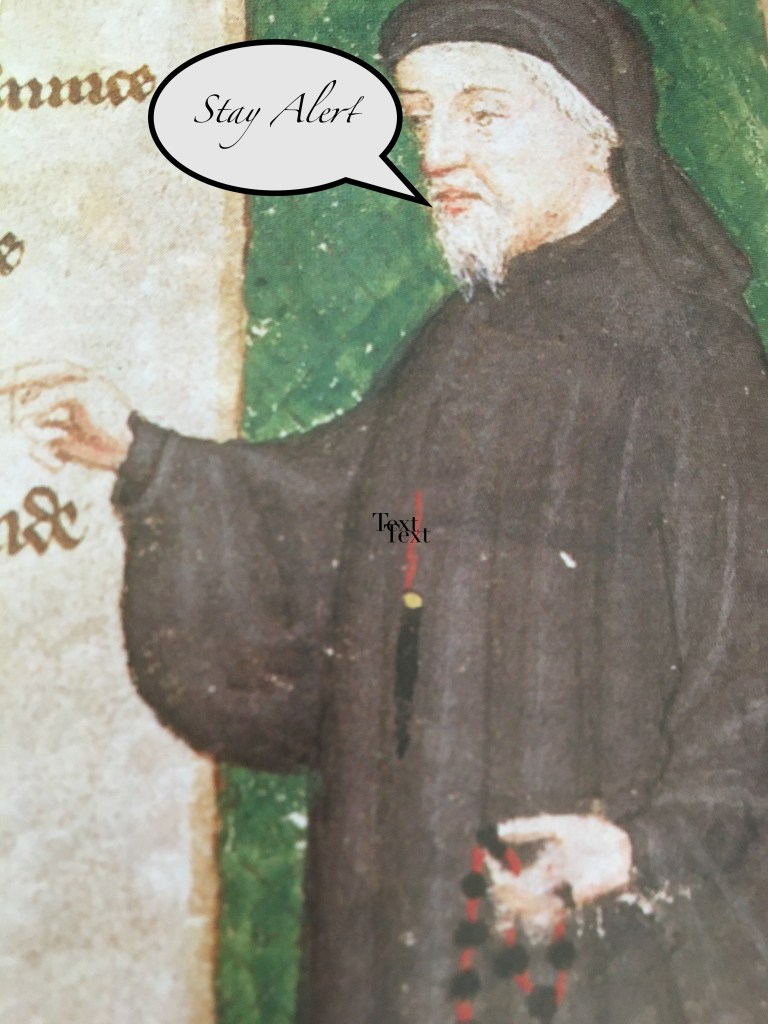
IN the spirit of the latest government coronavirus advice, I have decided to rename this column Alert Thoughts on London Walks.
It seems appropriate now that vigilance has replaced enforced idleness as the watchword of the day.
Unfortunately, due to unforseen technical issues, full details of the rebranding will not be available for several days. I do not apologise for any confusion.
In the meantime, it was with more than the usual alertness that I set off to the site of Geoffrey Chaucer’s Tabard Inn and to reflect on how the poet and his fellow medievals coped with pandemic in an age before they had a Johnson.
There’s nothing left of Chaucer’s pub in the narrow cul-de-sac of Talbot Yard. The last remnants were knocked down in 1873.
In 1386, however, when Chaucer set off from there to Canterbury with his 29-strong band of pilgrims:
The rooms and stables of the inn were wide:
They made us easy, all was of the best.
He and his companions could have told you a thing or two about the effect of viruses, even if they didn’t know what they were at the time.
They had not long before survived the mid-century Black Death, the most fatal pandemic the world has ever seen and one that changed the course of its history. B&Bs like the Tabard had then been under lockdown.
Chaucer, son of a London vintner from just across the river in Upper Thames Street, was a child when the bubonic plague hit England, eventually killing a third to a half of the city’s population.
But the memory was still very much alive when, as an adult, he penned The Canterbury Tales. In The Pardoner’s Tale, three young sinners go on the rampage to try and kill Death because the plague has taken the life of one of their friends.
It was a time when quack cures were just as prevalent as they are today. But, as intravenous shots of disinfectant were not available, the Middle Ages made do with chopped snake or arsenic.
Plague doctors would visit suspected cases and impose self-isolation on affected families or pack them off to plague hospitals. Social distancing was not a problem as everyone assumed they would catch the plague if they came near a sufferer.
King Edward III was no slouch in a crisis. He arranged the digging of plague pits and ordered the streets of London to be cleaned because they were “foul with human faeces, and the air of the city poisoned to the great danger of men passing, especially in this time of infectious disease”.
In the days before video links, Parliament had to be prorogued in 1349, since “the plague and deadly pestilence had suddenly broken out in the said place and the neighbourhood,” according to a contemporary, “and daily increased in severity so that grave fears were entertained for the safety of those coming here at the time.”
You can just imagine those medieval MPs complaining that, as a consequence, they had no opportunity to debate an eventual relaxation of the lockdown. Who says history doesn’t repeat itself?
 Idle Thoughts on London Walks