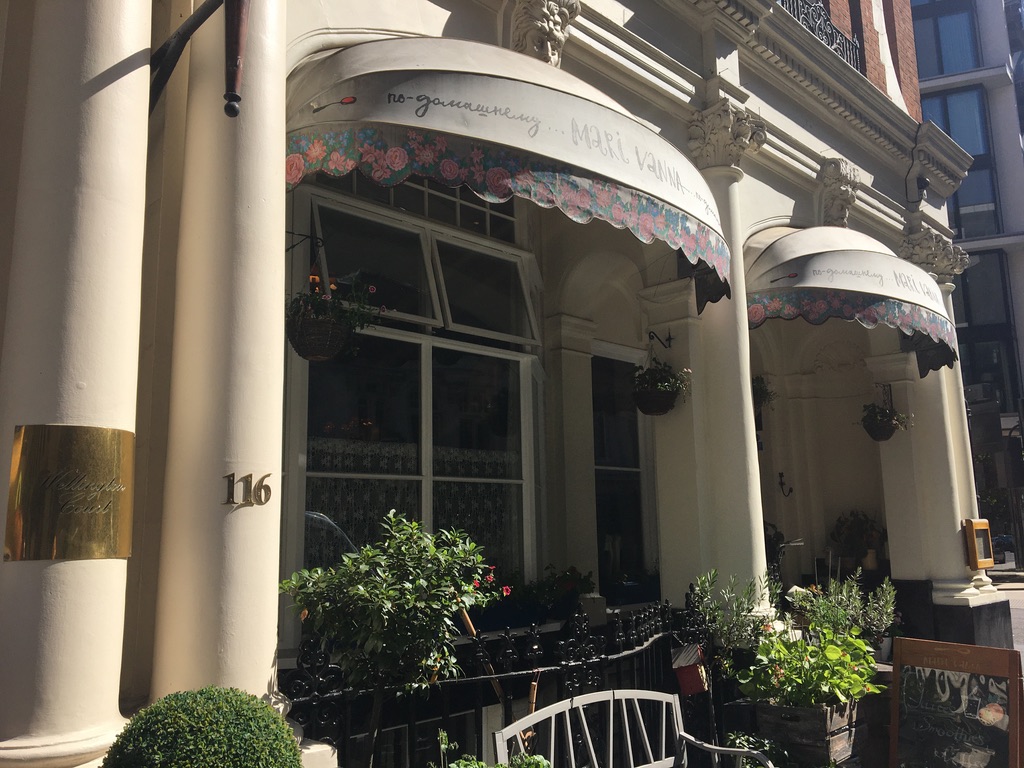
GIVEN all the headlines about meddling Russians, it seemed a good day to head to the heart of what Parliament’s Intelligence and Security Committee describes as Londongrad.
The hunting and grazing grounds of London’s Russian oligarchs have no fixed border. But the epicentre would definitely include Knightbridge for the shops, Mayfair for the clubs and Belgravia, an area where even some of the English gentry have swapped their gracious piles for piles of Russian roubles.
As the committee put it, Britain welcomed Russian money, with few, if any, questions asked about the provenance of this considerable wealth which then went on to be recycled through the London “laundromat”.
Sadly, dear reader, the budget of this column is too meagre to breach the bastions of the crème de la borscht of the city’s Russian elite. So, for once, we’ll have to make do with pressing our noses to the window pane.
For, unless you’re a society hostess, a Tory MP, or one of the army of expensive lawyers and bodyguards who keep the expat Russians safe, the average punter is unlikely ever to rub shoulders with them.
The committee report also mentions a wider army of British enablers who minister to the needs of London’s Russian elite: “Lawyers, accountants, estate agents and PR professionals have played a role, wittingly or unwittingly, in the extension of Russian influence which is often linked to promoting the nefarious interests of the Russian state.”
The nearest most of us are likely to get to them is by watching McMafia, the crime drama based on journalist Misha Glenny’s non-fiction journey through the global criminal underworld.
Back home, the Russians have their own TV series, Londongrad, which gives a comic and somewhat idealised view of their compatriots’ lives in the British capital. It centres on an agency that troubleshoots for the Russian super-rich.
An almost equally rosy view was provided by society magazine Tatler, which was allowed a brief glimpse into the lives of the sons and daughters of London’s Russian plutocrats.
“From Ascot to Annabel’s, Henley to Harrods, they are the new generation of Russian-born, UK raised ‘little tsars’ adding their unique brand of glitz to British high society,” Tatler drooled. Pass the sick bag, Ivan.
Twenty-something Anna Milyavskaya enthused: “When I lived in Belgravia, every second person was Russian. Sometimes you’d be like: ‘Am I in Moscow or am I in London?’ ” Neither, darling. You’re in Londongrad.
When they are not headed for Ascot or shopping at Harrods, the Russian set hang out in the Mayfair clubs racking up the bar bills. The record set in 2013 for a £130,000 round – “Let’s split it,” said the two multimillionaire Russian tipplers – appears to be unbroken.
Despite these excesses, and the suspicion that some of them are involved in a Putinesque plot to undermine our democracy, they get a pretty easy ride from the great British public.
You never hear That Bloke Down the Pub declaring: “Bloody Russians! Coming over ‘ere, taking all the places at Eton! Jumping the bloody queue at the Ritz!”
Even this week’s report refers to Russian “expatriates” rather than immigrants. The former is a term the British generally reserve for themselves to describe any exiled Brit, from a monolingual geriatric on the Costa Brava to a tax-evader in Monaco.
It was slim pickings in Londongrad today. I’d intended to doorstep a few Russians to ask if they’re really buying up London in order to hand it to Mr Putin. Zilch! The usual haunts, including the Russian restaurants around Knightsbridge, were empty.
(Pictured today is Mari Vanna’s – branches in Moscow, St Petersburg and New York – which offers Russian food for a modest English budget. Just don’t order the Beluga at £100 a spoonful).
Maybe the Russians are lying low, given this week’s negative publicity, or maybe they fled to sunnier climes months ago to escape the virus. Then I remembered one of the younger set telling Tatler that most fashionable Russians go to the Tuscan seaside town of Forte dei Marmi every summer.
So the walk to Londongrad was a bit like going back to the old Soviet era, when you never met a Russian in London, apart from the odd “diplomat” or “journalist”, because the mass of the Russian population just didn’t get out much.
In my old Associated Press days in the seventies, there was a young Russian who would splash the cash at the Hoop and Grapes, just round the corner from Fleet Street. He favoured English tweed and corduroy and said he worked for the Soviet news agency Tass.
MI5 tried to warn us off, saying he was a spy. Er, thanks, we’d sort of worked that out.
Did the spooks really think us hacks would sell out our country for a measly pint of beer? Now, if he’d had 130,000 smackers behind the bar and the VIP slot at Annabel’s…
 Idle Thoughts on London Walks