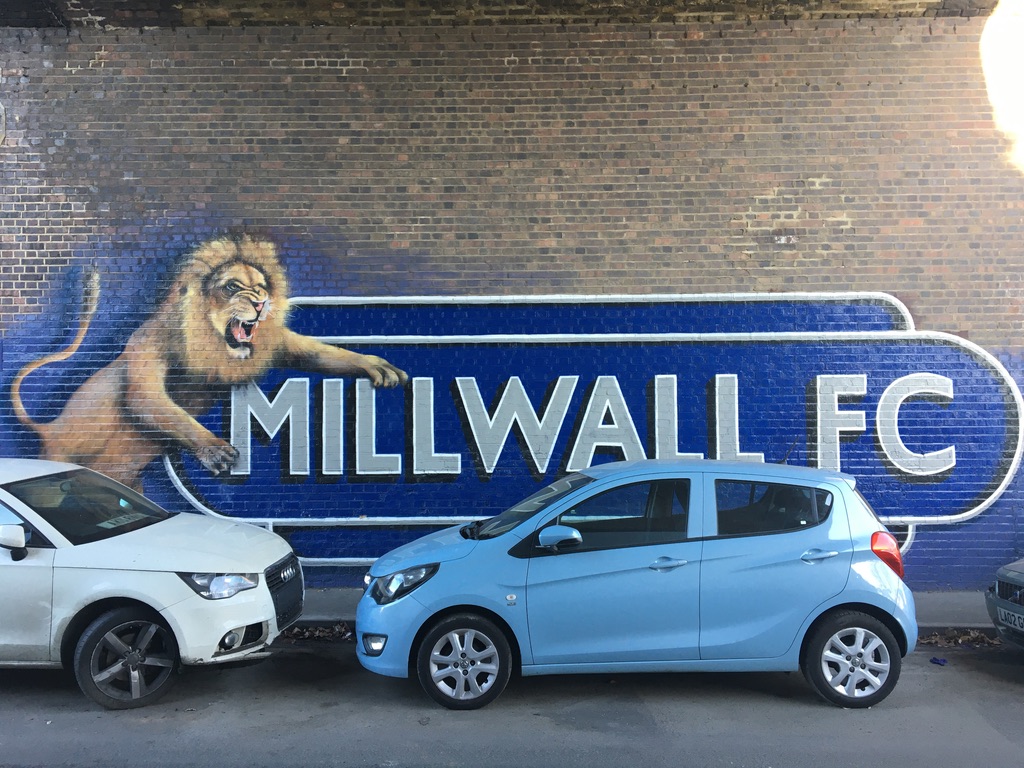
ONE drawback of the relaxation of a ban on public attendance at football matches is that Millwall fans may soon be headed to a stadium near you.
Host teams will be anticipating the arrival of the visitors with the same enthusiasm with which Anglo-Saxon monks once looked forward to the Vikings popping round.
For, by past reputation at least, Millwall fans are the gold standard, the alpha and omega, the nec plus ultra of English football hooliganism. They are Betar’s La Familia crew, The Boca Juniors ultras and Dinamo Zagreb’s Bad Blue Boys all rolled into one.
Returning to the Den for the first time since the Covid lockdown, a diminished home crowd of 2,000 lived up to the abrasive reputation today by booing their own team. The players’ offense was to have got down on one knee in support of Black Lives Matter.
The Football Association put out a statement supporting players who “wish to take a stand against discrimination in a respectful manner” and strongly condemned the behaviour of any spectators that actively voice their opposition to such activities.
Give yourself a break, FA. That’s like a red rag to a bull for a team whose motto is: “No one likes us, we don’t care.”
Former Notts Forest player Greg Halford put the incident down to typical Millwall behaviour. “Every time I’ve played there I’ve heard a form of racist abuse.”
Up to a point, Greg. The reality is that Millwall fans have a reputation for being equal opportunity abusers. They will target any minority group or rival team and, if none are available, they just fight among themselves.
A few years back, 10 fans were arrested in an intra-Millwall barney at a Cup match at Wembley, ostensibly started when a Millwall child was pushed over by a Millwall drunk.
But how did the team, or rather its fans, get such a bad reputation, is it truly deserved, and what the hell do I care anyway?
Well, on the last point, you could say I had no choice. Brought up a few hundred yards from the Old Den in Cold Blow Lane, I am tribally Millwall even if I haven’t been to a game for years. They’re still my local team, since moving just up the road to the New Den in Bermondsey in 1993.
An allegiance to the Millwall Lions is somehow built into the fabric of the neighbourhood and you can’t get away from it, however much you might want to.
If clubs can be said to have a personality, then Millwall’s is held to be aggressive, slightly paranoid, and pessimistic verging on the psychopathic.
The rising chant of Milllllwaaaaaallllllllll…., designed to curdle the blood of the opposition, is more like a pagan battle cry than a football chant.
And whereas fans of neighbouring arch-rival Charlton will simper over how well their boys played in a match they just lost 10-nil, Millwall will denounce their own winning goal-scorer as “shit” for failing to double it.
The hooliganism heyday was in the late sixties and seventies, when the fandom’s sharp-dressers – more mod than rocker – would get kitted out in the Tower Bridge Road before launching on the weekly mayhem.
These days they may be a bit more subdued but their reputation goes before them. Whenever some aggro erupts on the South London streets, you can bet there’s a Lions’ fan involved.
That’s not always a bad thing. When jihadist terrorists attacked London Bridge and Borough market in 2017, fan Roy Larner confronted the knife-wielding attackers with: “Fuck, you! I’m Millwall!” (You can still buy the T-shirt).
The macho image was somewhat dented when another Millwall fan, a self-appointed guardian of London’s statues from Black Lives Matter protestors, had to be rescued from the clutches of an angry crowd by a BLM activist.
None of the negative vibes could be felt this morning as the New Den prepared to welcome back fans. Two old codgers – no doubt right tearaways in the old days – were enjoying an early cuppa on the sun-kissed terrace of Kennedy’s caff.
They looked as if they didn’t have a care in the world. And this afternoon’s home game result – Millwall 0 Derby 1 – must have been a bonus to their instinctive pessimism.
 Idle Thoughts on London Walks