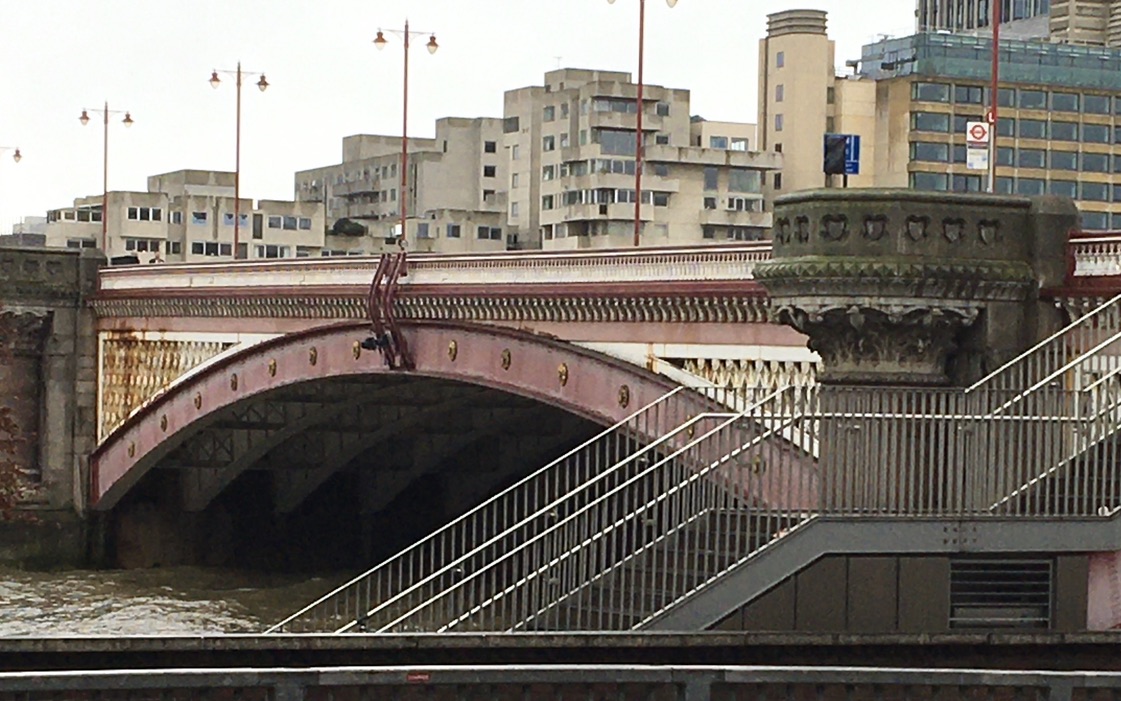
EARLY on the morning of 18 June 1982, a young postal clerk headed for work at the nearby Daily Express spied a body hanging by the neck from scaffolding beneath an arch of Blackfriars Bridge.
The corpse turned out to be that of Roberto Calvi, a 62-year-old Italian financier known as “God’s Banker” for his close financial ties to the Vatican. The pockets of his hand-made suit were stuffed with wads of cash and weighed down with bricks.
Even by London standards, it doesn’t get much more noir than that. But wait. There’s more to this saga, which has yet to be completely resolved almost four decades on.
The plot sounds like it was written by a Hammer Horror scriptwriter on speed, involving as it does skulduggery in the Holy See, sinister Masonic organisations, the mafia, powerful neo-fascists and even hints of black magic.
The discovery of Calvi’s body had to compete in the news of the day with the aftermath of the Falklands War. Argentine forces had surrendered to the Brits only four days earlier. There were other less fortuitous connections between the Calvi affair, Argentina and Thatcher’s war that the celebrating British public and headline writers missed at the time.
But more of that later. First the bare facts.
The day before his death, Calvi had been formally removed from his post as chairman of Banco Ambrosiano, Italy’s biggest private bank whose main shareholder was the Vatican.
He was in the process of appealing a four-year jail sentence on charges of raising massive unsecured loans, shipping illicit funds out of Italy and lending to dubious associates in Italy and abroad. The bank collapsed soon after.
Calvi had gone on the run a week before his death, using a fake passport to make his way to London on a private jet, via Venice.
So how did he end up hanging under a London bridge? And why Blackfriars, on the somewhat soulless eastern fringe of the Thames Embankment?
Now, this is where it gets really creepy. Calvi was a member of the underground Italian masonic lodge, Propaganda Due – P2. Its grandmaster was Licio Gelli, who still cleaved to the ideology he had embraced as one of Mussolini’s early fascist volunteers. Calvi’s arrest had come after documents on the covert P2 were uncovered in a raid on Gelli’s villa.
When the well-connected lads at P2 weren’t busy rolling up their trouser legs, they were involved in ultra-right politics at home and abroad and in helping out their establishment brethren. And the moniker they gave themselves was the frati neri – The Black Friars!
You don’t have to be Dan Brown to conclude that the brothers had a role in Calvi’s death, maybe to prevent him coughing up the lodge’s secrets to the police and to dissuade others with their symbolic masonic warning.
The unimaginative City of London Police nevertheless decided it was a suicide and the coroner’s court agreed. However, at a second hearing the following year a jury recorded an open verdict.
The italians dug up Calvi in 1998 and forensic evidence pointed to foul play. The Thames tide had been out when the body was found but at high tide someone in a boat could have reached the scaffolding he was hanged from.
The London police eventually followed up in 2003 by opening a murder inquiry. They discovered Calvi had been staying in Chelsea in the days before his death at a flat that had been used by playboy and drug-dealer Sergio Vaccari.
The theory emerged that Vaccari had hired the boat on which Calvi was strangled on behalf of the mafia. We’ll never know for sure. Three months after Calvi’s body was spotted, Vaccari was found murdered, lying in a pool of blood in his flat in Holland Park with multiple stab wounds.
In 2005, five suspects went on trial in Italy, including Calvi’s former bodyguard. They were all cleared. Gelli died in 2015, six years after a case against him for plotting Calvi’s murder was dropped.
The old fascist, and Calvi’s erstwhile Venerable Master, had spent many of his fugitive years in Argentina. He was close to the ageing nationalist president Juan Peron and to a key adviser, Jose Lopez Vega, a rumoured black magician and member of the P2 lodge.
Gelli’s influence extended to the military dictatorship that replaced the Peron dynasty. Among its leaders were P2 members. Argentina had got hold of French Exocet missiles used in the Falklands war thanks to an illicit credit paid though Calvi’s Banco Ambrosiano.
In 1987, 13 years after Peron’s death, the late president’s tomb in Buenos Aires was raided and his hands were removed. A black magic rite? Or maybe another sinister message from the P2?
From Blackfriars to Buenos Aires. Come on Hammer Horror! Even you couldn’t make it up!
 Idle Thoughts on London Walks
Yikes Harvey! Hope you have a bodyguard or two!! Otherwise, as the audience shouts in this panto season:”Look behind you!”
Trixie
LikeLike
Harvey, this is very topical. Australian Cardinal George Pell is said to be alleging in his prison diaries to be published next week that he was set up over choirboy abuse charges by people who feared his investigations into Vatican finances. Pell, jailed then acquitted of molesting two choirboys in Melbourne, refers to the Calvi case as evidence supporting his claims that dark forces were at work. He hasn’t explained yet how allegations decades old could have been manipulated to bring him to court only in the past few years.
LikeLike
That’s fascinating, Chris. I shall look out with interest for the diaries. The Calvi tale has always intrigued me as I was in Argentina for Reuters during the 70s dictatorship.
LikeLike
Brilliant story and a timely exhumation, it would seem. I’ve always been curious about this, partly because I walked over that bridge at least twice a day for much of the eight years I served at the Express.
LikeLike
I’d forgotten about the Calvi saga until I happened to pass that arch the other day. London walks are great for idle thoughts. The old Express building is a shadow of its former self as I said in a post on Fleet St back on April 24 that might bring back memories.
LikeLike