THIS week Londoners marked the traditional Back on the Boat Day, the occasion on which they take to the river to celebrate the latest easing of the Covid lockdown before the inevitable setback that leads to its reimposition.
By established custom, this moveable feast is preceded by an announcement from Downing Street in which the prime minister of the day praises the “great spirit” of the nation and pledges that this time the restrictions are being lifted “once and for all”.
The festive period will be particularly welcomed by our old folk after a miserable winter in which they were stuck at home, reduced to playing endless online games of “have you had your second jab yet?”
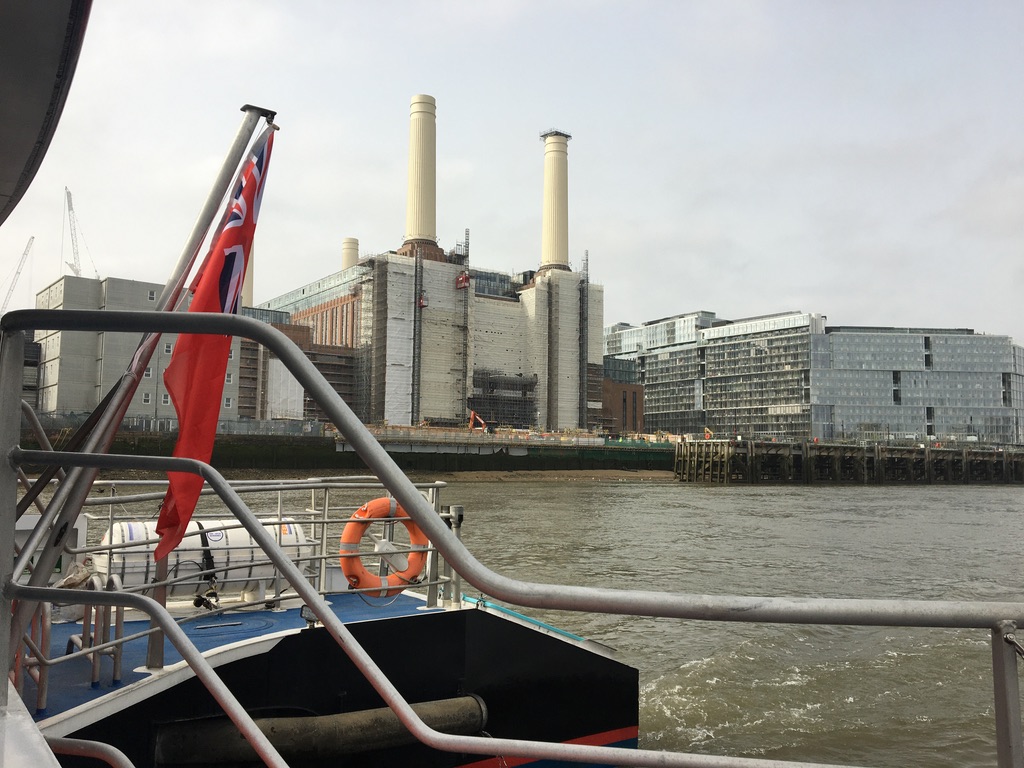
For this year’s Boat Day I joined fellow revellers aboard one of the Thames Clippers, released this week from their latest pandemic purdah, on a journey west to Battersea. A foursome on the open afterdeck were celebrating with a bottle of Prosecco. Not bad for ten o’clock in the morning.
The half-hour trip from London Bridge Pier is highly recommended for its views of St Paul’s, The Globe, Parliament, Millbank and Lambeth Palace. Then, as you approach Nine Elms on the south bank, things take a turn for the worse.
In the space of a decade the developers have managed to turn a 560-acre former industrial site, stretching all the way from the characterless new US Embassy to the monumental Battersea Power Station, into the most arid and soulless stretch of the river in central London.
In 2012, with characteristic hyperbole, the then London mayor Boris Johnson described the regeneration project as “the greatest transformational story in the world’s greatest city” and the “final piece in the jigsaw” of central London.
What we got was a private equity free-for-all in which developers rushed to erect garish high-rise luxury blocks pitched at mainly overseas investors. Meanwhile, promises of so-called affordable housing went out the window.
The area feels half empty and that’s because most of the overpriced flats actually are, despite the invitations in the estate agents’ windows to join “our vibrant riverside community”. Even potential Chinese buyers have complained it’s more like Wuhan than London.
The magnificent power station, decommissioned by the early 1980s, is now hemmed in by clusters of multi-storey eyesores. I suppose we must just be grateful they didn’t also demolish the listed building to make way for yet more anonymous tat.
Now even that is being turned into flats, with the first residents due to move in this year to become part of what the developers call a neighbourhood “carefully curated to be a thriving quarter right on the River Thames. A place where technology giants mingle with local artisans”. (I’m glad to see that media communications course wasn’t wasted.)
Long-term locals might argue there already was a thriving quarter right on the Thames before the developers trashed it.
Battersea’s prime location was probably its downfall. That, combined with the right-to-buy scam that did away with cheap rented properties, turned this typical run-down but lively working class neighbourhood into a target of gentrifiers from the 1970s onwards.
Eager young Sloanes crossed the river to turn the elegant mansion flats along Prince of Wales Drive into a southern outpost of Chelsea. The avaricious Tory council in Wandsworth, which had absorbed the old Battersea council in this traditional Labour stronghold, rubbed its municipal hands.
The area’s saving grace is its park, a 300-acre refuge laid out in the mid-19th century on fields, behind the riverside wharves, that had once been a meeting place for duellists.
In 1951 it was the site of the Festival of Britain Pleasure Gardens, the fun bit of that five-month long, spendthrift, ration-book era attempt to cheer the country up after the war.
All the serious stuff that showcased a modern Britain thrusting foward into the second half of the 20th century was down the river at Waterloo near the newly constructed Festival Hall.
Battersea Park was where they put the funfair and the rides for the kids. I remember the toy train and the Guinness clock that included the brewer’s trademark toucan.
When I came across a plaque marking the Pleasure Gardens site, it suddenly struck me I hadn’t been there since the day, 70 years ago, that my grandfather took me for a salad lunch by the central pool and a whizz round the roundabout.
One night, aged 5, my parents took me on to the rickety tree walk, a meandering wooden causeway that let you wander through the branches of the tree tops. There were fairy lights and stars. One of my earliest memories. It’s all gone now. But while it lasted Battersea was magic.
 Idle Thoughts on London Walks
Easter greetings Harvey. My Mum and Dad took me to the Festival of Britain. They bought me a soft toy of Ivy the polar bear abd Bruno her cub. Wish I could have gone on the rickety tree walk.. Sounds magic.
LikeLike
It was such a precarious contraption it would be be banned these days by even the most permissive health and safety regime. Hope you had good Easter w/e.
LikeLike