IN LINE with this column’s esprit communautaire, I sacrificed a lie-in to make an early start at the local pub and bring you news of today’s grand reopening of the London boozers.
If it hadn’t been for Prince Phil’s demise, it’s an event that would have been leading all the bulletins. Pubs are the essence of England, or so we’ve been told in a stream of commentaries from the Phil Spaces of the weekend press.
That raises the question why so many of them had shut down even before Covid struck. Almost 2,500 London pubs closed permanently between 2000 and 2016 and since then the trend has continued.
The Horseshoe, a regular hideaway near London Bridge, is one of the survivors. I’d been visualising a quiet pre-lunch pint in its usually empty back terrace.
Be careful what you wish for!
Who should already be esconced and holding court at a nearby table but right-wing radio shock-jockette harridan Julia Hartley-Brewer? I nearly choked on my Breakspear’s.
For those of you unfamiliar with la Brewer, she’s a professional anti-wokist who latches on to whatever is the reactionary talking point of the moment to stir up her daytime listeners.
That’s all well and good. But what’s she doing in MY pub?
It gets worse. Also in her adoring circle were fellow presenter Mike Graham, self-proclaimed “King of the UnWoke”, and fellow radio hack Kevin O’Sullivan, a Fulham fan!
Mercifully, I missed Toby Young, alt-right twat and General-Secretary of the so-called Free Speech Union. Apparently, Julia had been interviewing him on the upstairs terrace but he must have slithered out early to avoid his round.
Tobes and Jules are both lockdown skeptics, having harangued the rest of us throughout the lockdown as snivelling sheep in thrall to limp-wristed politicians and so-called experts.
Toby had used the Talk Radio slot to “encourage as many people as possible to get out there, go to the pub, go to restaurants, but it’s ridiculous that we still have to sit outside.” Why aren’t these people running the country? Or maybe they are.
A bit of classic Julia came just before Christmas, when she urged listeners to break the seasonal coronavirus rules after blaming Muslims who did the same at Eid for fuelling the pandemic.
As you can no doubt tell, they and their gang almost ruined my first pub pint of 2021. The yard was busier than usual. I’d overlooked the obvious – that D-Day was always likely to attract a lot of part-timers.
Things should have calmed down by the end of the week when the novelty will have worn off. Then I’ll have more tranquillity in which to reflect on the long-term future of the London pub.
I tell you what! I’ll just nip in tomorrow so I can bring you an update from the frontline.
THIS week Londoners marked the traditional Back on the Boat Day, the occasion on which they take to the river to celebrate the latest easing of the Covid lockdown before the inevitable setback that leads to its reimposition.
By established custom, this moveable feast is preceded by an announcement from Downing Street in which the prime minister of the day praises the “great spirit” of the nation and pledges that this time the restrictions are being lifted “once and for all”.
The festive period will be particularly welcomed by our old folk after a miserable winter in which they were stuck at home, reduced to playing endless online games of “have you had your second jab yet?”
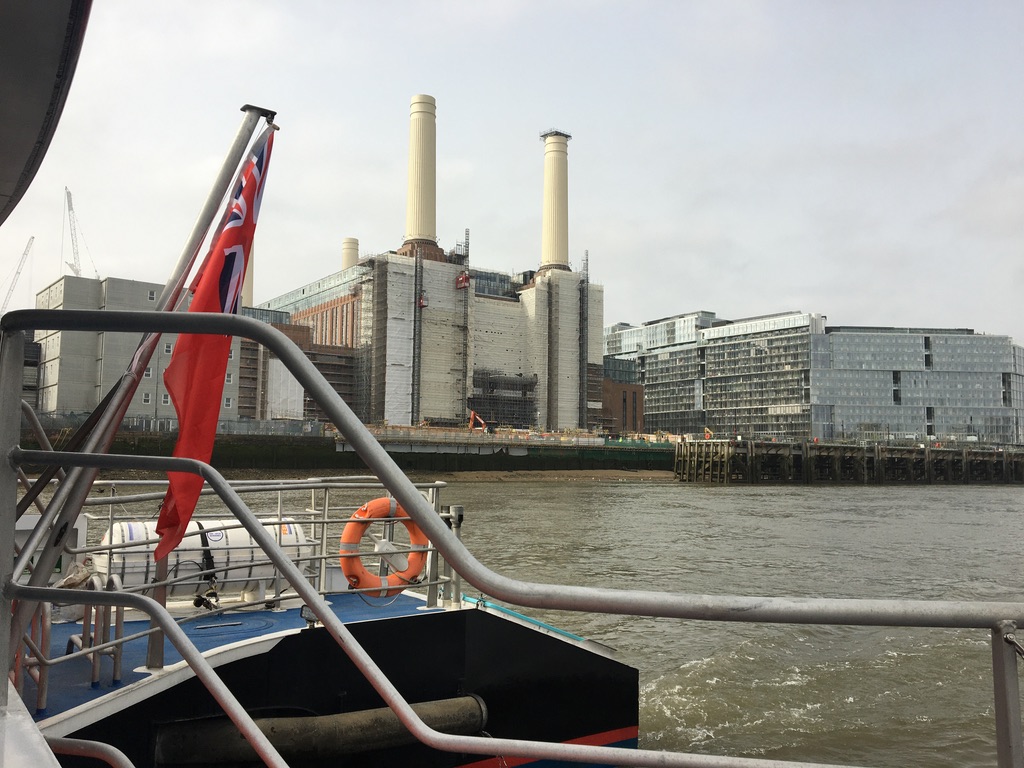
For this year’s Boat Day I joined fellow revellers aboard one of the Thames Clippers, released this week from their latest pandemic purdah, on a journey west to Battersea. A foursome on the open afterdeck were celebrating with a bottle of Prosecco. Not bad for ten o’clock in the morning.
The half-hour trip from London Bridge Pier is highly recommended for its views of St Paul’s, The Globe, Parliament, Millbank and Lambeth Palace. Then, as you approach Nine Elms on the south bank, things take a turn for the worse.
In the space of a decade the developers have managed to turn a 560-acre former industrial site, stretching all the way from the characterless new US Embassy to the monumental Battersea Power Station, into the most arid and soulless stretch of the river in central London.
In 2012, with characteristic hyperbole, the then London mayor Boris Johnson described the regeneration project as “the greatest transformational story in the world’s greatest city” and the “final piece in the jigsaw” of central London.
What we got was a private equity free-for-all in which developers rushed to erect garish high-rise luxury blocks pitched at mainly overseas investors. Meanwhile, promises of so-called affordable housing went out the window.
The area feels half empty and that’s because most of the overpriced flats actually are, despite the invitations in the estate agents’ windows to join “our vibrant riverside community”. Even potential Chinese buyers have complained it’s more like Wuhan than London.
The magnificent power station, decommissioned by the early 1980s, is now hemmed in by clusters of multi-storey eyesores. I suppose we must just be grateful they didn’t also demolish the listed building to make way for yet more anonymous tat.
Now even that is being turned into flats, with the first residents due to move in this year to become part of what the developers call a neighbourhood “carefully curated to be a thriving quarter right on the River Thames. A place where technology giants mingle with local artisans”. (I’m glad to see that media communications course wasn’t wasted.)
Long-term locals might argue there already was a thriving quarter right on the Thames before the developers trashed it.
Battersea’s prime location was probably its downfall. That, combined with the right-to-buy scam that did away with cheap rented properties, turned this typical run-down but lively working class neighbourhood into a target of gentrifiers from the 1970s onwards.
Eager young Sloanes crossed the river to turn the elegant mansion flats along Prince of Wales Drive into a southern outpost of Chelsea. The avaricious Tory council in Wandsworth, which had absorbed the old Battersea council in this traditional Labour stronghold, rubbed its municipal hands.
The area’s saving grace is its park, a 300-acre refuge laid out in the mid-19th century on fields, behind the riverside wharves, that had once been a meeting place for duellists.
In 1951 it was the site of the Festival of Britain Pleasure Gardens, the fun bit of that five-month long, spendthrift, ration-book era attempt to cheer the country up after the war.
All the serious stuff that showcased a modern Britain thrusting foward into the second half of the 20th century was down the river at Waterloo near the newly constructed Festival Hall.
Battersea Park was where they put the funfair and the rides for the kids. I remember the toy train and the Guinness clock that included the brewer’s trademark toucan.
When I came across a plaque marking the Pleasure Gardens site, it suddenly struck me I hadn’t been there since the day, 70 years ago, that my grandfather took me for a salad lunch by the central pool and a whizz round the roundabout.
One night, aged 5, my parents took me on to the rickety tree walk, a meandering wooden causeway that let you wander through the branches of the tree tops. There were fairy lights and stars. One of my earliest memories. It’s all gone now. But while it lasted Battersea was magic.
SOHO’s a building site these days. The idle walker now has to navigate a tangle of roadworks that have turned the cut-through from Cambridge Circus to Oxford Street into an annoying obstacle course.
Apparently it’s down to Westminster Council’s decision to shut 14 streets to traffic to allow regimented outside boozing once the lockdown lid comes off.
The al fresco plan is supposed to be temporary but, in the nature of such schemes, might well end up being a fixture.
You have to have some sympathy with the owners and staff of the local restaurants and bars that have been shuttered for months and who want to pull in as many paying punters as possible once the all-clear sounds.
The trouble is that every such official initiative to “revitalise” Soho invariably ends up making it less vital.
Successive attempts to make it fit the tourist board image of London’s “energetic, cosmopolitan entertainment hub” have effectively knocked the stuffing out of a neighbourhood that attracted generations of chancers, ne’er-do-wells and misfits.
Even the bureaucrats recognise the risks. When London’s well-meaning Night Czar, Amy Lamé, met the locals a couple of years back they agreed they must work to prevent Soho “becoming bland”.
Some of the old-timers would argue that’s a lost cause. Already in 1989, when the play “Jeffrey Bernard is Unwell” hit the London stage, celebrating the life of the eponymous roué, alcoholic and Soho chronicler, one reviewer noted:
“It is a lament for a Soho that has now passed. All the bohemian characters have now been replaced by wannabes, striking poses rather than living lives.”
It seems a similar sentiment is expressed in Fiona Mozley’s Soho novel “Hot Stew” that came out this month, starring two of the neighbourhood’s declining cohort of sex workers. It’s on my list.
The Guardian reviewer said it’s not just about Soho, “it’s about how money strips the heart from cities, and how we must learn to cherish what little grime and seediness remains, before it’s lost to the plate glass and brushed steel of the developers.”
Even the tourism marketers pay prudish lip service to Soho’s seedy past, an area known, according to the Visit London official guide, for its “lively and, at times, risqué vibes”.
With an eye on the pink dollar, euro and pound, they neverthless positively revel in Soho being the focus of London’s “vibrant” gay and LGBT+ community.
(Why are gay people forced to endure this curse of vibrancy? Can’t they be allowed to have an off day? Can you imagine a municipal handout from the other side of London inviting you to “experience Bromley and its vibrant hetero community”?)
Hopefully, come D-Day on April 12, they and all the other Soho revellers will be back or else, in the words of a histrionic appeal by local business owners, Soho will be dead.
Calling for more bailout dosh from the government, they declared Soho to be “the beating heart of London – famous worldwide for its diversity, independent small restaurants and late night venues, music and theatre, and of course being London’s centre for the LGTBQ+ community.”
Yes, yes! OK. Get on with it!
“As Soho flatlines,” they concluded, “culture flatlines, creativity flatlines, individuality flatlines… If Soho dies, London dies.”
I doubt it. I’ve lived through many death-of-Soho moments since being introduced to the area by my parents at about the age of nought. Those were the days of the Soho Fair when you could still dine at the old mama and papa restaurants without taking out a bank loan.
Before the 1959 Street Offences Act pushed prostitutes indoors, a refined Catholic lady down from Scotland remarked on the groups of pretty girls idling on the street corners. When my dad quietly explained, she gasped: “Surely not on a Sunday!”
As teens, we used to hang out at Amalfi’s in Old Compton Street – sadly long gone – where you could get a plate of pasta for five shillings. Chuck in a glass of wine, and you’d still have the bus fare home. It was a time when the legendary Gaston Berlemont was still serving half pints – pints were banned – from behind the bar at the French House.
Soho means different things to different people. I used to jump on the number 53 almost every Saturday morning to spend hours browsing the shelves of the bookshops in Charing Cross Road before nipping through Manette Street and down to Brewer Street and the Lina Stores, where I could pick up exotic ingredients such as garlic and pancetta that you couldn’t find in South London in those days.
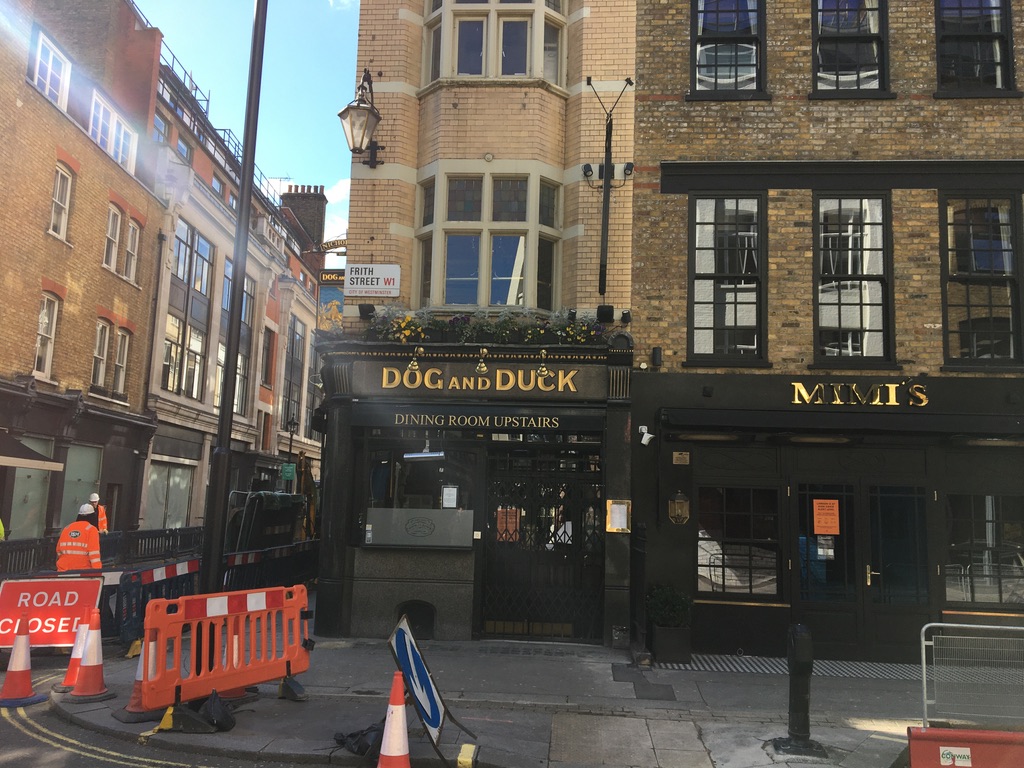
On Friday evenings, when I was around 16, I’d pop into the poetry readings upstairs at the Dog and Duck, treading in the footsteps of the likes of George Orwell.
As Jeffrey Bernard might have said: “What a little prick!”
IT’S barely a century since Limehouse occupied the popular imagination as a snakepit of drugs, degeneracy and vice overseen by sinister and ruthless Chinese immigrants, a vanguard of the so-called Yellow Peril.
Western paranoia had been growing throughout the 19th century that the Chinese would one day wake from their slumber to challenge the white man for world supremacy. Sound familiar?
Limehouse, a one-time seafaring enclave on the Thames northern shore, wedged between Wapping and what is now Canary Wharf, had attracted Chinese settlers over the years.
The 1921 census revealed that by that year their number had risen to 337, no doubt an underestimate but nevertheless somewhat short of an invading horde.
That did not deter the Daily Express from concluding, beneath the headline “The Yellow Peril in London”, that there was “a vast syndicate of vice” at work in the East End.
The Yellow Peril myth had received a boost in the inter-war years thanks to the British writer Sax Rohmer, creator of the sinister oriental mastermind Dr Fu Manchu who runs a worldwide criminal empire from his Limehouse HQ.
He claimed his character was inspired by a visit to Limehouse for a magazine article. Rohmer went in the footsteps of the fictional Sherlock Holmes, who had gone there in search of opium. Dickens was another early adopter of the Limehouse myth.
The reality of London’s first Chinatown was more mundane than either Rohmer or the Daily Express suggested. The local Chinese were more likely to run a laundry than an opium den.
Hence George Formby’s 1932 lyric: “Mr Wu, what shall I do? I’m feeling kind of Limehouse Chinese laundry blues.” Not to be confused with the 1922 Limehouse Blues: “In Limehouse where yellow chinkies love to play/ In Limehouse where you can hear those blues all day.” The lyrics have since been sanitised.
Apart from the laundries, there were Chinese shops and lodging houses for the itinerant Chinese seamen who made up much of the street population. They would meet at the local coffee shops to exchange news from home.
Many of the old slums and alleys began to be demolished in the 1930s at the same time as a slump in maritime trade. The blitz did the rest. By the end of World War II, the Chinese community had faded away, many to the emerging Chinatown south of Soho.
If the Limehouse of legend ever existed, it’s certainly gone now, although the Chinese heritage is recalled in names such as Canton Street, Pekin Street and Amoy Place.
The shipping has weighed anchor, the Sailors’ Mission has been turned into flats, and the old slums have made way for swish apartment buildings. Celebrity chef Gordon Ramsay runs a restaurant in Narrow Street, while thespian Ian McKellen and Evgeny “Baron” Lebedev run the local pub, The Grapes.
The estate agents’ blurbs don’t even mention the Chinese connection. “Limehouse is known for its picturesque views of the Thames and a walk around the Limehouse Basin is one of the most distinguished in the capital,” runs a typical example. A lot of homes are expensive “but there are some more affordable ex-council properties”. That’s alright then.
I agree about the Basin though. The former Regent’s Canal Dock is now a yacht haven surrounded by luxury flats. But it still has a whiff of the old docks and the open sea. It’s at the mouth of a canal that stretches all the way to Paddington via Bow and Islington. Try walking the towpath sometime.
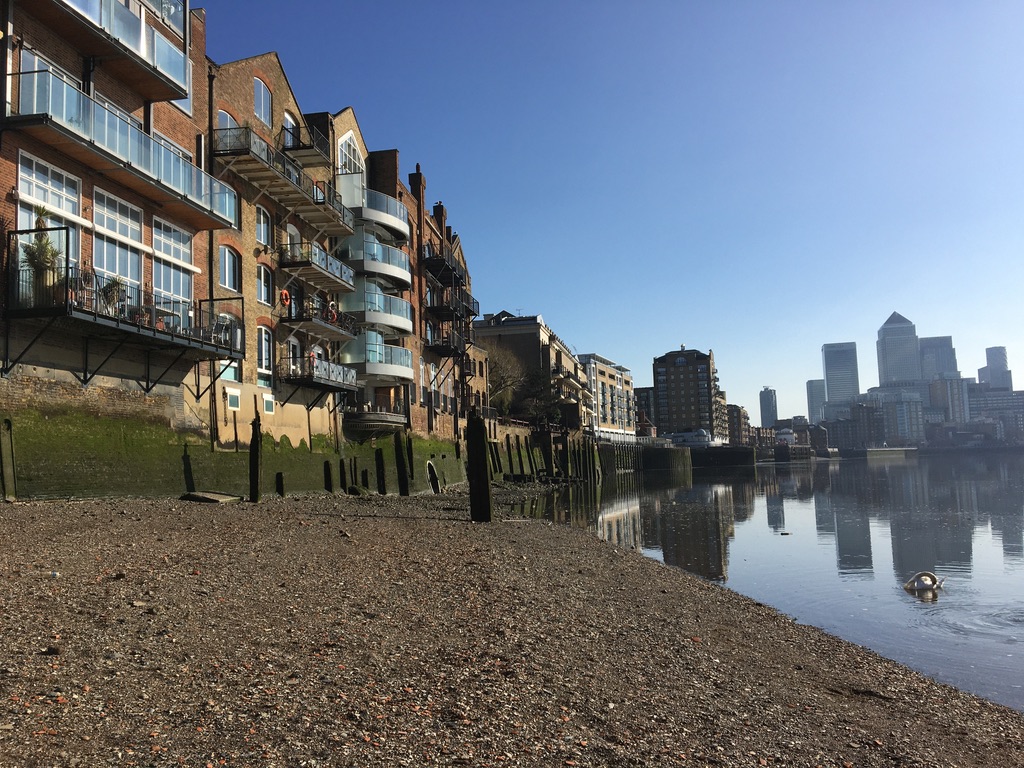
Limehouse was still a bit of a slum when bold gentrifying pioneers such as the Labour politician David Owen moved in to tart up the abandoned riverside buildings (today’s pic from the foreshore). It was at his home that the so-called Gang of Four Labour rebels sealed their breakaway from the party with the 1981 Limehouse declaration.
Who knows what Clement Attlee, the former prime minister and Limehouse MP, would have made of it. Attlee was born in the same year as Sax Rohmer and outlived him by a few years.
Rohmer wasn’t all bad – he was blacklisted by the Nazis – but his Limehouse fantasies reflected the casual racism of the day. The author lived to see his character serialised on TV in The Adventures of Dr Fu Manchu.
WHENEVER I launch into a monologue about the iniquities of the 1963 London Government Act, my live-in carer rolls her eyes and reaches for my medication.
But then she, like many, is too young to recall the vandalism of the faceless bureaucrats and soulless politicians who ripped up the municipal map to replace it with the amorphous boundaries of so-called Greater London.
Until the legislation came into force in 1965, appropriately perhaps on April 1, London had ended at Stoke Newington in the north, Hammersmith in the west, Lewisham in the south and eastwards at the line of the River Lea in Poplar. Beyond that was terra incognita.
This ancient delineation had held sway since 1900 when 28 independent boroughs, linked to historically definable neighbourhoods, were established under the leadership of the London County Council.
In the subsequent half century or so, the tentacles of the Great Wen had spread further in all directions to envelop previously rural areas of the surrounding counties.
The response in the 1960s was the creation of 20 new boroughs in parts of what had been Kent, Essex, Surrey and Hertfordshire – Middlesex disappeared completely – to form what would henceforth be known as Outer London.
It might as well have been Outer Space for most Londoners, who now had to adjust to living in a city that included places like Croydon or others bearing unfamiliar names such as Havering, Waltham Forest and Brent.
So far, so good. But then the politicians ditched earlier plans to preserve the inner London boroughs and forced the old 28 fiefdoms to amalgamate into 12 new administrative units.
Out went the municipal independence of the likes of Holborn and Shoreditch, Bermondsey and Bethnal Green, and of historic Finsbury, London’s smallest borough, of which more later.
Keith Joseph, the local government minister of the day before he became known as Margaret Thatcher’s Rasputin, said he didn’t much care what the amalgamated boroughs called themselves as long as they kept it to the name of a single location.
Thus historic Deptford, with a royal naval connection stretching back half a millenium, was subsumed into its once rustic neighbour to become henceforth part of Lewisham.
Gritty Bethnal Green, Stepney and Poplar emerged as Tower Hamlets.
It could have been worse. There was talk of renaming Lewisham, now enlarged, as Ravensbourne. Greenwich with its palace, museum and observatory – not to mention the meridian – almost ended up with the name of its more sleepy next door neighbour, Charlton.
There was one exception to Joseph’s golden rule. Over in that part of west London where a lot of MPs and rich people lived, two boroughs were combined but were considered so venerable they got to keep both their names in the new Royal Borough of Kensington and Chelsea. Funny, that.
You might ask, what’s in a name? Well quite a lot actually if your identity is eclipsed in a forced marriage to an overbearing neighbour.
Which brings me back to Finsbury. Where is it, even? Ask a cabbie and he’s sure to ask: “D’you mean Finsbury Park, pal?’, referring to a suburb three miles to the north.
The real Finsbury, however, is hard by the northern edge of the City and was first built on by the 12th century Empress Mathilda, daughter of Henry I and arguably London’s first suburban property developer.
Nothing much happened for the next 300 years until someone had the bright idea of building a gate in the nearby Roman wall, thereby encouraging Londoners to move to Finsbury.
It developed as, and remains, not quite part of the City but not of the suburbs either. John Wesley built his chapel there and the Honourable Artillery Company moved in just before the outbreak of the Civil War and has been there ever since.
It was once London’s medical district with hospitals for, among others, lunatics and French Huguenots. Only the Moorfields Eye Hospital survives. It also boasts one of those creepy 18th century Hawksmoor churches, St Luke’s. Post-1963, Finsbury’s redundant and derelict town hall was turned into a dance studio.
For much of its modern history Finsbury was a mix of residential, light industrial and street markets, a mix that has to some extent been preserved. There are housing estates built post-war by the long defunct Finsbury Borough Council.
If Finsbury is now almost forgotten as a distinctive neighbourhood, it is largely because it was absorbed into the much larger Islington to the north.
The conquest came just at the time when what estate agents call “young, urban professionals” were deciding that Islington was THE place to be. Flexing its muscles, the newly enlarged council played up the trendy Islington angle and proceeded to wipe neglected Finsbury off the map.
These days, as even Finsbury has become a bit chintzier, it’s regarded as just an overlooked bit of Islington, the latter an unpopulated cow pat when the former was already a jewel in Empress Mathilda’s crown.
One sign of the occupation is a billboard at St Luke’s Gardens describing them as being “in the heart of Islington”. Even if Islington had a heart, you wouldn’t find it there.
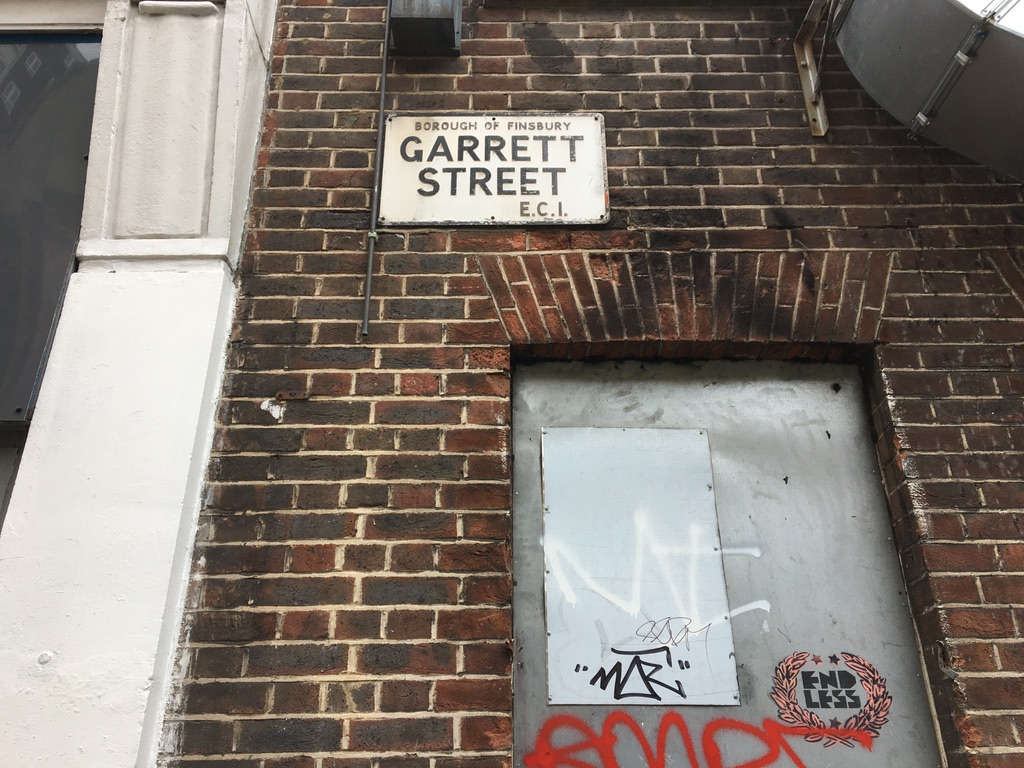
Happily, in their haste to establish their rule, the Islington bureaucrats failed to renew all the street signs. In the backstreets you can still find rusting signs that proudly bear the name of the Borough of Finsbury (today’s picture).
Sorry to bang on for so long, but perhaps you’ll now understand why the injustices of the accursed 1963 Act get me going.
And don’t get me started on the horrors of the 1969 Greater London Development Plan, mercifully trimmed down before its execution!
SUCH was the dire economic news from the City that it was with some trepidation that I crossed the Thames, half-expecting to find the starving orphans of futures traders begging for pennies on the Guildhall cobbles.
The remoaning Financial Times had set the ball rolling by gleefully reporting that the Square Mile had been overtaken as Europe’s top share trading hub by Amsterdam.
That set off a spate of grim prophecies of the end of the City’s financial supremacy as a result of the UK’s liberating departure from the EU.
It was small consolation that Dominic Raab, the government’s minister for dealing with Johnny foreigner, assured us that as an inevitable consequence of the Brexit Bounce the Europeans could be expected “to nick a bit of business here and there”.
To be fair to Dom, there were few signs of the coming Apocalyse among the lanes and alleys around the Royal Exchange and the Bank, no weeds sprouting in the cracks of Eastcheap or of Bevis Marks, no begging children.
The streets have already been pretty dead for a year and a Friday is now more like a pre-pandemic City Sunday. Most of its half million regular workforce is staying at home and virtually no one actually lives there.
Just a little over 8,000 people can technically call it home and more than half of them are at the Barbican, a brutalist estate built in the 1970s to offer banking fat cats a pied-à-terre near the office.
That’s less than one in a thousand Londoners and not much more than the 6,000 who lived in Londinium when the Romans were still around. In other words, it’s an ideal spot for the urban rambler to get away from it all and revel in London’s most historic quarter without the distraction of other people.
Frankly, nobody else bothers to go unless they have to. The City of London Corporation maintains a what-to-do site that reveals that there’s really not much to do. Even tourists, when there are any, tend to give it a wide berth apart from the A-list sites on the fringes such as St Paul’s or the Tower.
It’s certainly not party central. Look at it this way: if the lockdown ever ends, no one is going to suggest celebrating with an all-night piss-up in Throgmorton Street or Poultry.
We Londoners sometimes forget that, until about 1800, the square mile was all there was. Outside the mostly invisible line of the Roman wall, there was mainly farmland and marsh and the occasional hamlet.
The journey to rustic settlements such as Peckham was so perilous that stagecoaches would only venture there with an armed guard. Some things don’t change!
The old City had yet to become synonymous with high finance. The money dealers of the day lived above the shop, alongside the drapers and tailors and skinners and scriveners and all the other trades whose memory survives in the livery companies that still bear their names.
All human life was there. Well, almost. The prostitutes and actors and bear-baiters were kept across the river in Southwark which was incorporated into London for four centuries as the Ward of Bridge Without.
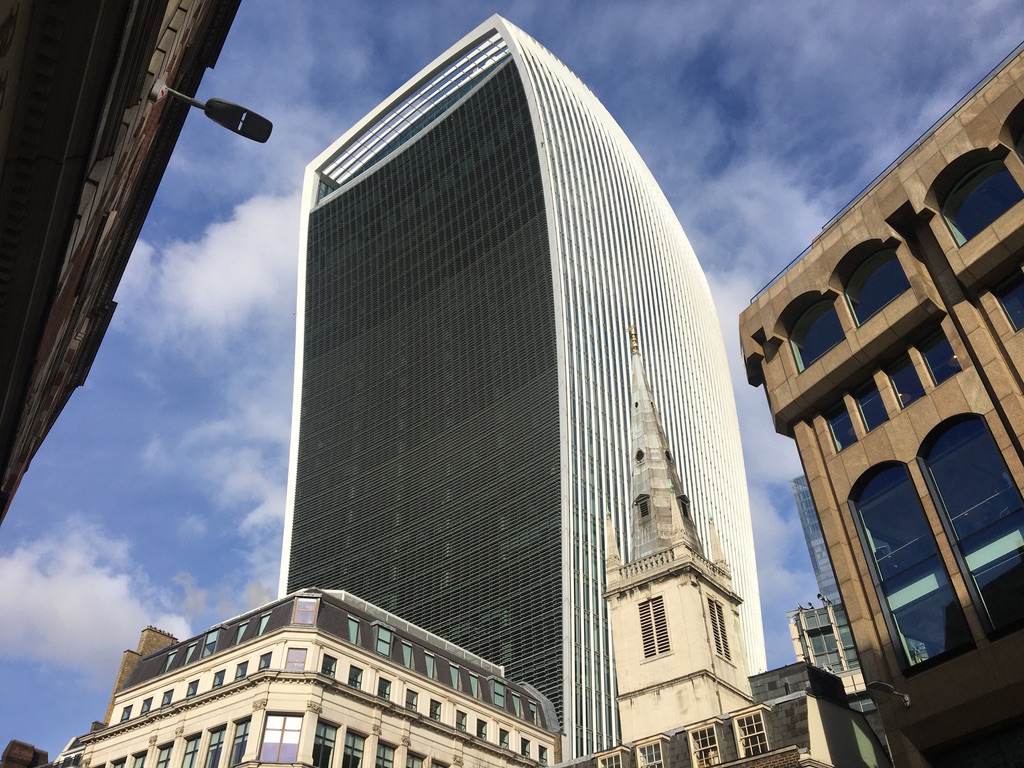
The City took a hammering in the blitz and the post-war population dropped to 5,000. St Paul’s Cathedral was its tallest building until 1980 when the NatWest Tower went up. That was followed by a dozen more with increasingly esoteric nicknames such as the gherkin. (Today’s pic features the walkie-talkie, a building that’s better in than out).
What’s to become of them, now that London’s entire financial system is said to be threatened with collapse because Boris Johnson failed to read the small print in his world-beating deal with Brussels?
Already there were questions about how many bond traders, hedge funders, and dealers in invisibles or intangibles or whatever they’re called, would actually return to their desks after Covid. It’s probably cheaper to keep them working from home until robots finally replace them. The survivors can always decamp to Frankfurt.
As for the City and its highrises, we could knock them down or turn them into workers’ flats or make the whole square mile into a Brexit theme park. How about a novelty mechanical treadmill for the kids to teach them about the good old money-making days? You could charge in Bitcoin and call the ride The March of Folly.
I WALKED over to Euston on Friday to see if I could catch up with Swampy.
It inevitably turned out to be a bit of a wild goose chase since the veteran environmental campaigner’s latest protest is taking place mainly out of sight and underground.
Eco warrior Swampy, a.k.a Dan Hooper, was more visible in an earlier protest when he occupied the top of a tree to prevent it being chopped down to make way for the HS2 high-speed rail link from London to the north.
Presently he’s the front-man for a dedicated band of urban burrowers dug in beneath the fenced-in lawn in front of Euston Station as bailiffs try to dig them out. One 20-year-old called Lazer concreted his arm into the ground inside a metal tube. He successfully made a break for it when the bailiffs came to get him.
The protestors, who dug a warren of tunnels beneath the lawn last month without anyone apparently noticing, are once again trying to halt HS2 because of the environmental damage they say it will cause.
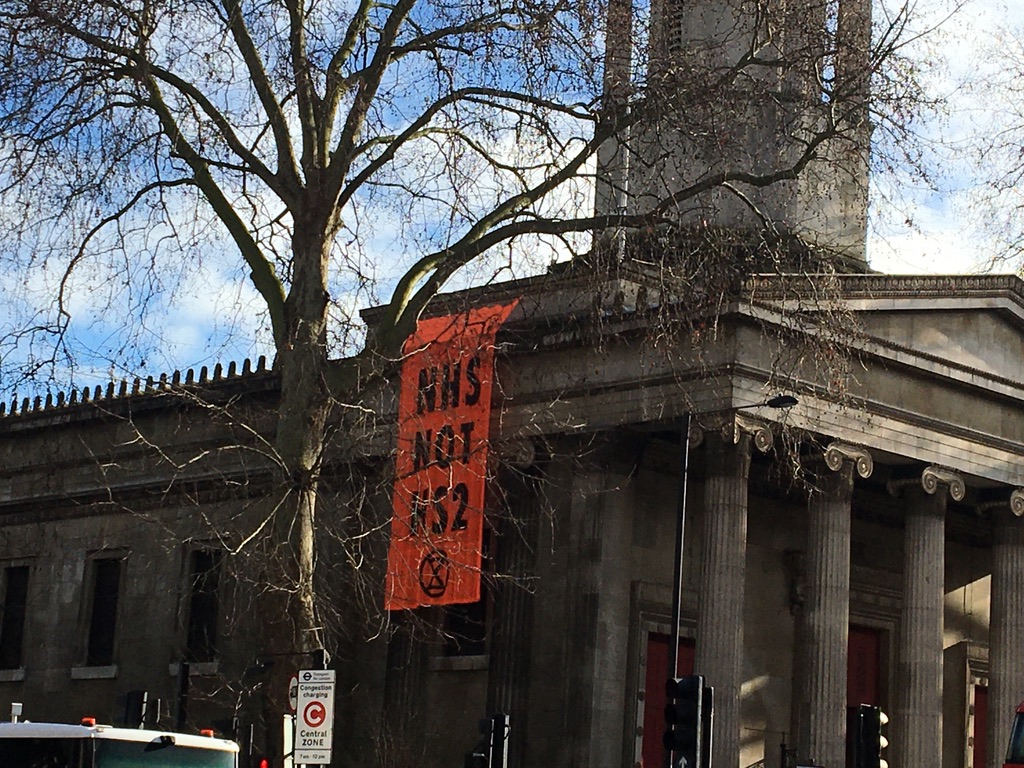
Above ground, there was little evidence of the subterranean standoff apart from a large “NHS not HS2” banner hanging from the portico of St Pancras New Church.
The two press snappers sunning themselves at the foot of the war memorial almost outnumbered the street-level Swampy acolytes, who were so desperate to get themselves nicked that they were doing press-ups on the pavement.
They were certainly outnumbered by the squads of hi-viz coppers whose expressions of combined suspicion and boredom must surely be part of the Met police training course. It was somewhat more unsettling to see the black-uniformed private bailiffs, who were kitted out like the SAS.
The police are staking out the station entrance, questioning everyone in order to weed out Swampy followers who might be planning to chain themselves to the tracks.
I’m not sure what to think about the HS2 demos. If you’re worried about climate change, surely rail must be better than road. Then again, you can already get to Birmingham and beyond pretty quickly by train. If you absolutely have to.
Our friends in the North complain, meanwhile, that they need more local trains for local people, not soom looxury service aimed at metropolitan businessmen heading up their way to plunder the last widow’s mite.
Politicians have been wrestling with the HS2 plan for years and appear to have settled on a “well, we’ve started so we might as well finish” solution. The price tag has already tripled since the plan was first mooted in 1996 and the first train to Manchester won’t run till at least 2040, so don’t try booking just yet.
It involves chopping down a lot of trees, which has upset Swampy’s lot, and ploughing through a bunch of pristine villages, which has roused rural Tory voters from their customary slumbers.
Hence the anti-HS2 movement has drawn support not only from Swampy’s crusties but also from a familiar crop of backbench Tory swivel-eyed loons.
But that’s enough national news. What does it mean for us Londoners, particularly those of us who have no intention of venturing anywhere north of Watford?
For a start, it will mean a big revamp for Euston Station. There’s already a lot of digging going on around the back, as an argument continues to rage over how many platforms it needs.
Euston is unquestionably London’s ugliest mainline station, having been rebuilt in the 1960s after its Victorian predecessor was torn down and its Great Hall and majestic entrance arch removed by the planning vandals.
The government of the day, obsessed with cutting the ribbon on the latest stretch of motorway even us it was shutting down half the railways, wouldn’t even cough up the cash to have the arch moved elsewhere.
What stands in the place of the former neo-classical gem is something resembling a retail park in Chorleywood, wherever that is. “Even by the bleak standards of Sixties architecture, Euston is one of the nastiest concrete boxes in London,” according to one critic writing in The Times.
For Monty Python star and trainspotter Michael Palin it is “a great bath, full of smooth, slippery surfaces where people can be sloshed about efficiently”.
Fortunately, the campaigners who failed to save the Euston arch did succeed in saving St Pancras, a soaring Gothic Revival masterpiece down the road that looks more like a medieval castle than a railway station. The striking but less flamboyant King’s Cross Station next door has also since undergone a tasteful regeneration.
And then there’s Euston, an alien carbuncle that continues to scar one of London’s most stately thoroughfares. It’s a blot on a landscape that includes the imposing Wellcome Institute opposite and St Pancras Church nearby with its pagan caryatids, a group of upright maidens copied from the Acropolis.
There’s a lot of other good stuff nearby, but I’ll save it for a future trip.
Suffice it to say, if there were a campaign to rid us of the urban eyesore that is Euston Station, I’d be down in the hole with Swampy.
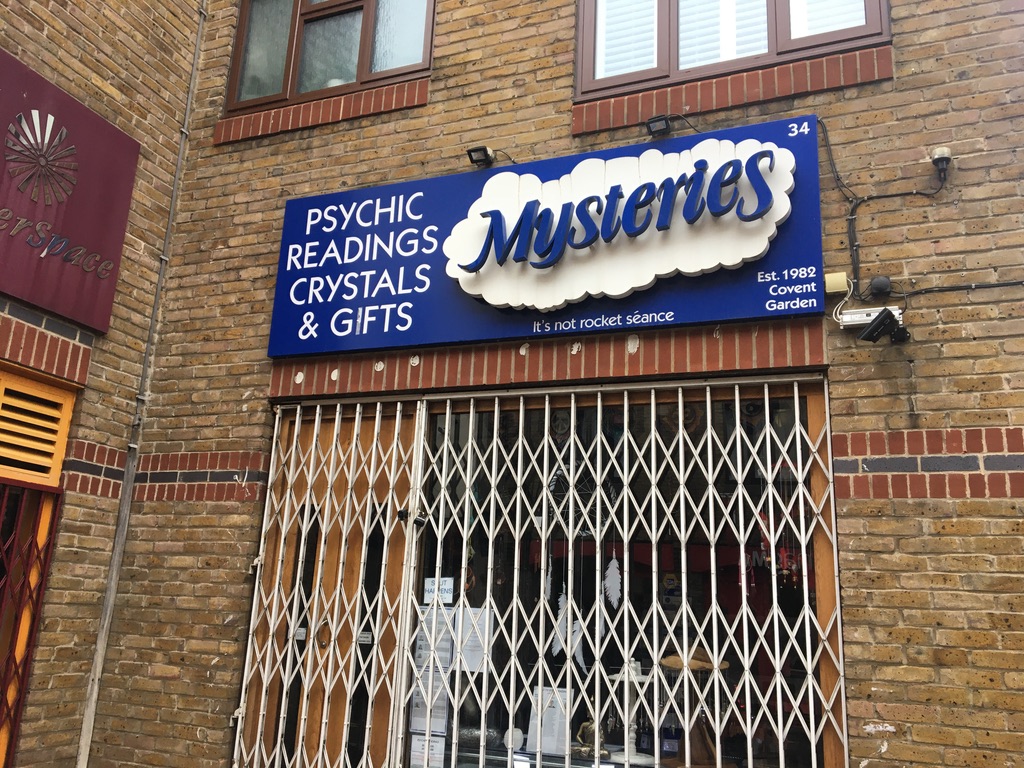
SINCE the 17th century, the narrow streets and alleys on the northern fringe of Covent Garden have been the lair of seers, psychics, stargazers and all manner of occult devotees.
The theory is that they were drawn there by the mystically star-shaped junction of Seven Dials where seven streets converge at a Doric obelisk topped by six sundials. The column itself served to cast the shadow of a seventh dial. The local French refugee community dubbed it La Pyramide.
The entrepreneur and MP Thomas Neale had opted for the novel street layout in the 1690s for the very unmystical reason that he wanted to maximise the frontages, and hence the rent of the properties he was building there for prosperous new residents.
The more expansive Covent Garden square nearby had been built some years earlier “fitt for the habitacions of Gentlemen and men of ability” and the developers were moving to cash in on the adjacent farmland.
It was only in recent decades that archaeologists determined that the neighbourhood was built on the site of the ancient settlement of Lundenwic, founded by the pagan Anglo-Saxons in the 7th century. Perhaps the invaders brought their witches with them.
Seven Dials and Covent Garden in general have had a chequered history since Neale’s time but the area never shed its association with the occult.
Wealthy 18th century Londoners didn’t really take to it – maybe it was the spooky vibes. Within a century, Seven Dials had become the city’s most notorious gin-sodden slum where street vagrants now rubbed shoulders with the diviners and the astrologers.
There’s a myth that a mob of local toughs tore down the obelisk in 1773 in search of hidden gold. In fact, London’s Paving Commissioners ordered its removal because the central island it occupied had become “a rendezvous for blackguards and chimney-sweepers”. A replacement copy of the original was unveiled only in 1989.
At around the time the obelisk came down, the nearby Freemasons’ Hall was just opening up as heaquarters of the United Grand Lodge of England. Its modern fortress-like 1930s replacement still surveys the neighbourhood like an all-seeing eye.
For decades Seven Dials mouldered in obscurity on the fringe of Covent Garden market and London’s theatreland.
Our wrinklier readers will remember when Covent Garden was the city’s central fruit, veg and flower market until its closure in 1974. In its dying days, Alfred Hitchcock filmed Frenzy there, a contemporary thriller set among the potato sacks and the apple crates. Barry Foster plays wholesale merchant and serial killer Bob Rusk, known as the “necktie murderer” for his favoured method of dispatching his women victims.
Mercifully, the planners preserved the market infrastructure of Covent Garden square, declaring it a “piazza”. Designer shops, bars and cafes were soon to replace the old wholesale stores.
The gentrification seeped into Seven Dials, with the arrival of boutiques and cocktails and artesan coffee.
But the old ways perist. Tucked between the shoe shops and the parfumeries are occult bookshops and others that offer healing crystals and astrological paraphenalia. There are meeting rooms where clairvoyants and mediums ply their trade.
In an eerily quiet Covent Garden, they’re all shut down now by a pandemic none of the fortune-tellers appears to have predicted. They are offering virtual sessions via Zoom, although surely telepathy would be more appropriate.
It’s all very New-Agey and harmless these days. But the once notorious neighbourhood has had reminders of its darker occult past.
In the late-1990s a troubled and homeless drifter became one of the many street-sleepers camped out on the city streets. In his early fifties, he had grown up suffering delusions and had been diagnosed with paranoid schizophrenia.
He had such an obsession with Aleister Crowley, the notorious 20th century occultist known as The Great Beast, that he had officially changed his surname to Crowley.
In Covent Garden he was befriended by a bright and sympathetic 12-year-old boy, half-Spanish, who lived in the neighbourhood. They used to hang out in Phoenix Gardens to play and chat.
But for Crowley, the friendship became an ever more demanding obsession. The boy, Diego Piniero-Pillar, became wary and took to avoiding his new friend. The police became involved but, although a harassment charge was pending, the drifter was out on bail.
One evening in May 2000, Crowley stalked Diego and his older brother while they were running an errand. He caught up with them by the obelisk on a corner of Seven Dials. He pulled out a kitchen knife and, with more than 20 blows, stabbed the younger boy to death.
A crumpled paper in Crowley’s bag bore scribblings about child sacrifice and the Latin inscription “Delendus est D. Piniero” – Piniero must be destroyed.
I had planned a column on the benefits of London’s parks in these challenging times and, in the process, to defend Matt Hancock’s decision to head off to his own local patch of green at the weekend for a kick-around with the kids.
If anyone needs a breath of fresh air to clear the cobwebs, it’s the Mattster.
Now it turns out our hard-pressed health minister has been pinged by the track-and-trace app after coming near to an unidentified plague carrier and will have to self-isolate for the rest of the week.
I just hope his too-close-for-comfort moment didn’t occur in crowded Queen’s Park on what the pops have dubbed “muddy Saturday” after boss Boris Johnson told Matt and all the rest of us to stay at home. The last thing we need is BoJo shutting down the parks.
Believe it or not, good old London is one of the world’s greenest cities. Its 35,000 acres of public parks, woodlands and gardens amount to 40 per cent of its surface area. It’s got so many trees, one for every Londoner, that it meets the UN definition of a forest.
Better still the greenery isn’t all in one place but democratically spread around, so that we all get to experience rus in urbe right on our doorsteps.
I don’t know Queens Park, where Matt was described by a witness as “covered head to toe in mud”. But it sounds fairly typical: trees, grass, a bandstand, flower gardens, a playground with a paddling pool.
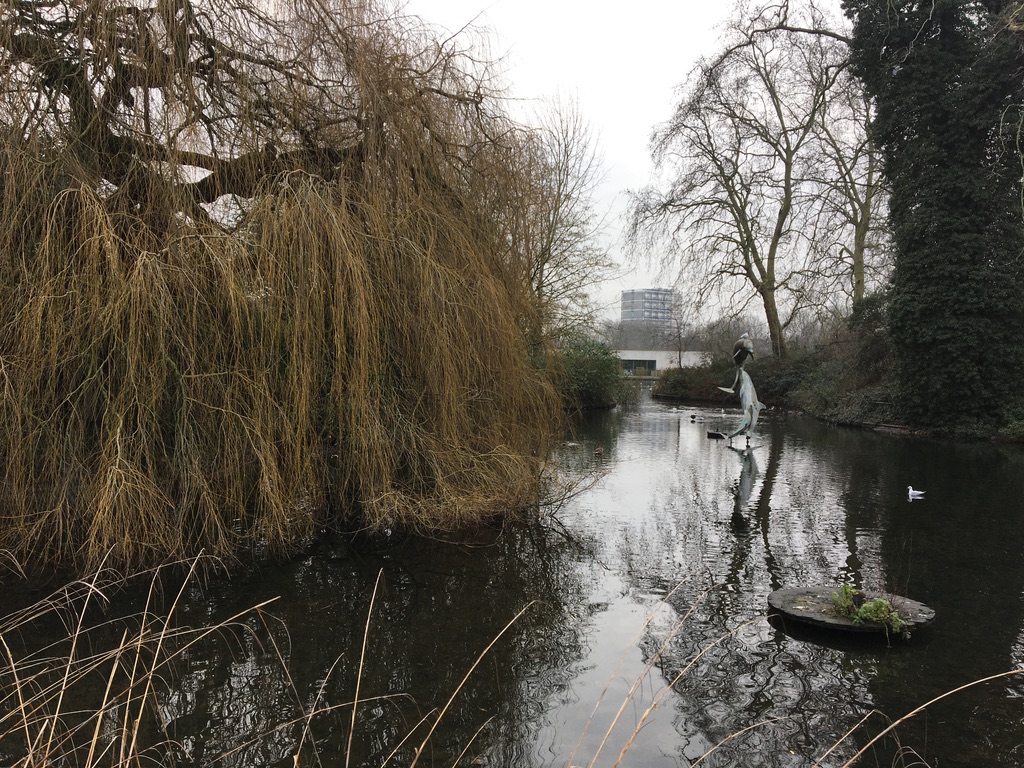
Southwark Park, where I just took a lockdown stroll, ticks most of those familiar boxes. Plus it has a recently restored lake, populated by demanding wild fowl – ducks, coots, geese, swans and a solitary heron – all within 100 yards of the Lower Road pollution hotspot.
Potential visitors might like to know that it’s never crowded, most of the new-fangled outdoor gym gear lies largely idle at this time of year, and the jogger threat is low to moderate.
Many of London’s open spaces have been there forever. Invading Vikings once camped at what is now Greenwich Park, one of eight Royal parks, where Elizabeth I used to go hunting. Green Park was once a swamp that served as a burial ground for mediaeval lepers.
Other parks, however, are a more recent London legacy of the Victorians, along with the sewers, the bridges and the railways.
Southwark Park opened in 1869 on 63 acres to the west of Surrey Docks and south of the Thames at Rotherhithe. It’s got a running track, a bowling green, football pitches and the inevitable cafe.
There’s a memorial garden for Ada Salter, the Quaker and social reformer, whose husband Alfred set up a free health service in the area, a forerunner of the NHS as I’m sure Hancock would be interested to know.
It’s the sort of local park where generations of unaccompanied schoolkids were once allowed to run wild, in the days before anxious modern parents began to imagine that a paedophile or a drug-pusher lurked behind every bush.
Contrary to this paranoia, police stats show that crime in London parks is relatively low. Southwark Park’s last “brutal daylight revenge slaying” was more than two years ago.
In the old days, the kids and the criminals – often one and the same – were kept in check by Gestapo-like park keepers (they even wore brown uniforms) who would try to stay one step ahead of the miscreants.
Like most of modern life, London’s neighbourhood parks are now actually more sedate than they used to be and more geared to the keep-fitters and the “consumers”. There is an unwelcome trend to rent them out for music festivals and other events that squeeze out the locals.
Southwest Londoners have protested about plans to stage festivals in Brockwell park. “Brockwell Park is the beating heart of our community,” said one irate local. “It’s our living, open, green space. To take that away from us is wrong. To do that without the consent of the community is worse.”
The trouble is that too many politicians these days are uncomfortable with the idea of any communal facility that is either not owned by someone or fails to generate a profit. For them, a park is just so much unexploited development acreage.
We’re safe for now. But the price of freedom is eternal vigilance. When it comes to your local London park, it might be a question of use it or lose it.
ON THIS week’s Hancock’s Half Hour, the health secretary explained that if you go for a long lockdown walk and end up seven miles from home “that is OK but you should stay local”. All clear now?
His intervention helpfully absolved Prime Minister Boris Johnson of scurrilous accusations that he broke the latest Covid restrictions by cycling from Downing Street to the Olympic Park, a 14-mile round trip.
It also came to a relief to me, concerned as I was that a recent round trip, six-mile pilgrimage to Deptford might have stretched the boundaries of some obscure sub-clause of the new 100-page instructions.
As officials struggled to define what constitutes a substantial walk, one minister underlined the gravity of the situation by saying we were facing another “Scotch egg moment”.
However, the Met Police chief, Dame Cressida Dick, offered further comfort when she clarified that “local” was a relative term.
Now that these procedural ambiguities have been resolved, I would urge all Londoners to get on your bikes or, like me, into your walking shoes to explore one of the most historic corners of their historic city. Just don’t all go at once.
In primary school, a couple of teachers who were local history buffs would help to reveal this cornucopia on our doorsteps and the characters who had once populated it: Peter the Great, the murdered playright Christopher Marlowe, the 17th century diarist John Evelyn, the Dutchman Gringling Gibbon, whose lost carvings at Deptford Church were said to have been so delicate that they rustled in the breeze.
It’s where Queen Elizabeth I knighted Francis Drake on the moored Golden Hind and where Captain Cook set out on his fateful third voyage aboard the Resolution.
The Deptford dockyard, founded in 1513 by Henry VIII, was once the largest naval dockyard in the world and continued turning out warships for 350 years. The maritime connection was maintained until 2000, when the last of the commercial docks at Convoys Wharf closed.
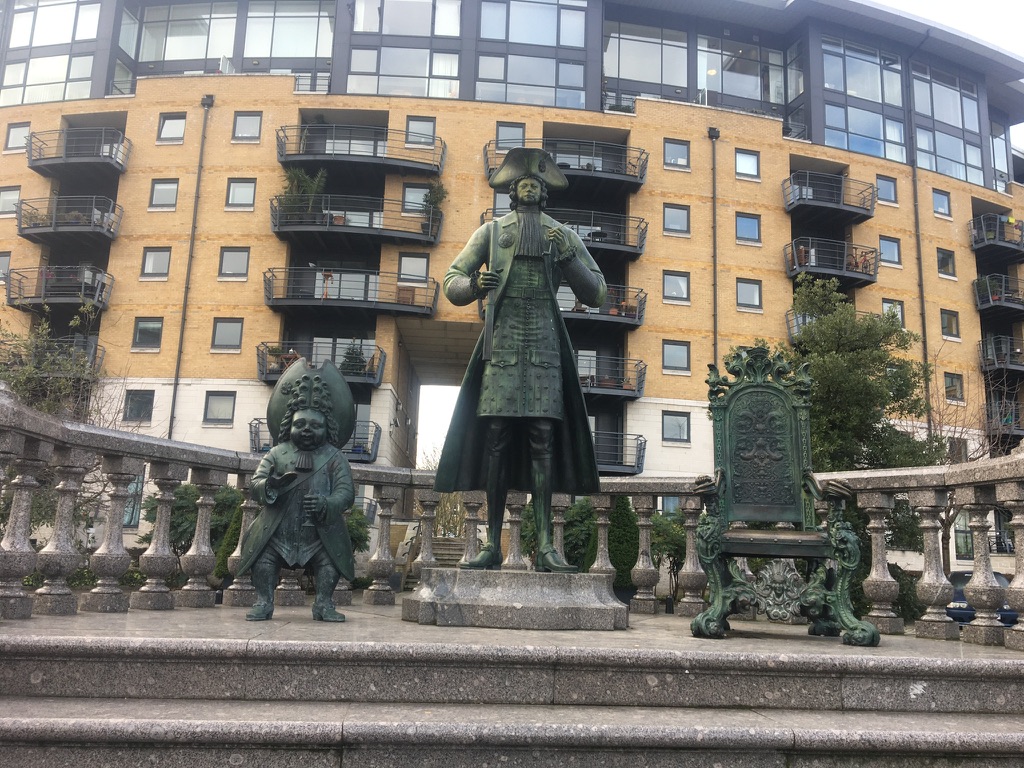
This illustrious history survives via a number of quirky memorials: a stranded anchor at the top of Deptford High Street, and a statue of the Russian czar Peter and one of his dwarves – apparently he collected them – at the mouth of Deptford Creek.
A gift from the people of Russia (today’s picture), the bronze of the pinheaded Peter and his short companion has been described as the strangest sculptures in London.
They told us at school that the czar worked anonymously in the Deptford dockyard. In fact, he came over on an official if anonymous trip in 1698 to get some dockyard ideas for St Petersburg, arriving with four chamberlains, three interpreters, two clocksmiths, a cook, a priest, six trumpeters, 70 soldiers, four dwarves and a monkey.
From the 19th century and into the 20th, Deptford underwent a steady decline and isolation, although the docks continued to provide work for many of the locals. At around the time the borough was subsumed into its blander neighbour, Lewisham, in 1965, a survey in the local paper found that a majority of Deptford women had never left the neighbourhood.
It’s still got a lively high street market, at least it was the other day when the Caribbean shops were stacking up the yams and peppers and the Kurdish fishmongers were hosing down their suspiciously exotic fish.
Deptford’s been gentrified-ish but not enough to spoil your visit. St Paul’s Church and the churchyard are worth a look, or at least would be if they hadn’t padlocked the bloody gates!
There was a quixotic plan at one time to build a cruise liner terminal next to Peter’s statue at the head of the creek. The Greater London Authority decided in 2005 that “a cruise liner terminal at the site was not considered to be appropriate at that time”. At least the planners get some things right.

 Idle Thoughts on London Walks