News from the Forum: What did we ever do for the Romans?

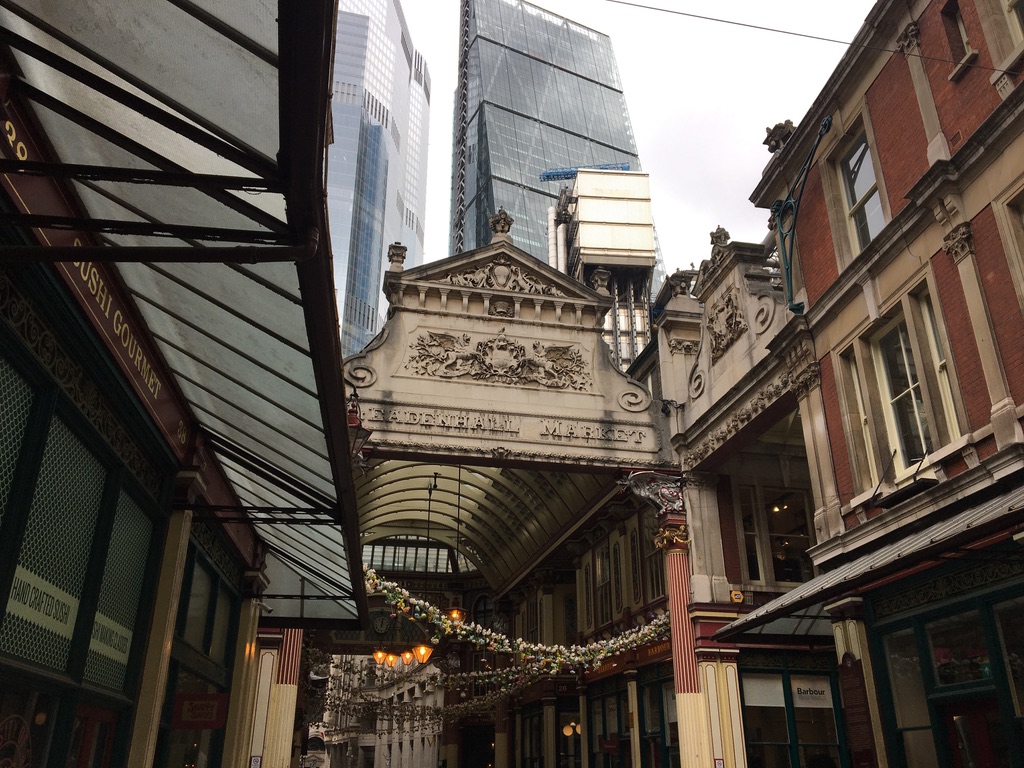
LEADENHALL Market is a bit subdued these days, barely kept afloat by the reporters and occasional camera team who head there to update us on the pandemic-driven decline of the City of London.

Covid-weary hacks seeking insights from lippy millennials about the government’s latest indeciferable directive will naturally gravitate to Soho’s Old Compton Street around closing time.

To gauge the response of equally lippy retailers, however, they’ve taken to heading for Leadenhall, the grumbling ground zero of the Square Mile.

Sky, the BBC and the Standard have all visited and the Daily Mail has been round at least twice, latterly to chronicle the backlash over the government’s “chaotic new rules”.

It’s an appropriate place to sound out the vox populi since the market and its surroundings were at the dead centre of Roman London. If there had been a Radio Londinium around during the 2nd century Antonine Plague, no doubt its hacks would have headed to the neighbourhood.

Now, THAT was a pandemic! It swept across the empire from the Middle East and killed up to a third of the population in areas hardest hit. Londinium, a port and an important garrison, was particularly vulnerable.

The population declined as many fled. But for some it was a plus. Wealth became concentrated in fewer hands and the rich built ever larger and flashier town houses. The locals took to worshipping Apollo, the god of medicine and healing.

It was bad timing for a pandemic. The Romans had only a few decades earlier put the finishing touches to a new Forum, the second largest north of the Alps, with a basilica taller than Wren’s St Paul’s.

And, of course, it had a market, although it wasn’t yet called Leadenhall. If Roman remains elsewhere are anything to go by, it would have been heavy on fast food and takeaway.

You can almost imagine the intern from the Daily Londinium being sent down there to hear the lentil stew and spiced wine seller griping about the impact of the latest imperial anti-plague measures on walk-in trade.

There are remnants of the Roman age all over modern London, including bits of wall in the cellars of Leadenhall, most of it buried under centuries of subsequent development.

I’m just about old enough to remember the excitement when builders dug up the remains of a Temple of Mithras. Mind you, there wasn’t much else to get excited about in 1954 London.

The temple remains are now displayed in the bowels of the new Bloomberg building in Cannon Street. Worth a visit, although maybe a bit too son et lumière.

Underneath the Guildhall are the remains of an amphitheatre where up to 6,000 people could go to watch animal fights, gladiators and public executions.

Given the extent of this cultural treasure house, it’s amazing how little the Romans intrude into the London psyche. Maybe it’s because, unlike in Rome itself, or Nime or Trier, most of it is underground.

London goes weak at the knees when it recalls the city of Chaucer, Pepys or Dickens. But when it comes to the Romans, the attitude is very much: “What did the Romans ever do for us?”

It’s as if the poor old Romans were not so much forebears as interlopers, even though they founded the city and named it long before England was invented.

Then, as now, a lot of the inhabitants came from somewhere else. There were native Celts and Africans, Germanic mercenaries and slaves, Syrian merchants, Jews and early Christians (the latter tended to get lumped together), maybe even a few Italians.

Multicultural London, demonised by the self-imagined descendants of those Johnny-come-lately Anglo-Saxons, is definitely not a new phenomenon.

The Empire declined, the legions left, and London was abandoned. But, centuries later, once the continental newcomers had settled in and overcome their early obsession with Chelsea, they repopulated the Forum.

Leadenhall resumed its role as a central market. The poulterers and cheesemongers moved in. In the 15th century London Mayor Dick Whittington (yet another incomer) took a lease out on the place.

Its present incarnation is the handiwork of Horace Jones, the 19th century architect who also gave us Tower Bridge, a pastiche of a Scottish baronial castle that is London’s current identifying icon.

In normal times, Leadenhall is a hangout for Lloyd’s insurance brokers who work just around the corner. I confess it’s not my favourite market. There are a couple of decent pubs but there are too many chintzy shops and not enough poultry and cheese.

Anyway, it’s likely to overcome our present travails. There was an extended shutdown after about 400 AD but Leadenhall is still with us despite the grumbles.

Stop press: I’m Covid-negative. No, I didn’t ask for a test. No, I didn’t need it. At a time when families are being sent on 500-mile round trips to get a swab, I got mine unsolicited through the post.

It’s for some government-backed trial or other. I’m happy to help out, but a mate who did a rival trial got a 50 quid voucher. What did I get? Zilch!
Murder in the cathedral: Praise the Lord and heed the Rule of Six

HOW are you coping with the Rule of Six?

It would be a great book title, wouldn’t it? Maybe an early Agatha Christie, or a lost manuscript by Conan Doyle, or even one of Enid Blyton’s Famous Five series if you count their part-time friend Jo.

It definitely beats the other updated diktat: Hands, Face, Space. I doubt that would sell many copies.

Before that, it was Stay Alert, Control the Virus, Save Lives, slammed by PR experts as unhelpful, vague and open to interpretation. So what’s next? Hands, Knees and Boomps-a-Daisy?

As we approach the half-year anniversary of anti-Covid measures, at least it’s good to know the great British public remains united – if only by their widely shared confusion.

In the interests of that same public I decided to stick my nose out of the door to check that everyone was abiding by the new rules. Within yards, I bumped into a group of a dozen or so co-workers outside City Hall receiving a briefing from the bloke in charge, no doubt about social distancing in the office.

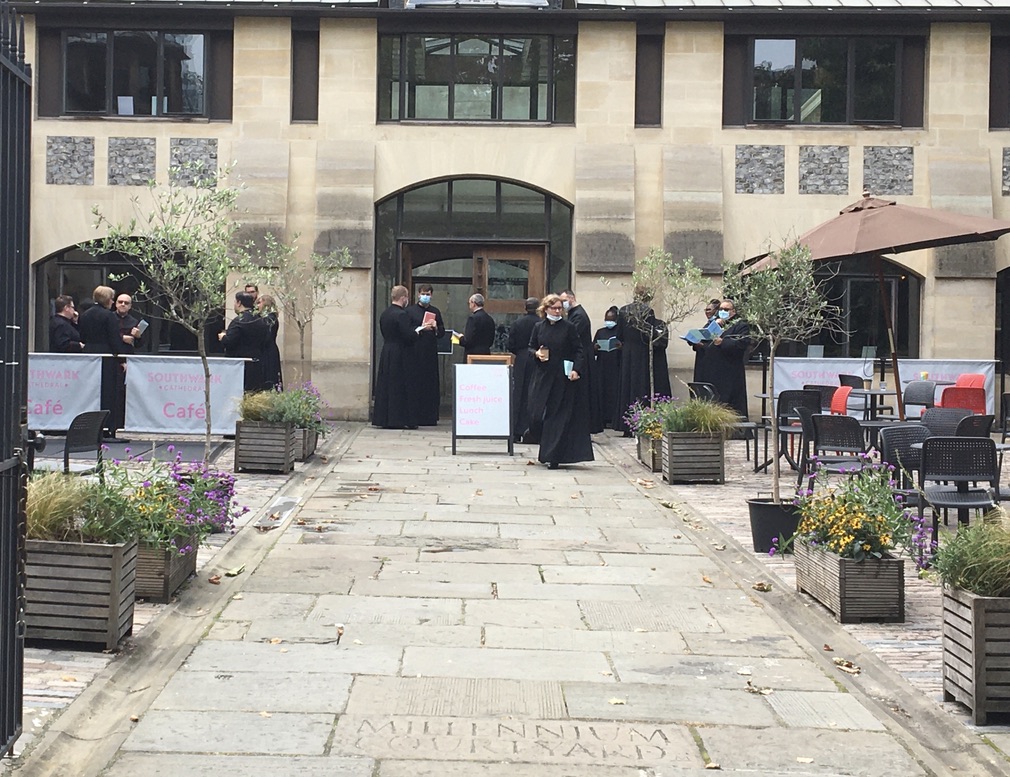
But the real shocker awaited me just down the road. There I encountered almost a score of Anglican divines rubbing cassocks in the precincts of Southwark Cathedral (today’s picture).

They weren’t carrying shotguns, so they can’t have been hunting grouse, a mandated exception to the government’s Rule of Six. Perhaps they had just nipped out for a fag break mid-service. I was tempted to have a word, but as they were mob-handed I decided discretion was the better part of valour.

Better surely to nip home and study the Rule before laying down the law.

The Cabinet Office has helpfully boiled down its latest catch phrase to just over 400 words. You can apparently still go to a wedding or a funeral or “other religious and belief-based life cycle ceremonies”. Perhaps the Southwark vicars were involved in one of the latter. Or maybe they all live in the same clerical bubble.

I suppose that before we get too animated about transgressions of the Rule of Six, we should recall the Rule of One – don’t snitch!

So keep today’s revelation to yourselves. I don’t want the law dumping on the diocese.

Priti Patel, the Home Secretary – yes, you read that right – has said she would call the police to report neighbours she discovered flouting the restrictions. Patel says families should not stop to chat to other families if they bump into them in the street because it was “absolutely minglin’.”

Boris Johnson made it even more confusing by slapping her down as a “sneak” and saying you should first have a quiet word with the offenders. Good luck with that round here! Who’d risk a showdown with the local vicar?

I suppose there’s a bit of the curtain-twitcher in all of us and all these rules have only made it worse. Hands up if you’ve harrumphed at the bloke who sailed into the corner shop without his mask or if you’ve glared at a gang of teens yacking it up in the local park.

None of us is immune. I was in Waterloo at the weekend where a growing flock of cackling henpartyers gathered in force before heading to some mass gathering in The Cut.

Some old pensioner was grumbling into his collar about “thoughtless young floozies…no better than they ought to be…skirts smaller than their face masks”. Then I realised to my horror it was me!

Curtain up: Support your local thespians

DEAR diary. This week I went to the theatre to see the actor Ralph Fiennes in a very short play. My luvvy friends say you have to call him “Rafe” because he’s quite posh, even though he was born in Ipswich.

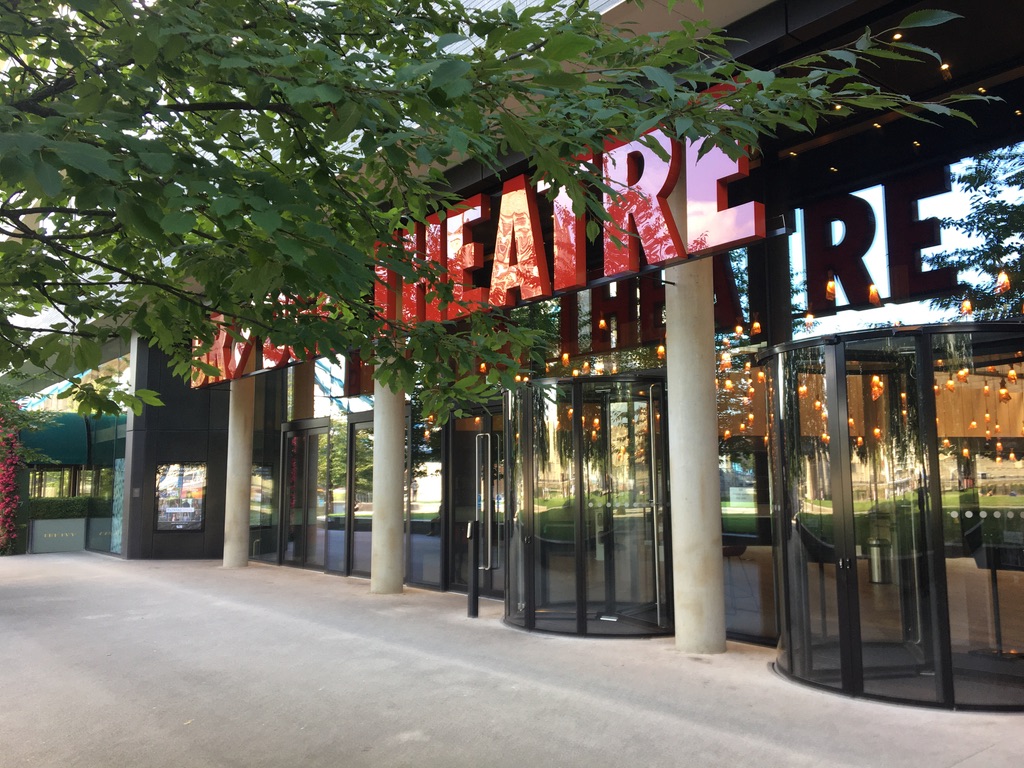
The play, called Beat The Devil, was at the Bridge Theatre, which like all theatres that have plays with no songs or dances in them, is also quite posh.

It was written by David Hare and was about him catching Covid before the lockdown and what happened next.

They said it would last 50 minutes but it was over in 45, which either means Rafe forgot a bit or was talking too fast. Anyway, it was good fun, although David Hare was quite rude about Boris Johnson.

“A spirited expression of…righteous anger,” the Guardian said. I knew David slightly at what young people now call “Uni”. He was also quite posh and actually quite righteous but not yet very angry. But that was long before he caught the bug.

The seats cost £30 pounds each, which is about 66p a minute. But can you put a price on art? You can’t really value a play or a concert as you would, say, a burger and chips, which is probably why that nice Mr Sunak opted to halve the price of the latter.

That’s all over now of course and many restaurants and cafes are once again empty from Monday to Wednesday. Although maybe that’s just because the bargain-hunting gourmands have finally gone back to work.

Another posh actor, Vanessa Redgrave, who’s also often righteous and sometimes angry, says private businesses should help restore theatre and the arts to what they were before the pandemic.

“We have to save everybody!” la Redgrave implored. “We have to save the arts for everybody.”

Let’s hope that they at least save The Bridge, not least because it’s local, near the south side of Tower Bridge.

It only opened in 2017 and would seat 900 in pre-social distancing days. For the time being they’ve cleared out most of the seats and only 250 can attend a performance, which meant that at this week’s matinée the sea of white hair that usually occupies the stalls was sparser than usual.

Compulsory masks also meant the usual pre-curtain braying was reduced to a muffled hum and there was no crackle of Ferrero Rocher wrappers or sucking of Werthers Originals once the play began.

I’m not trying to say the London theatre always attracts the same sort, or demographic as they now call it, but let’s just say it’s less mixed than in the old playgoing days for which south London was famous.

The Globe and The Rose were just up the road in Shakespeare’s day and they let in all sorts, from the hoi polloi in the open-air pit to the toffs in the gallery.

During the 1606 season the Globe and all other London theatres were closed because of the plague. The crisis spelled the end of Shakespeare’s companies of boy actors and started a trend towards winter seasons held indoors, once theatres re-opened. That gave scope for more intimate Shakespearean scenes and more discriminating, and perhaps less rowdy audiences.

Vanessa’s probably right when she says the arts should be for everybody. Add that to your post-pandemic resolutions.

One of the treats at school was when they regularly took us little south London oiks to the Old Vic, also local. We’d sit up in the gods and giggle through Hamlet or Macbeth or something similar.

And it cost just half-a crown. For younger readers, that was one-eighth of a pound, the equivalent in those days to the price of a pint of beer or a packet of 20 cigarettes.

These days, one expensive minute at The Bridge costs the same as a single cigarette. Don’t smoke then, I hear you cry. But how, in that case, would you manage without the more than £10 billion a year in tobacco taxes?

If you’ve been wondering who has kept the economy going during the lockdown, it wasn’t Rishi Sunak – it was me!

Back to normal: Just nipping down the Spa

IT would be churlish, before turning to today’s walk, not to mention the spontaneous outpouring of sympathy that greeted my recent brief aside that a mild leg disorder had curbed my regular peregrinations.

It would also be invidious to pinpoint any single well-wisher. But the caller who took the trouble to reverse the charges from France perhaps spoke for you all when he encouraged me to “stop malingering and get off your arse and give us some more walks!”

Apparently he finds the column occasionally informative, even amusing. But mostly he welcomes it as a gentle soporific at bedtime after a hard day of housebound liaising with work colleagues on TikTok.

So here goes, although I fear the promised Rotherhithe tour proved a limp too far and will still have to await another day.

In the meantime, I made it as far as Bermondsey Spa. Now, before you start fantasising about nipping down for an exfoliation, hot yoga or ayurvedic salt scrub, I should point out that this one shut down in 1805.

Established just 35 years earlier by the still life painter Thomas Keyse, it was a place for a nice cup of tea and maybe a bit of music and fireworks on a Saturday night rather than bodily pamperping. A mineral spring had been found nearby, spouting near the River Neckinger, so why not call it a spa?

Spa Road survives, leading to Bermondsey Spa Gardens, built on the site of Keyse’s tea garden and bordered on one side by the old Bermondsey Town Hall, now converted into (drum roll) luxury flats!

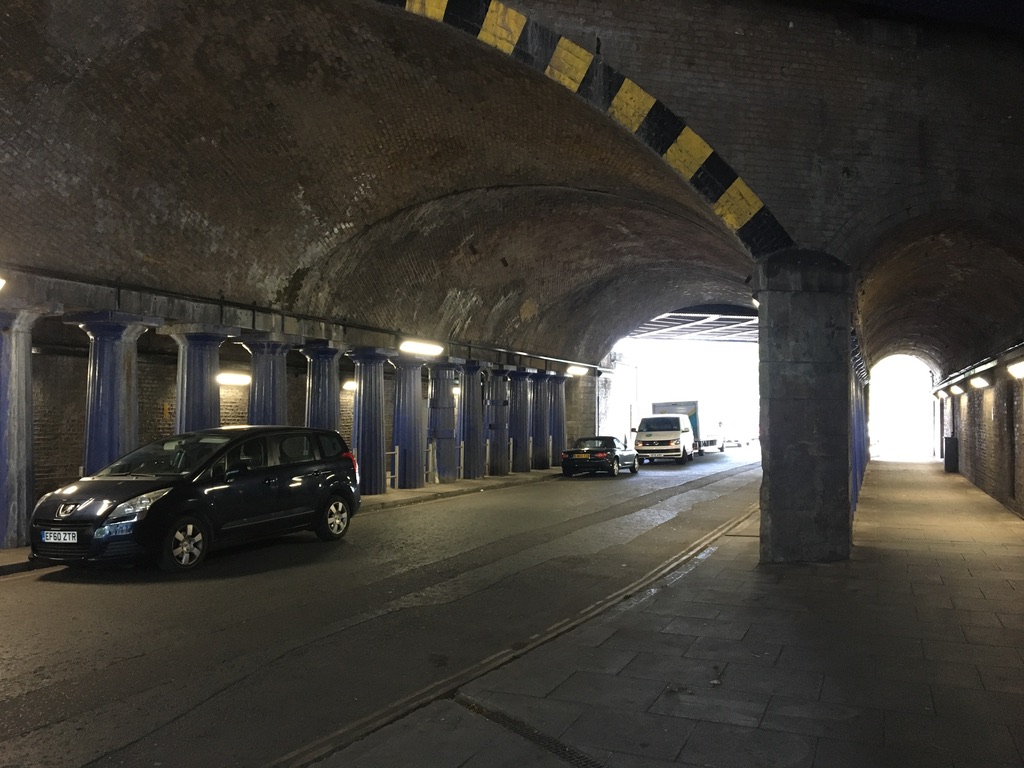
There was a Spa Road Station until 1915, London’s first railway terminus on the London and Greenwich line, which opened in 1836. The legacy of the line, which still operates, is probably the longest stretch of railway arches anywhere in London. If you’re a fan, it’s arch heaven.

Over the last decade, the scrap merchants and car repairmen who mainly occupied the arches have gradually made way for upmarket food stores, wine bars, bijoux gin distilleries and micro-breweries.

The trend was started by a handful of disgruntled traders from the more famous Borough Market who gravitated to Maltby Street, a few hundred yards west of the Spa.

Around the same time, in 2000, the local Southwark Council decided to transform “a neglected corner of south London” in a £140m deal with private developers.

According to the planners: “With the neglected community at the heart of this urban renewal, we focused on creating a strong sense of place and providing the existing and new residents with the better quality connections, streets and homes they so deserved.”

Who writes this shit?

A bunch of new housing developments went up, appealing to those young professionals who like to live next to railway lines, or to buy-to-letters who live somewhere else anyway.

It could be said though that the market that grew organically from Maltby Street to encompass the arches and light industrial estates at the Spa have done more to regenerate the neighbourhood than any master plan.

There’s been that inevitable trend to prepared “artesanal” food over raw ingredients that’s the curse of London markets, Borough included. But it’s still a lively spot at the weekend and has been crowned with the accolade “hidden gem” by the travel sites.

Naturally, it has attracted some of the wrong sort. I was enjoying a mid-walk glass outside the area’s best wine bar one day, when a designer beard approached. He discreetly reached into his tweed jacket pocket for a pot of pommade to wax his moustache before entering. Whatever happened to south London, I inwardly wailed.

The old faded low-rise council blocks have survived much of this innovation. The area has one of the highest concentrations of social housing in London and some of its poorest residents.

But you rarely see the locals cross narrow Druid Street to pick up their cavalo nero at the railway arches. There have been some grumbles of discontent about the newcomers but it hasn’t turned nasty – yet.

Of course, many of their predecessors sold up under right-to-buy and moved out to Bromley or to Addington. There they pass their dotage swapping reminiscences on social media about how fings ain’t what they used to be in the new Bermondsey.

Rotherhithe update: Riverside tour temporarily suspended

AS the great Albert Camus used to say – I’m paraphrasing here – if you find something you like doing, you should keep on doing it.

A central tenet of the Frenchman’s Absurdist philosophy was that, as human existence is totally meaningless, you can either top yourself or make the best of it by repeated enjoyment of the simple things in life, rather than getting your knickers in a twist like Sartre and the Existentialists.

On this side of the Channel, the Hoxton-born music hall chanteuse Marie Lloyd put a similar message across somewhat more succinctly with the title of her 1914 smash hit ‘A Little of What You Fancy Does You Good’.

It doesn’t much matter which modest pleasure turns you on. Albert was a football mad teenager when he was growing up in Algeria, while Marie sings of the joys of an occasional glass of stout.

The problem at the moment is that even the most banal treats are, if no longer off-limits, at least constrained by the government’s latest runic “hands, face, space” injunction.

Even if Marie could find a pint of stout in London these days, she would have first to queue outside the pub and then enter via the hand sanitation station before ordering her tipple and paying for it by pressing her credit card to the barman’s plastic screen. Not what I call a night out.

Now, if your pleasure is a simple idle walk, there are no such barriers – plastic or otherwise. Albert himself, when he wasn’t playing in goal, used to like to wander aimlessly around the streets of pre-war Oran, delighting no doubt in the activity’s essential absurdity.

I bet though that he had his favourite jaunts, just as Marie no doubt had her favourite boozer.

Moi aussi, Albert. Often, as I head out, I have no idea which way my feet will take me until they hit the street. More often than not, however, they will head east along the river towards Rotherhithe – just over a mile and half an hour max if you’re not in a hurry.

I would rate it as one of London’s Golden Miles in terms of its connection with centuries of the city’s history and had hoped to take you on an extended tour there.

The trouble is your correspondent’s urban ramblings have been temporarily interrupted by a gammy leg. What would be a minor inconvenience to the sedentary is near fatal to the flaneur.

I write partly to reassure followers of the column’s imminent revival and to forestall veiled threats of subscription cancellation from among our wide domestic and international readership.

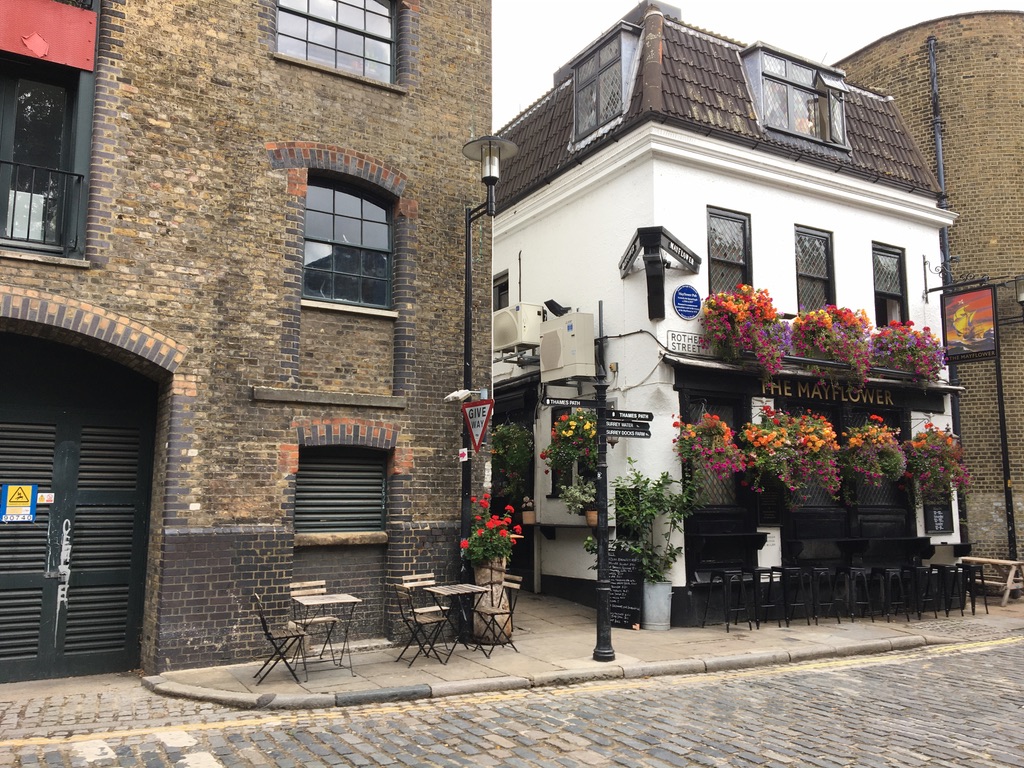
When Rotherhithe Live eventually surfaces, it will include pirates and pilgrims, a medieval royal hunting lodge, the entrance to the world’s first underwater tunnel, a pint at The Mayflower (today’s picture from our extensive archives), and a church with its own sauna.

Meanwhile, as Albert might have said, if you can’t keep doing what you did keep doing, pick something else in the meantime. Try reading a bit of Camus, he might have suggested (or “rereading” as guests on Radio 4 insist on saying). His 1947 The Plague has been selling like hot croissants since the pandemic started.

I realise that for many the temporary absence of this column will be one more nail in the 2020 coffin. But maintain a stiff upper lip and look ahead to a swift resumption of these ramblings.

Russia report: All quiet on the Londongrad front

GIVEN all the headlines about meddling Russians, it seemed a good day to head to the heart of what Parliament’s Intelligence and Security Committee describes as Londongrad.

The hunting and grazing grounds of London’s Russian oligarchs have no fixed border. But the epicentre would definitely include Knightbridge for the shops, Mayfair for the clubs and Belgravia, an area where even some of the English gentry have swapped their gracious piles for piles of Russian roubles.

As the committee put it, Britain welcomed Russian money, with few, if any, questions asked about the provenance of this considerable wealth which then went on to be recycled through the London “laundromat”.

Sadly, dear reader, the budget of this column is too meagre to breach the bastions of the crème de la borscht of the city’s Russian elite. So, for once, we’ll have to make do with pressing our noses to the window pane.

For, unless you’re a society hostess, a Tory MP, or one of the army of expensive lawyers and bodyguards who keep the expat Russians safe, the average punter is unlikely ever to rub shoulders with them.

The committee report also mentions a wider army of British enablers who minister to the needs of London’s Russian elite: “Lawyers, accountants, estate agents and PR professionals have played a role, wittingly or unwittingly, in the extension of Russian influence which is often linked to promoting the nefarious interests of the Russian state.”

The nearest most of us are likely to get to them is by watching McMafia, the crime drama based on journalist Misha Glenny’s non-fiction journey through the global criminal underworld.

Back home, the Russians have their own TV series, Londongrad, which gives a comic and somewhat idealised view of their compatriots’ lives in the British capital. It centres on an agency that troubleshoots for the Russian super-rich.

An almost equally rosy view was provided by society magazine Tatler, which was allowed a brief glimpse into the lives of the sons and daughters of London’s Russian plutocrats.

“From Ascot to Annabel’s, Henley to Harrods, they are the new generation of Russian-born, UK raised ‘little tsars’ adding their unique brand of glitz to British high society,” Tatler drooled. Pass the sick bag, Ivan.

Twenty-something Anna Milyavskaya enthused: “When I lived in Belgravia, every second person was Russian. Sometimes you’d be like: ‘Am I in Moscow or am I in London?’ ” Neither, darling. You’re in Londongrad.

When they are not headed for Ascot or shopping at Harrods, the Russian set hang out in the Mayfair clubs racking up the bar bills. The record set in 2013 for a £130,000 round – “Let’s split it,” said the two multimillionaire Russian tipplers – appears to be unbroken.

Despite these excesses, and the suspicion that some of them are involved in a Putinesque plot to undermine our democracy, they get a pretty easy ride from the great British public.

You never hear That Bloke Down the Pub declaring: “Bloody Russians! Coming over ‘ere, taking all the places at Eton! Jumping the bloody queue at the Ritz!”

Even this week’s report refers to Russian “expatriates” rather than immigrants. The former is a term the British generally reserve for themselves to describe any exiled Brit, from a monolingual geriatric on the Costa Brava to a tax-evader in Monaco.

It was slim pickings in Londongrad today. I’d intended to doorstep a few Russians to ask if they’re really buying up London in order to hand it to Mr Putin. Zilch! The usual haunts, including the Russian restaurants around Knightsbridge, were empty.

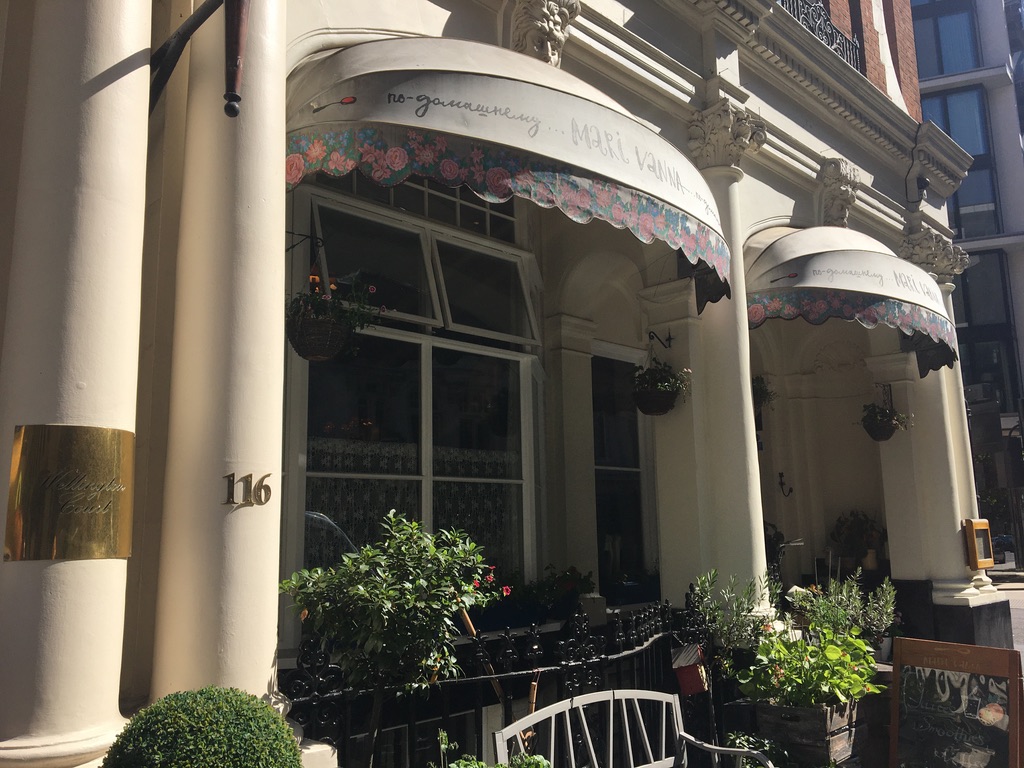
(Pictured today is Mari Vanna’s – branches in Moscow, St Petersburg and New York – which offers Russian food for a modest English budget. Just don’t order the Beluga at £100 a spoonful).

Maybe the Russians are lying low, given this week’s negative publicity, or maybe they fled to sunnier climes months ago to escape the virus. Then I remembered one of the younger set telling Tatler that most fashionable Russians go to the Tuscan seaside town of Forte dei Marmi every summer.

So the walk to Londongrad was a bit like going back to the old Soviet era, when you never met a Russian in London, apart from the odd “diplomat” or “journalist”, because the mass of the Russian population just didn’t get out much.

In my old Associated Press days in the seventies, there was a young Russian who would splash the cash at the Hoop and Grapes, just round the corner from Fleet Street. He favoured English tweed and corduroy and said he worked for the Soviet news agency Tass.

MI5 tried to warn us off, saying he was a spy. Er, thanks, we’d sort of worked that out.

Did the spooks really think us hacks would sell out our country for a measly pint of beer? Now, if he’d had 130,000 smackers behind the bar and the VIP slot at Annabel’s…

Passport to Pimlico: central, continental, but beware of MPs

SO I’m strolling near the corner of Warwick Way in Pimlico, minding my own business, when who bounds out of a shop and almost runs into me but former Tory grandee Michael Fallon, besuited, maskless and wearing a satisfied grin.

And who can blame him? The former defence minister bailed out before last December’s election and went into the oil business, thereby avoiding any association with the Johnson government’s coronavirus car crash.

Sir Michael lost his minister’s hat in 2017 after being accused of “repeatedly and inappropriately” touching journalist Julia Hartley Brewer’s knee under the dinner table 15 years earlier. No comment.

His more serious crime though was to be a Remoaner, albeit a reluctant one. And, with a swivel-eyed Brexiter Tory victory looming, he sensibly decided to call it a day.

Anyway, where was I? Ah, yes. Pimlico.

You’re always in danger of running into a politico, ex or extant, in Pimlico because Parliament is only a 10 minute trot away. Estate agents punt flats in the neighbourhood as pieds-à-terre for MPs on the basis that it’s within range of Parliament’s division bell. If they get their skates on, they can just make it to the voting lobby.

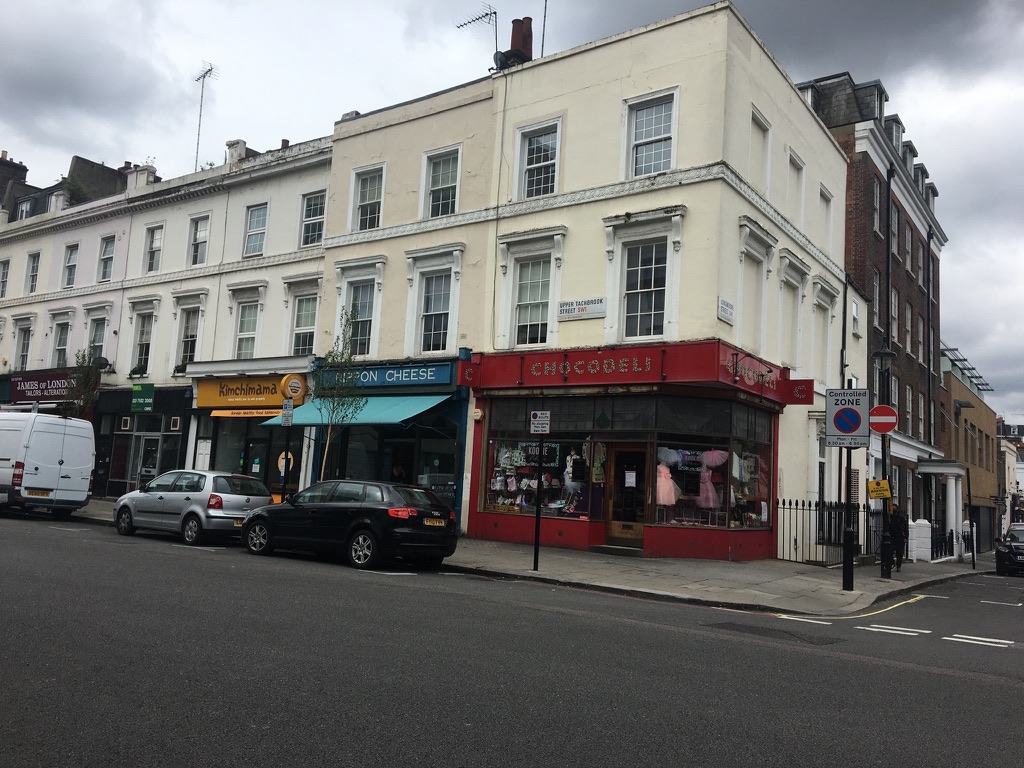
I’ve always had a soft spot for Pimlico – my grandfather had a fish shop in Tachbrook Street long before my time – although I don’t have much occasion to go there these days. It has generally been regarded as a bit of an enclave, more famous for what it’s near than for what it is.

There is nearby Westminster, of course, and Victoria Station and the fast train to Brighton at its northern edge, while a quarter hour stroll gets you to Buckingham Palace.

Even in the gloomy fifties it had a certain cosmopolitan charm, stirring seductive thoughts of a then distant Europe and all that exotic foreign stuff like café au lait and spaghetti and flamenco.

That image was perhaps in part a hangover from the 1949 Ealing comedy “Passport to Pimlico” in which the fictional rationbook-era locals discover an ancient charter proving they’re actually part of the Duchy of Burgundy.

In the film, a Pimlico woman shouts from her window: “We’ll always be English and that’s why we’re sticking up for our right to be Burgundian.” It sounds like a pro-EU slogan avant la lettre.

The district was mainly marshland and market gardens until the 1820s when Thomas Cubitt was hired to develop the area with handsome stucco terraces and squares. For most of the 19th century it was home to the “better sort”, middle class families and aspirant tradespeople.

By the middle of the 20th, however, it had gone downhill somewhat and became a convenient spot for the peers and plutocrats of the more affluent Belgravia and Mayfair to park their live-out servants.

I had an aunt who was what in those days was called a lady’s maid. She ministered to the needs of the wife of a captain of industry known to everyone as “the Colonel”.

As part of her wages she was given a rent-free floor in Pimlico’s elegant St George’s Square, the only square in London that is bordered by the river. These days the flat would fetch somewhere north of a million.

Her generous employers took my aunt and uncle to Monaco in 1956 for the wedding of Prince Rainier and Grace Kelly. Well, someone had to be on hand to iron the colonel’s wife’s frock.

I would often spend the weekend at St George’s Square and sometimes hung out with the family of “Uncle” Ernie the bookmaker who had a basement flat in Pimlico’s more proletarian Denbigh Street.

In the era before betting shops, gambling was a semi-clandestine world of bookies’ runners and betting slips passed in pubs. A visitor at Ernie’s once took us kids out to the yard to discreetly show off the handgun he was packing.

The neighbourhood has gone back upmarket in recent years. But the small shops and food stalls have survived and, like much of central London, it’s now more cosmopolitan than ever. The Pimlico Academy even offers flamenco classes.

Strolling homewards through Parliament Square, I spotted that anti-Brexit campaigner with the bowler hat who’s been hanging out there for the past four years. He and a line of bored looking police were preparing for the latest demo.

Someone had strung a banner on the railings of Parliament. “Self-serving idiots are destroying our nation,” it read. I couldn’t help thinking: “You’re well out of it, Michael Fallon.”

South East London noir: farewell to a screen pioneer

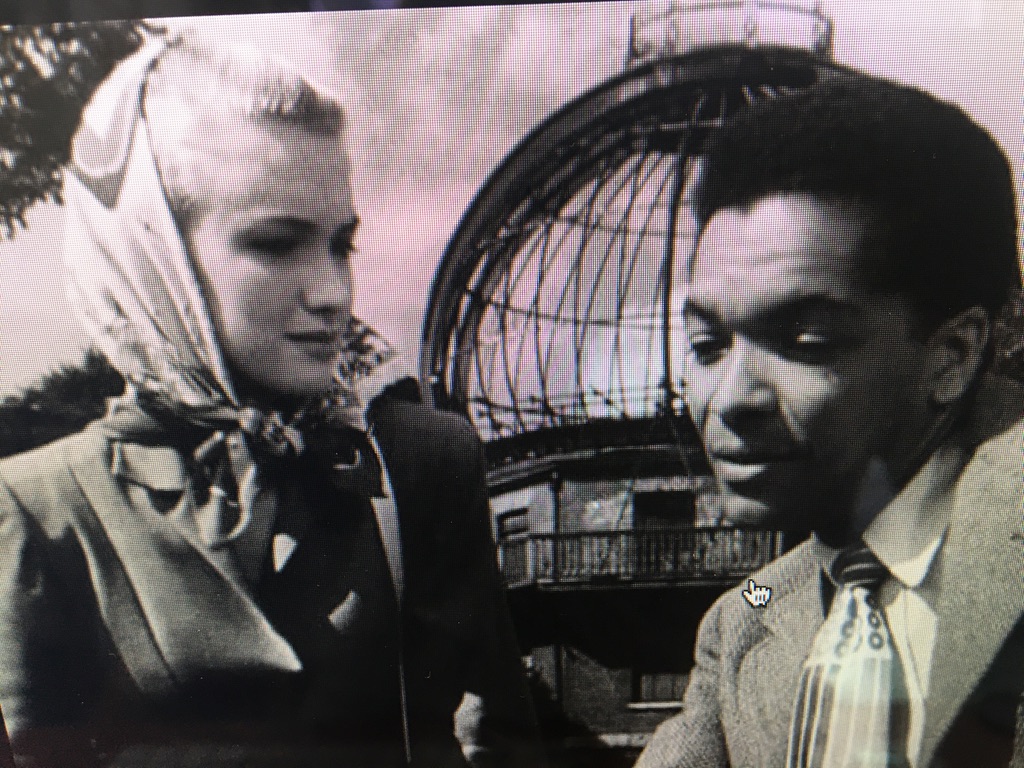
EARL Cameron, the Bermudan-born actor who starred in the 1951 film The Pool of London, died peacefully at home this week at the impressive age of 102.

His leading role as a Jamaican merchant sailor on a weekend of shore leave was a first for a black actor in British cinema. So too was his tentative screen romance with a white woman, played by Susan Shaw.

You could say, however, that his real co-star was south east London, which provides the backdrop to what is essentially a routine London noir about a jewel heist gone wrong.

Filmgoers used to having their weekly diet of romance or drama set in a Mayfair drawing room or an English country house were instead treated to a crime story made largely on location at the wharves in Bermondsey and at the Borough, Camberwell and Greenwich.

There are scenes set in Borough Market and Southwark Cathedral.

One of Cameron’s shipmates even jumps on a tram that will take him to New Cross, although either the budget or the plot precluded filming that far into the south east hinterland.

The Pool is still worth watching for its its critique of contemporary racial attitudes but also for its snapshot of a changing London emerging from the post-war grime with many of its habits and social mores still intact.

Some scenes are set at the Camberwell Palace of Varieties, an old fashioned music hall where in those days boys were still employed to set out the limelight lamps ahead of an evening of songs, jokes and acrobatics.

Within five years, the Palace had shut down and soon afterwards its ornate interior was demolished.

As for the trams, one character remarks that they too will soon be scrapped.

Much of the action takes place around the south bank of the pool of London where The Dunbar has moored after its voyage from Rotterdam. The crew prepares for a night ashore by stuffing their pockets with innocent bits of contraband, pocket watches and nylon stockings, to sneak past the customs men.

The Scottish chief engineer, played by the sonorous James Robertson Justice, opts to stay on board with a couple of bottles of brandy for company. Of London, he says: “Walk within the shadow of its walls and what do you find, filth and misery.”

On a boat trip to Greenwich, Cameron’s character, Johnny, explains the significance of longditude to his wide-eyed new girlfriend and reflects on the problems of race. “You wonder why one man’s born white and another not,” he muses. “It matters. Maybe one day it won’t.”

Perhaps we haven’t got there yet, as Cameron himself reflected in old age.

Having acted on the stage after arriving in Britain in 1939, The Pool of London was his screen breakthrough. He went on to win prominent parts in cinema and television for the rest of his career, including a supporting role in the Bond film Thunderball.

“Unless it was specified that this was a part for a black actor, they would never consider a black actor for the part,” he recalled in a 100th birthday interview. “And they would never consider changing a white part to a black part. I got mostly small parts, and that was extremely frustrating – not just for me but for other black actors.”

His breakthrough 1951 film highlights the prevailing prejudices, just a couple of years after the arrival of the Empire Windrush marked the start of large-scale immigration from the Caribbean. (Sadly, some members of that generation are still struggling for compensation from a government that illegally kicked them out).

“They’re all the same,” says one character as Johnny is ejected from a pub. “You must be hard up to go with him,” a unsympathetic white woman sneers at his girlfriend.

There are some jarring notes. The “nice” girls all speak with cut-glass, middle class accents while only the gangsters’ molls speak Sarf London.

Much has changed in the area in the decades since the film was made – although many would say not enough.

When Johnny asks for directions to Camberwell Green, he’s told to get the 42 bus on Tower Bridge. That’s a route that opened in 1912 and is still running to this day. At least some things in south east London never change.

Pining for the simple joys of lockdown

I AM sure I am not alone in looking back nostalgically to the halcyon days of the London lockdown.

Remember the traffic-free streets, the near deserted parks and squares, and the louder than usual twittering of the birdies in the trees? It seems an aeon ago now since the only jarring note was the insistent pitter-patter of the joggers.

Now, after a couple of hot days, lumpen London is back with a vengeance.

Early on Friday, venturing the few yards to our nearest reveller-blasted patch of grass, I was hailed by my first passive-aggressive drunk of the day.

But before we could establish a rapport, our exchange was interrupted by a hue and cry for a fat, shirtless inebriate who had grabbed someone’s phone and was staggering precariously from the scene of the crime.

The old neighbourhood’s back to normal, I reflected, and all before 9 AM!

At a nearby park, meanwhile, armed police were called out to deal with two men taking pot shots at wildlife on the lake. “It is possible one duck was killed,” Southwark Police announced, “but we are not sure yet.”

It’s understandable that everyone’s a bit stir-crazy after months of lockdown. Add to that a couple of days of heat and sunshine and the full gamut of the city’s underlying derangement is set loose.

It’s not a class thing so much as equal opportunity mayhem, although some Bermondsey locals have been muttering on social media that it’s all down to “them middle class hipsters”.

The noisy hordes that have descended on our local parks are clearly not short of a bob or two to judge by the plastic cups of half-consumed takeaway mojitos abandoned among the detritus carpeting the grass around the empty litter bins.

I’m all for everyone having a good time. But I’m not sure their dawn braying is much appreciated by the many ordinary Londoners who have been enduring weeks of genuinely sleepless nights, worrying how they’ll pay the post-lockdown rent or looking after fractious kids and grumpy grannies.

And all this before yet another of our interminable “Independence Days” on July 4 when Boris “fit as a butcher’s dog” Johnson has declared that the real post-lockdown party should begin!

Some people have inevitably tried to score political points by criticising government messaging on containing Covid, as if Johnson’s announcement of an end to “national hibernation” was somehow an invitation for us all to go outdoors.

Adherence to the lockdown had, in any case, already been in decline since Dom “the dodger” Cummings’ dash to Durham was exposed.

But, if you’re worried about more high jinks on the 4th – the police certainly are – I recommend retreating to the City, the still eye of any bacchanalian London storm. There’s nothing to do and few people live there, so it’s slim pickings for those who like to annoy the locals by yelling in the early hours or vomiting in the street.

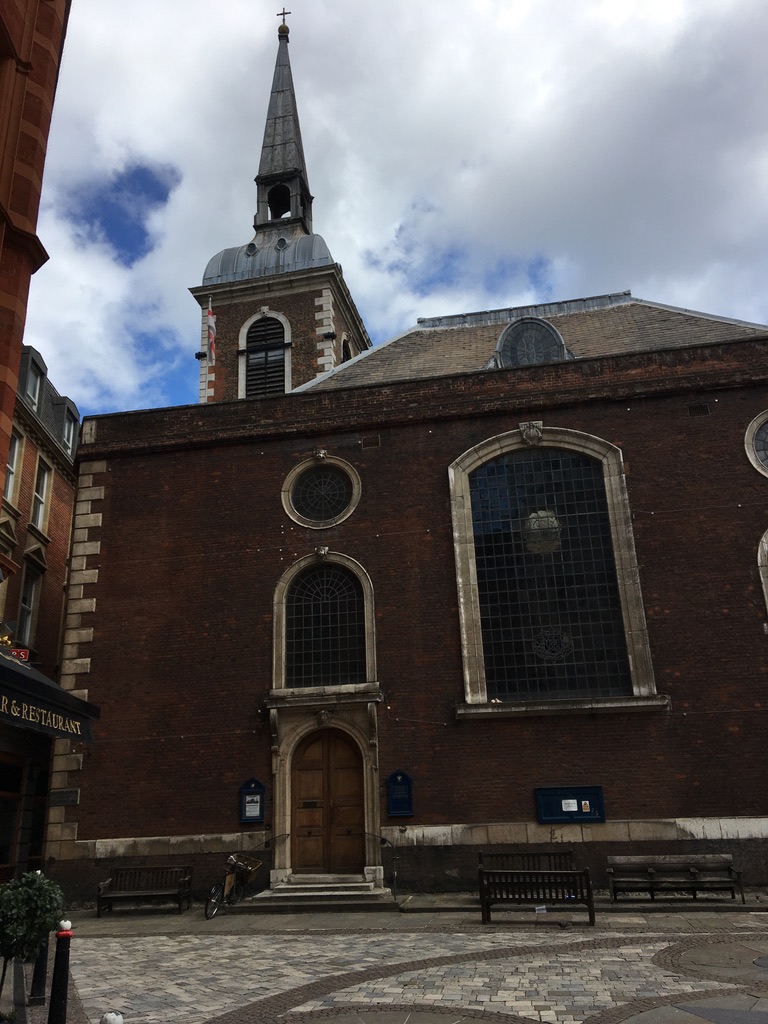
I hung out in the square on Abchurch Lane this morning. As you can see: empty.

The City and its outskirts were not always so quiet, and the noisy gangs of litter-strewing tossers who have been keeping us awake all week are not a new phenomenon in a historically riot-prone and disorderly London.

Writing about a pre-Lent pissup in 1617, the contemporary commentator John Chamberlain wrote:

“The ‘prentices, or rather the unruly people of the suburbs, played their parts in divers places, as Finsbury Fields, about Wapping, by St Catherine’s, and in Lincoln’s Inn Fields, in pulling down of houses, and beating of guards that were set to keep rule.”

Happy Independence Day, and see you down the pub!

City Hall: The sad demise of municipal London

SADIQ Khan has said he wants to plug a post-Covid hole in London’s budget by moving City Hall from the riverside opposite the Tower to the middle of nowhere.

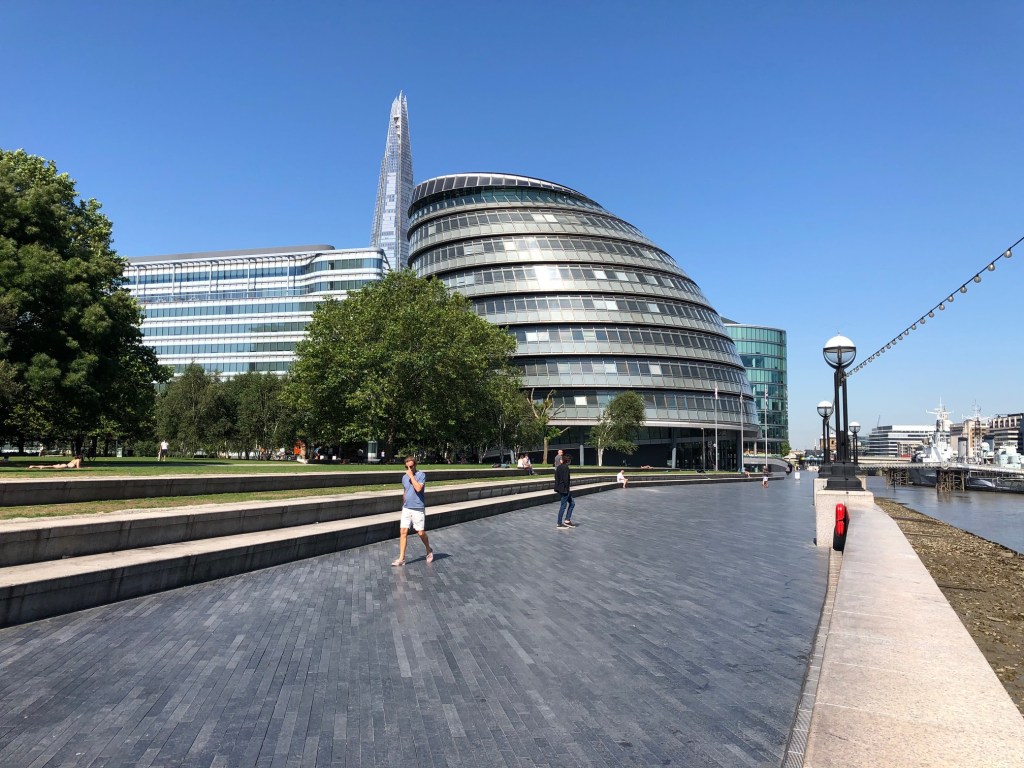
The London mayor seems a decent enough bloke. You sometimes see him scurrying towards the Norman Foster-designed bubble that has housed the Greater London Authority since it opened in 2002.

He has worked out that over the next five years the cash-strapped GLA could save £55 million it pays to its Kuwaiti-owned landlords if it decamps eastwards to Newham.

Now, just think about that for a minute. The government of one of the world’s richest and most international cities has got to move out of the centre because it can’t afford the rent!

And to Newham, for God’s sake! When the much more powerful London County Council called the shots, until it was disbanded in 1965, the site of Khan’s proposed alternative City Hall premises in the Royal Docks was still technically in bloody Essex!

The planners dithered for years over what to do with the stretch of post-industrial wasteland south of the Thames between Tower Bridge and London Bridge. They eventually settled on the banal modern urban planning solution of privately-funded corporate office blocks and luxury flats.

The saving grace was City Hall, together with the open-air theatre, the Scoop, alongside it. The developers built City Hall for £43 million, or £12 million LESS than Sadiq is now hoping to save in rent.

Heralded at its inception as “a new landmark for the capital”, City Hall was neverthelss a bit of a climbdown from the glory days of County Hall, the Edwardian Baroque edifice on the South Bank near Waterloo.

As headquarters of the LCC and its successor, the Greater London Council, it dominated every aspect of London life from education to housing, from public transport to the fire brigade, barely tipping its hat to Parliament on the opposite bank.

Teachers told us kids that it had six miles of corridors, although I’m not sure anyone ever walked them all to check.

It was abandoned after big-spending council leader Ken Livingstone’s frequent run-ins with Margaret Thatcher during which the PM complained of the anti-government billboards that were posted on County Hall’s facade.

She scrapped the Council in 1986 and its powers reverted to central government and local boroughs. The building was sold off to become part-hotel, part-aquarium.

The GLA was formally established in 2000, with the troublesome Livingstone back in the chair until 2008, when he was unseated by Boris Johnson. The rest is history.

Johnson bequeathed us “Boris” bikes (they’d been Ken’s idea) and a bunch of pet projects that never went ahead, except for his one to become prime minister.

Municipal London is essentially dead. It relies on stingy, controlling and centralising governments at Westminster for additional funds. Its elected but now essentially advisory council has few real powers. The Mayor proposes policy and the councillors can merely try to hold him to account.

The GLA doesn’t directly run any services, but merely presides over bodies that do. These include Transport for London, entirely funded by ticket sales, which have been virtually non-existent for the past three months. Hence Sadiq’s scramble for savings.

He can’t sell off any libraries, youth clubs or open spaces because most of those were disposed of years ago.

So he says he’s got no choice but to move out of the jewel in the crown. What will City Hall become? Another corporate office? Just what we need.

I am personally prepared to do a deal with Khan. I’ll drop my opposition to the City Hall move, if he reinstates the RV1 bus.

This nifty single-decker, linking the south bank of the Thames from Tower Bridge across to Covent Garden, was my favourite route until he scrapped it last year. More money-saving, we were told.

It won’t have escaped your attention that the route sounds like “The ‘arvey One.” I was devastated when it disappeared and suddenly realised how the Queen must have felt when they beached the Royal Yacht Britannia.