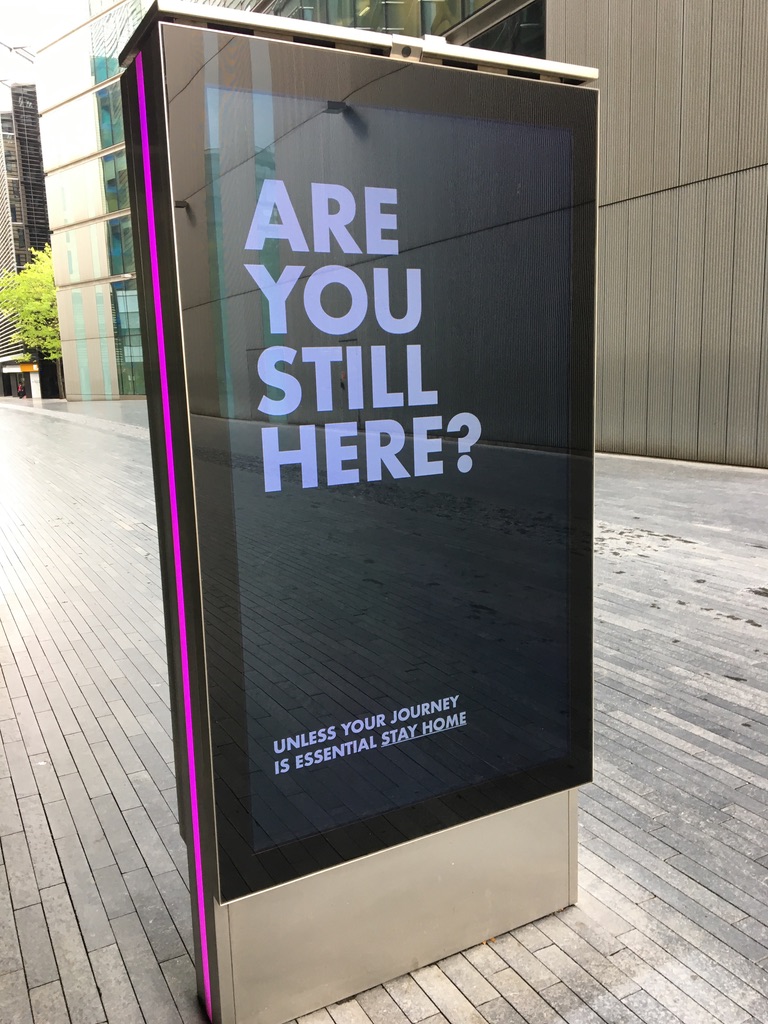
Waterloo Bridge: Lady welders, topless demos, Monet and the Kinks

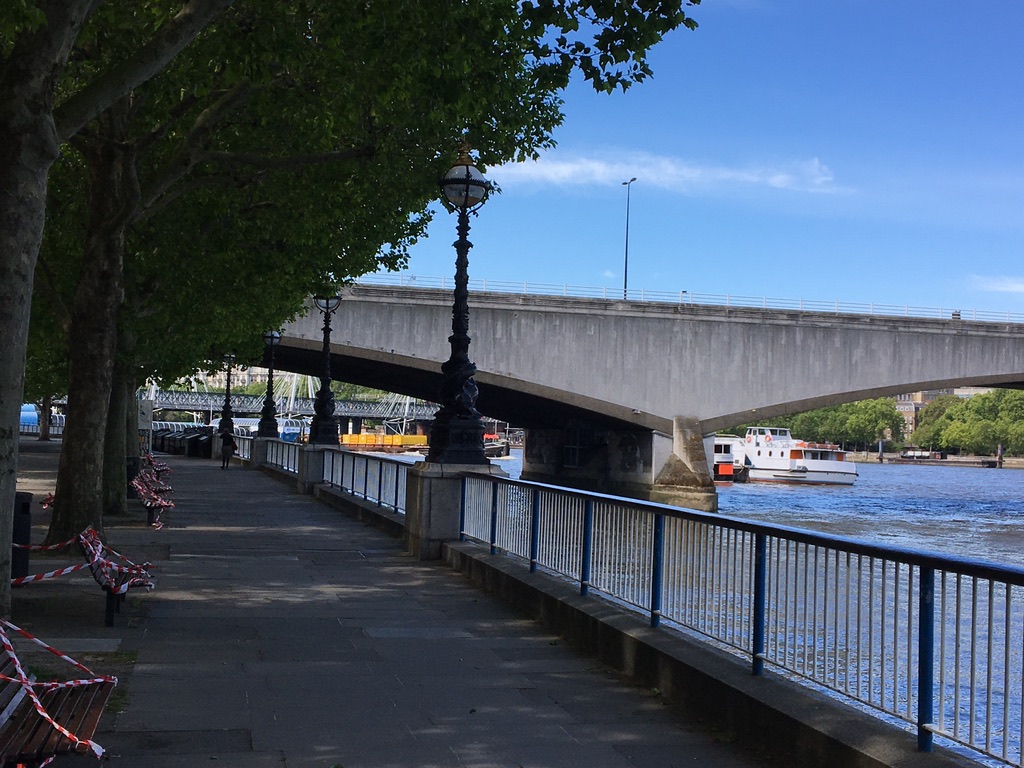
WATERLOO Bridge, or at least its current incarnation, is also known as the Women’s Bridge. It used to be called the Ladies’ Bridge, but times change.

In the 1930s, the London County Council decided to replace the original bridge that connected Lambeth in the south to the Strand and Covent Garden on the north side of the Thames. It had opened in 1817, two years after the Battle of Waterloo, hence the name.

The 30s’ project was interrupted by the war, although the half-finished replacement was officially opened in 1942.

It was not completed, however, until 1945 and largely thanks to a predominantly female workforce. Just as women took over jobs in factories and farms to replace men bound for the front, so they picked up their tools to finish the bridge.

Their reward came at the opening ceremony in December, 1945 when the Labour deputy prime minister Herbert Morrison declared that “the men that built Waterloo Bridge are fortunate men”. Well done, ladies!

Despite this initial slight, the contribution of the women has since been recognised, although promises to erect a commemorative Blue Plaque have yet to be fulfilled.

The men in this story always claimed the women weren’t deliberately ignored. It was just that the firm that built the bridge went bust and its employment records were lost. Photographs of the women bridge builders only surfaced in the last few years, proving the Ladies’ Bridge story wasn’t just a fairy tale.

Since then, some have wistfully suggested that their role is reflected in the bridge’s elegant feminine arches. Pretty fanciful, given that the plan was drawn up by Sir Giles Gilbert Scott, designer of London’s traditional but now mostly redundant red telephone boxes.

Women do appear to have a special affinity for the bridge. A group of them beat the lockdown by a couple of weeks to get their kit off for an Extinction Rebellion protest on International Women’s Day in March.

The charm of the bridge, however, is not so much the occasional topless demo as is its location, a favourite of painters and poets, from Monet to Constable, to Thomas Hood and Ray Davies of the Kinks.

Its location on a southward turn up the Thames means you can see St Paul’s and the skyscrapers of the City to the East, Parliament to the west, and much else in between.

Davies and I belong to that immediate post-war generation that just about remembers when the modern Festival Hall complex replaced the wasteland to the south to mark the 1951 Festival of Britain. It was the moment dreary London went from black-and-white to colour.

As the Kinks sang in Waterloo Sunset:

Dirty old river, must you keep rolling
Flowing into the night?
People so busy, make me feel dizzy
Taxi light shines so bright
But I don’t need no friends
As long as I gaze on
Waterloo sunset
I am in paradise

Footnote: There! I did it! A whole column under lockdown without mentioning the C-word. That’s partly in response to the complaints of some readers that I’ve been using these pages selectively to quote experts to undermine the government’s flawless response to the C-crisis or to suggest its messaging to the public might have been completely crap.

On the contrary, I admire the agility with which Johnson’s team have kept us all locked up while blaming any inconvenience on the nanny-statists. I particularly admire the government’s decision to allow cyclists to join joggers as a protected cohort that is no longer required to abide by social-distancing rules. Or that’s how it seemed today, anyway.

So, long live freedom! And keep the wrinklies indoors!
Cable Street: Banning stuff can set you free

CABLE STREET is on the edge of the once very working class and very Jewish East End, site of a memorable battle in which fascism was defeated three years before the outbreak of World War II.

The Battle of Cable Street pitted an alliance of locals, workers, Socialists and Jews – some would have ticked all four boxes – against the British Union of Fascists, a rag-tag army of fanatics and thugs led by Oswald Mosley.

They were an army only in the sense that they got to dress up. It was collarless black shirts for the rank and file, with the addition of riding britches, jackboots and peaked caps for Sir Oswald and his officers.

Most of the fighting on that October day was between the anti-fascists and the police, who had been sent in to protect Mosley’s blackshirts. The government had rejected a petition by locals to ban them from marching through the East End.

Some 20,000 anti-fascists manned barricades and used sticks, bottles, rocks and even rotten vegetables to block around 6,000 police and the 2,000 or so blackshirts sheltering behind them.

Mosley eventually abandoned his march, ostensibly to prevent further bloodshed. That doesn’t sound very übermenschlich, does it?

It was a technical knockout in favour of the anti-fascists. But the brilliant killer blow came in the following month, November 1936, when parliament outlawed the wearing of uniforms by political groups in response to the Cable Street battle.

It knocked the stuffing out of Mosley’s movement. After all, half the attraction of fascism is presumably the uniform. The movement went into decline from its peak of 50,000 members and was banned in 1940 after the war had already started. Mosley was interned.

There’s anecdotal evidence that some who donned the black shirt weren’t even political. In one confrontation, my friend’s docker father ran up against a workmate who was wearing the full black kit plus a thick belt lined with razor blades. “What the fuck you doin’ ‘ere?” says docker Harry as he aims a punch. “Cos they pay good money, pal!” says the other.

The Public Order Bill 1936 went through Parliament with little opposition. But even some who voted for it were uneasy. Lord Snell echoed the unease of many when he told the upper house: “It may mark the beginning of the end of our dearly cherished political liberties.”

The overwhelming view, however, was that fascism and its uniforms were disagreeable foreign imports that Britain could well do without.

The overall message from Parliament was that Mosley and his thugs could not argue that they had the freedom to do what they liked, including wear paramilitary uniforms, if their main purpose was to stamp on other people’s freedom through violence and intimidation.

Maybe someone should tell that to the anti-lockdown loons in the US who have marched into state capitols with automatic weapons to get their point across.

It is a constant refrain of these and other modern far-right groups that they are standing up for freedom. In reality, they’re talking about their freedom to do exactly what they like: abuse and intimidate immigrants, women, gays.

At the slightly milder end of the right-wing spectrum are those who constantly bang on about “political correctness/health and safety gone mad” or about imaginery campaigns by elites to silence them. If only!

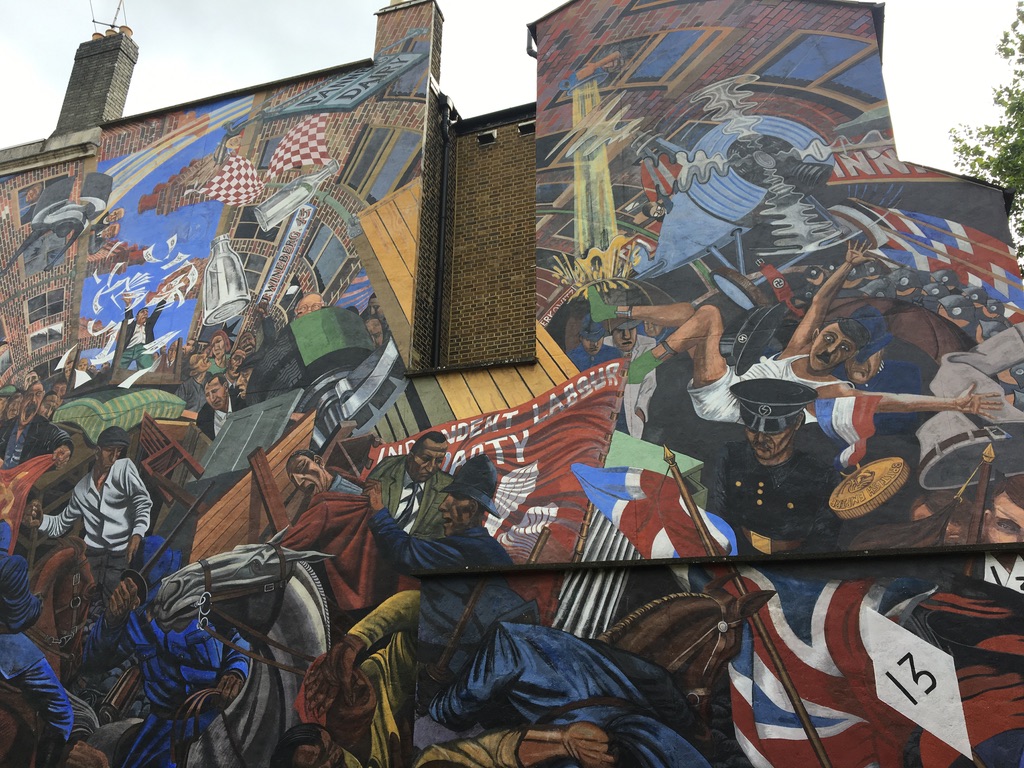
Back in Cable Street, the only memento of the famous battle is a large mural on the side of the old town hall. Completed in 1993 to commemorate the event, it’s frequently vandalised. But then so are other parts of the neighbourhood.

And what of Mosley? He was preening product of the upper classes – the black shirt was based on his fencing gear. He was a Labour Party renegade who came to adulate Hitler and Mussolini.

He was released in 1943 and spent most of the rest of his life abroad. In the 1950s he came back to lead the Union Movement, an ostensibly pan-European group that served as a front for incitement against new generations of immigrants.

A pathetic bunch of them held what they laughingly called a torchlight parade that marched past our shop in New Cross in the late-50s. There weren’t many of them and, because the law’s still in place, they weren’t in uniform.

My dad, who’d spent six years fighting actual fascists, said: “Just ignore them.” But I couldn’t resist popping out and spitting in their direction anyway.

Post-lockdown: Chaucer was there

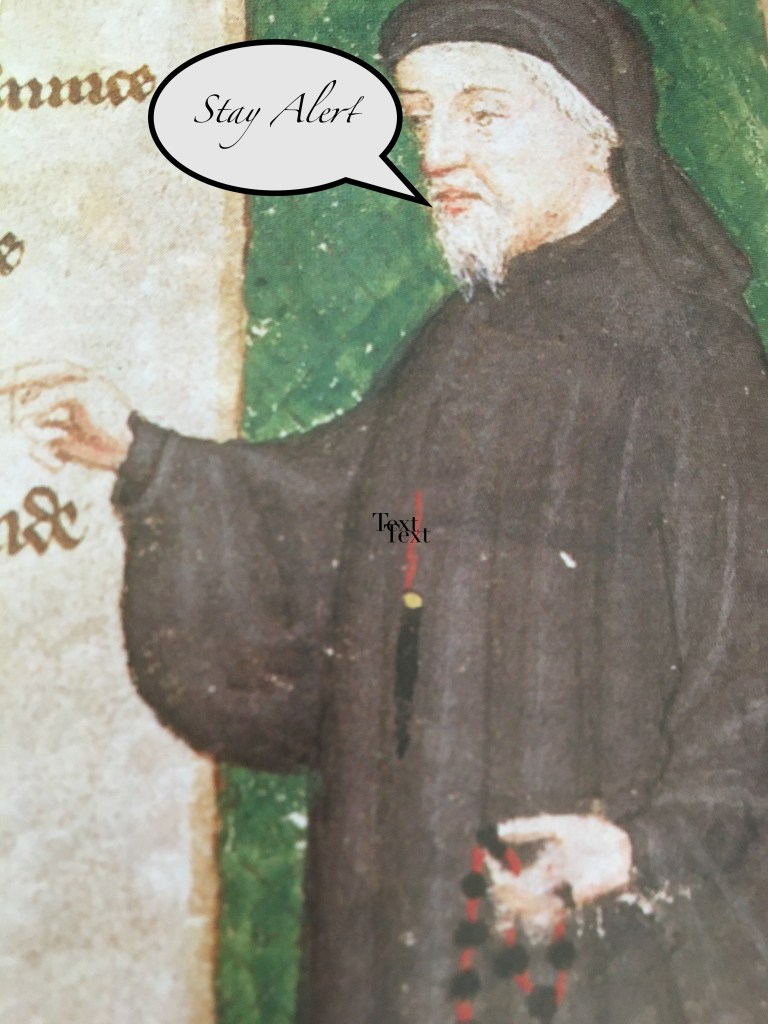
IN the spirit of the latest government coronavirus advice, I have decided to rename this column Alert Thoughts on London Walks.

It seems appropriate now that vigilance has replaced enforced idleness as the watchword of the day.

Unfortunately, due to unforseen technical issues, full details of the rebranding will not be available for several days. I do not apologise for any confusion.

In the meantime, it was with more than the usual alertness that I set off to the site of Geoffrey Chaucer’s Tabard Inn and to reflect on how the poet and his fellow medievals coped with pandemic in an age before they had a Johnson.

There’s nothing left of Chaucer’s pub in the narrow cul-de-sac of Talbot Yard. The last remnants were knocked down in 1873.

In 1386, however, when Chaucer set off from there to Canterbury with his 29-strong band of pilgrims:

The rooms and stables of the inn were wide:
They made us easy, all was of the best.

He and his companions could have told you a thing or two about the effect of viruses, even if they didn’t know what they were at the time.

They had not long before survived the mid-century Black Death, the most fatal pandemic the world has ever seen and one that changed the course of its history. B&Bs like the Tabard had then been under lockdown.

Chaucer, son of a London vintner from just across the river in Upper Thames Street, was a child when the bubonic plague hit England, eventually killing a third to a half of the city’s population.

But the memory was still very much alive when, as an adult, he penned The Canterbury Tales. In The Pardoner’s Tale, three young sinners go on the rampage to try and kill Death because the plague has taken the life of one of their friends.

It was a time when quack cures were just as prevalent as they are today. But, as intravenous shots of disinfectant were not available, the Middle Ages made do with chopped snake or arsenic.

Plague doctors would visit suspected cases and impose self-isolation on affected families or pack them off to plague hospitals. Social distancing was not a problem as everyone assumed they would catch the plague if they came near a sufferer.

King Edward III was no slouch in a crisis. He arranged the digging of plague pits and ordered the streets of London to be cleaned because they were “foul with human faeces, and the air of the city poisoned to the great danger of men passing, especially in this time of infectious disease”.

In the days before video links, Parliament had to be prorogued in 1349, since “the plague and deadly pestilence had suddenly broken out in the said place and the neighbourhood,” according to a contemporary, “and daily increased in severity so that grave fears were entertained for the safety of those coming here at the time.”

You can just imagine those medieval MPs complaining that, as a consequence, they had no opportunity to debate an eventual relaxation of the lockdown. Who says history doesn’t repeat itself?

Government preparations: They’ve got no defence

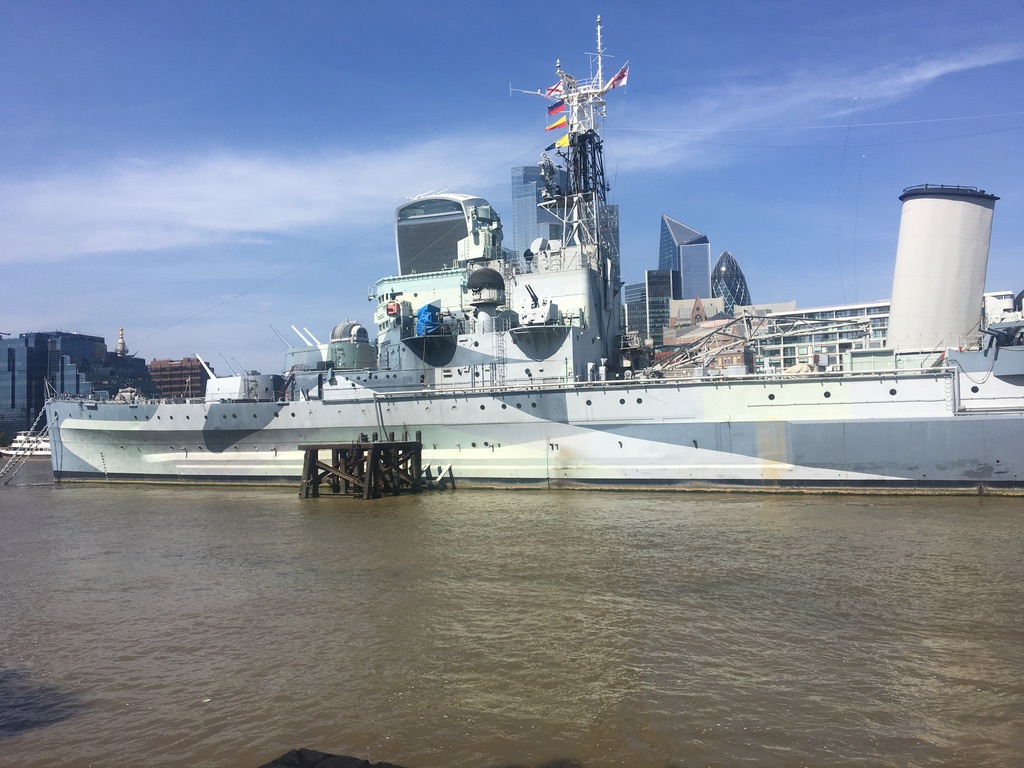
THE forward guns of the HMS Belfast in the Pool of London are permanently trained on the motorway services at Scratchwood, which means that if the enemy attacked via the M1 and stopped for fuel the war could be over in seconds.

But they might not come by road. They might come by air, in which case the Min of Def could deploy its brand new aircraft carrier HMS Queen Elizabeth. But not before 2021 because it hasn’t got any actual aircraft yet. The reason? Budget cuts.

And forget the army. Recruitment is down 30 per cent in some regiments and it turns out one in ten of those who have joined up are too fat to fight.

Now, no one wants us spending squillions on defence. Like Oliver Twist, the generals and the admirals will always ask for more. And maybe we don’t even need an aircraft carrier anyway.

But, given the government’s woeful lack of preparation for what was regarded as the country’s biggest security threat – a lethal pandemic – it does make you wonder how they would cope with a different sort of existential challenge.

Which didn’t stop them shamelessly exploiting the VE Day anniversary with characteristic jingoism.

How was it for you? I spent the day behind the sofa for fear that Boris Johnson would pop up on the telly to remind us that the wartime spirit of sacrifice and endeavour must now be deployed “in a new struggle against the coronavirus”. Which, inevitably, was exactly what he did.

As yesterday was the 75th the government awarded us a bank holiday, just what we needed when many of us are idling at home anyway.

Don’t get me wrong. I wouldn’t deny the remaining veterans like Captain Tom Moore their day of national gratitude and glory. But the “We’ll meet again” sentimentality is sometimes a bit over the top.

Happily, I was inoculated against militarism from birth by my ex-commando dad who used to say he’d never seen a sub-machine gun until he got back from Dunkirk, except, of course, for the ones the German soldiers had.

So much for “Be Prepared”. Subsequent generations of soldiers have had similar experiences, turning up at distant battlefronts without the right body armour or with the wrong gas mask. Apparently, the US military regard their Brit comrades as a breed of scroungers, always on the cadge for some bit of missing kit.

That said, I’ve always found them a cheerful bunch and highly efficient in difficult circumstances, as they are now in trying to sort out the government’s NHS supply cock-ups.

Maybe they deserve a bit less flag-waving and a bit more support from above. It’s the same with the nurses and care workers. There’s no point elevating them to the status of national heroes if you won’t pay them enough or buy them the right protective equipment – until it’s too late.

It’s no surprise that Johnson has gone full Churchillian in the current crisis – The Guardian said the country’s now run by a Churchill tribute act – but frankly it’s wearing a bit thin.

I’m just waiting for him to go on TV tomorrow to announce a relaxation of the lockdown and to tell us: “Now this is not the end. It is not even the beginning of the end. But it is, perhaps, the end of the beginning.”

I’m taking bets.

A letter from the editor: Mea Culpa

DEAR Reader,

I regret to inform you that I am considering my position at Idle Thoughts on London Walks after it was revealed I had an old mate over for a morning coffee this week in violation of the government’s strict social-distancing measures.

It is little defence that, unlike at the now infamous tryst between Professor “Lockdown”, Neil Ferguson, and his married lover, there was no touching.

At this time of national crisis, it is vital that we influential thought-leaders, as much as boffins like Ferguson, should avoid the charge of hypocrisy.

The prof has now fallen on his sword, quitting his role on the government’s SAGE committee, presumably in order to spend more time with someone else’s family.

The Daily Telegraph which broke the story sealed Ferguson’s fate when it revealed that the woman in question was a left-wing activist who lives in a £1.9 million house.

It is fair to say that The Telegraph has not been the biggest fan of lockdown, even though many of its aged readership already live in permanent self-isolation.

Ditto at The Sun, which opined that Ferguson’s “bombshell” research predicting that deaths could overwhelm the NHS was a “hammer blow” to the government’s initial hopes of building “herd immunity”.

None of this absolves me of my crime of taking pity on a frail, pensioner friend as he passed my home this week. Unlike Ferguson’s paramour, the only modest comfort I could offer was a hot drink (milk, no sugar).

But who will cast the first stone? How many of YOU have broken the rules, perhaps ignoring the six-foot requirement at the supermarket to grab the last packet of pasta, or illegally sitting down on a park bench?

So, watch this space. As I contemplate my future, I may resolve to just hang my head in shame as I continue to fulfill the critical function of this column.

The Editor

Religion: Armageddon outta here!

As I was walking by St Paul’s
The vicar grabbed me by the balls

THE traditional children’s nursery rhyme not only celebrates the Anglican Church’s legacy of clerical pederasty, it also evokes the more innocent pleasure of a stroll past Christopher Wren’s English Baroque masterpiece.

The Diocese of London’s “mother church” sits atop Ludgate Hill on which the Romans earlier erected a temple to Diana, goddess of chastity (ball-grabbing vicars, please note).

Wren took a lot of flak for his plan to replace the cathedral tower destroyed in the Great Fire of 1666 with a foreign-looking dome. Some protestant worthies claimed it smacked of Papist devilry.

This year, the poor old C of E has been having a bit of a rough ride.

The ruling Synod finally decided in February that it should pay compensation to children and vulnerable adults who had suffered sexual abuse at the hands of the clergy and its associated God-botherers. There were 3,287 cases in 2017 alone.

The Synod’s Bishop Jonathan Gibbs told his fellow divines: “It will mean money, serious money, and we will need to work out how we’re going to fund that.”

Then, along came Covid-19 and trashed Easter, a time when the Church can usually count on raising an extra bob or two via the collection plate.

Perhaps the C of E could top up the kitty by emulating the enterprising revivalist “bishop” who is selling bottles of oil and red yam to his South London parishioners at £91 a shot, with the assurance it will protect them from coronavirus.

You would think that Armageddon would be a busy time for organised religion. But with churches, mosques and synagogues shuttered, you could be forgiven for thinking religion has been marginalised in the present crisis.

It turns out, however, that a growing number of people are turning to it in lockdown. Downloads of Bible apps shot up by two million in March, the same month that Koran downloads hit a record high. Britain’s top online Christian bookstore reported a 55 percent rise in Bible sales in April.

Will this apparent revival outlast the crisis or will these foul-weather converts return to their godless ways once it’s all over?

“What if, after the lockdown is lifted, the pews remain empty?” the Catholic News Agency’s Luke Coppen asked in The Spectator. “Some sociologists believe that coronavirus is a dire threat to western Christianity. They predict that the disease will speed up the already fast drop in churchgoing.”

The canny C of E has long made up for declining numbers of churchgoers by charging tourists to visit its more notable sights. Salvation doesn’t come cheap at St Paul’s, for example, where visitors pay a whopping 20 quid entrance fee.

Business is nevertheless so brisk that the cathedral is planning to open a swish new visitors’ entrance in August, virus permitting.

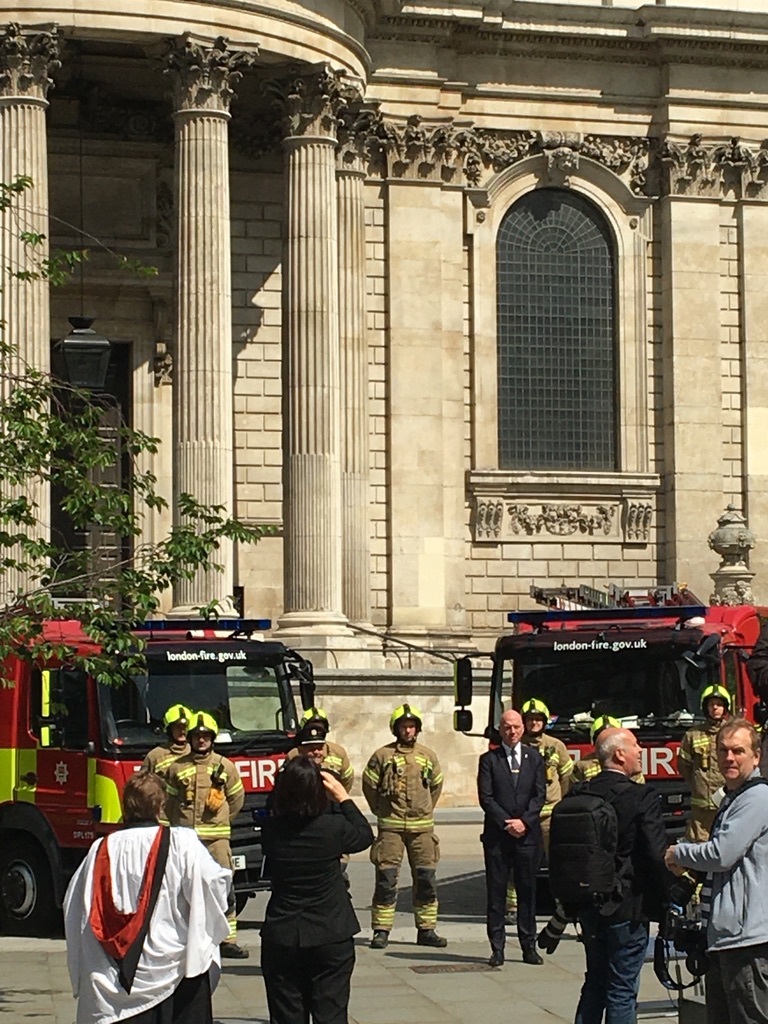
I thought I’d find the area deserted when I strolled up there this week. Not a bit of it. There were two fire engines, a serried rank of firefighters, several men in suits, a gaggle of photographers and a lady vicar (see today’s pic).

They’d turned out to lay a wreath at the monument to London’s wartime firefighters.

Not even social-distancing advice can prevent us Brits from glorifying World War II, particularly with VE Day approaching. Maybe that’s our true religion, right behind the National Health.

Wrinkly rebellion: Let my people go!

I GOT carded today.

When the guy in the corner shop demanded ID, I told him I only had my old age pensioner’s Freedom Pass. “That’ll do,” he said. “I just wanna check you’re not too old to buy cigarettes.”

He must have been only half-joking since he finally surrendered the 20 Silk Cut at the lockdown price of only £13 and change.

Three cheers, then, for the British Medical Association, which has come to the rescue of us over-70s by warning Boris Johnson’s government not to discriminate against wrinklies as it scales back the lockdown measures.

The threat to single us out was splashed in the Sunday Times, much to the annoyance of boy health minister Matt Hancock (b.1978 – 1978!!!)

“Sad to see another factually wrong & misleading article on p1 of the Sunday Times,” he Tweeted. “The clinically vulnerable, who are advised to stay in lockdown for 12 weeks, emphatically DO NOT include all over 70s. I’ve asked for an urgent correction.”

Tell it to your granny, Mattkins! Even before the lockdown started, the government was leaking that over-70s would be ordered to stay in strict isolation for four months under ‘wartime-style’ measures.

Read you own advice, Twattcock! On the government webpage, updated on May 1, oldies are listed as a “clinically vulnerable” group. So what is it? Do we stay indoors, or do we go out?

One of the worst things about being young is having your elders telling you they know better, thanks to their years and life experience. Worse still is getting old and being preached to by the young.

They can’t wait for us to fall off the perch and yet they daily lecture us about how we can extend our mortal span by avoiding any activity that might make our dwindling days bearable.

Even those ostensibly on our side don’t always strike the right note. Eileen Burns, past president of the British Geriatrics Society, advised against isolating the healthier oldies who might not want to sacrifice “one of the precious years they have left”. Thanks, Eileen.

No one wants old people littering the streets. Most of us are unattractive and we’re all grumpy. Nevertheless, it’s a free country – so far – so let’s drop the idea you can tidy up post-lockdown Britain by forcing us to stay at home.

Our lives have already been blighted by a later generation that has never got over the fact they just missed out on the sixties. Johnson only came out in the same year as the Beatles’ Hard Day’s Night and Hancock was still in nappies when Margaret Thacher came to power.

Get over it! You won’t suddenly become cool by giving us a hard time.

They’re going to announce this week their measures for a loosening of the lockdown. They should beware, as they do so, of the prospect of a wrinkly rebellion. Johnson, you’ve been warned.

Can the City help us out? Don’t bank on it

“BANKING was conceived in iniquity and was born in sin,” according to the late Sir Josiah Stamp.

As Britain’s then second richest man and director of the Bank of England during the Great Depression, he must have known what he was talking about.

A notable cynic about the capitalist system in which he made his pile, Sir Josiah mused that, if you took away the power of banks to create money, “all the great fortunes like mine will disappear and they ought to disappear, for this would be a happier and better world to live in.”

He must have been the life and soul of the party whenever the Bank of England’s Court of Directors met.

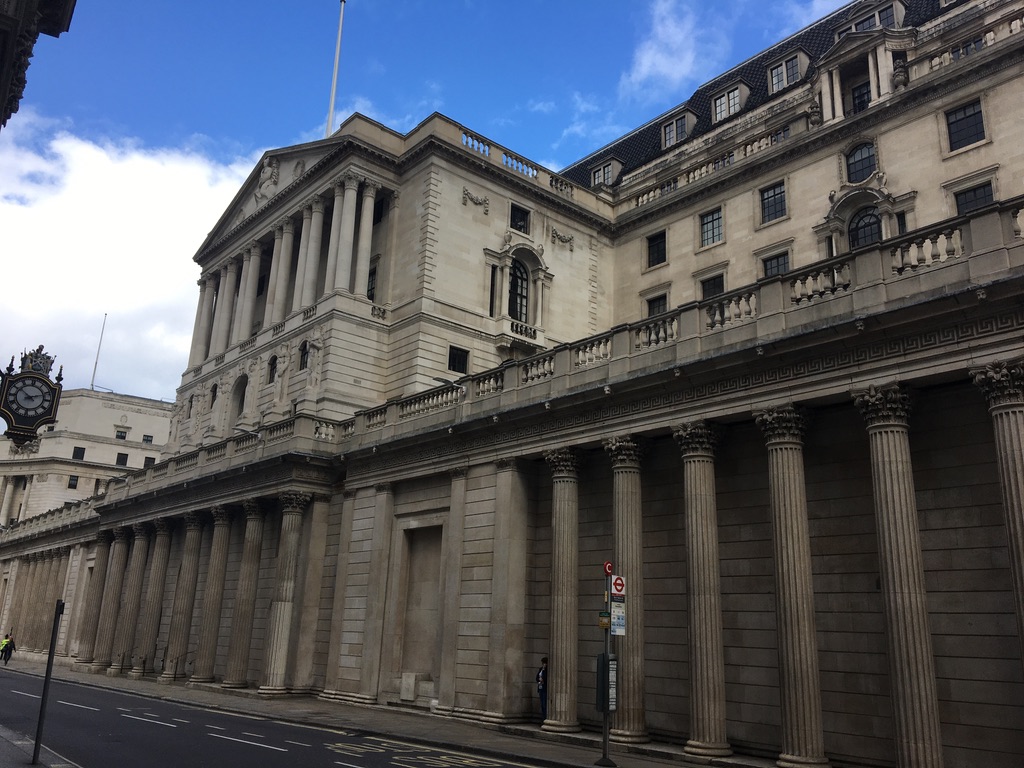
Britain’s central bank still dominates its corner of the square mile at Threadneedle Street where it has been since 1734. It was founded across the road at Walbrook in 1694.

Among the few people around today were two men from the City of London police on the lookout for dawdlers and other lockdown felons.

Not a central banker in sight. Maybe they were in the cellars printing out the wads of cash that the government is promising to dole out to keep the economy ticking over.

Bankers in general have had a bad rap since the 2008 financial crisis when the taxpayer coughed up to pay for their bad decisions and to prevent them from going to the wall.

Faced with the opportunity to redeem themselves in the present crisis, it looks like the bankers are keeping a firm grip on the dosh as the rest of the country goes to the wall. Half the state aid destined for the stricken care home sector has already been swallowed up by interest payments to lenders. It’s an ill wind…, as they say.

I first got to know the City well as a part-time messenger boy in the days when some of the City “gents” still wore top hats. They would turn up mid-morning to put in a couple of hours before heading to Sweetings for some oysters, fish pie and glass of bubbly. A nap in the afternoon and then off to the club.

That all got overturned with Margaret Thatcher’s 1983 Big Bang. The old guard were replaced by the “loadsamoney” generation of likely lads who moved into the banks and trading rooms, dropping thousands on their gold cards for a bottle of Chateau Petrus to take the edge off the coke.

The City “gent” generation they replaced was a bit of a myth. The hard graft, even in the days of jobbers and brokers, had always been in the hands of the craftiest of cockneys.

At my inner London grammar school, the teachers were told to be on the look out for bright school-leavers who might be useful at Lloyd’s. It was something to do with the City-connected Masonic mafia that ran our board of governors.

In those day, an alternative for a talented youngster was the related skill of bookies settler. The ability to calculate instantly the payout on doubles and trebles and each-way accumulators is up there with quantum mechanics.

The traders and the bookmakers’ settlers are essentially the same breed in the same business. We’ll no doubt be relying on them when the City weighs in to unscramble the economic mess left by coronavirus.

But don’t hold your breath. I’m not sure many of them share Sir Josiah Stamp’s belief in the virtues of abolishing great fortunes.

He was quite a character and would have had a thing or two to say about the flurry of sometimes conflicting facts and figures tumbling out of the daily press conferences on the government’s handling of the crisis.

In what became known as Stamp’s Law, he declared: “The government are very keen on amassing statistics. They collect them, add them, raise them to the nth power, take the cube root and prepare wonderful diagrams.

“But you must never forget that every one of these figures comes in the first instance from the chowky dar [a village watchman in India], who just puts down what he damn pleases.”

Nudge, nudge: Beware behaviourists

IT hasn’t gone unnoticed that the same Brexit-peddling politicians who told us not to trust experts are now telling us to put our faith in, er…experts.

It’s a pretty transparent wheeze. When the Johnson government is inevitably held to account over its handling of the coronavirus crisis, it can try to convince us it was the experts that got it wrong.

It depends, of course, on how you define an expert. In the present situation, most of us would think of doctors, virologists, even logisticians who know how to get the right kit to the right people.

These skills are indeed represented on the government’s semi-secret SAGE, the somewhat self-regarding acronym of the Scientific Advisory Group for Emergencies.

A drip-drip of leaks reveals, however, that its membership includes a clutch of so-called behaviourists and that they were behind much of the guidance it initially delivered.

It will have been the behaviourists who advised that the public would not accept being shut up in their homes or would rebel after a fortnight if they did.

If you’re not familiar with behaviourism, it’s a pseudo-science that starts from the standpoint that we’re all idiots who act according to our emotions rather than logic – all of us except the behaviourists themselves, presumably. It’s replaced astrology as the science of the age.

Whereas previous regimes would have used the threat of the thumb-screw or the gallows to get the public to behave, modern governments rely on the behaviourists’ subtle, subliminal messaging to get us to fall into line.

In the same way that we’ve switched from beating the pet dog as a way of training it, the behaviourists offer the prospect of a rewarding sweet to get us to do what they think is good for us.

These are the people who put “drink responsibly” labels on perfectly good bottles of gin and print pictures of diseased lungs on cigarette packets. If that doesn’t work, how about featuring an impotence sufferer contemplating a limp dick?

It is no surprise that behaviourism plays such a role in modern advertising – think of the Dan Draper character in the Mad Men series. His talent was to get people to buy stuff that they’d never known they wanted.

Needless to say, the UK government is a big fan. When the Conservatives took over in 2010 at the head of a coalition government, one of their first acts, apart from slashing all other public spending, was to splash out on a Behavioural Insights Team, the so-called Nudge Unit.

Part-privatised four years later, it is still part-owned by the Cabinet Office but has moved round the corner from 10 Downing Street where it was founded with just a seven-member team.

It now employs hundreds of staff on hundreds of projects around the world, from the US to Singapore, on the promise to “generate and apply behavioural insights to inform policy, improve public services and deliver results for citizens and society”. At least we export something.

It has come up with some real humdingers. They discovered for example that, if official questionnaires are written in plain English, people are more likely to fill them in. Similarly, if you offer a £5,000 lottery prize to encourage people to register to vote, more people are likely to do so. Who knew?

It makes you wonder how society functioned before they came along.

Sadly, they still have to cope with a recalcitrant public that insists, in the present crisis, on making up its own mind on the basis of listening to the concerns of doctors and nurses and ambulance drivers before it makes a judgment.

They question how coronavirus testing can be the right answer one day and wrong the next. They refuse to accept that the government always gets it right, as the death toll heads towards a European record.

When this is all over, let’s just hope for the government’s sake that the behaviourists can nudge the public into believing that, at the end of the day, everything that was done was all for the best.

London noir: queue here for the torture tour

THE Marshalsea.

Even the name sounds sinister, a hint of stagnant shoreline or a half-forgotten memory of Dickensian distress.

The name of what was London’s most notorious prison for 500 years from the 14th century comes, though, from the Anglo-French mareschalcie, the seat of courts and tribunals in Medieval Europe.

The jail was immortalised in three of Charles Dickens’ novels, most notably in Little Dorrit, whose heroine is born there. The author’s father had been confined to the Marshalsea when it had become principally a debtors’ prison.

The routine torture of inmates had been abandoned by then. But it was still a fetid, crowded place, even if there was beer on tap for those who could rustle up a few coppers.

Debtors they might have been, but they were required to pay rent.

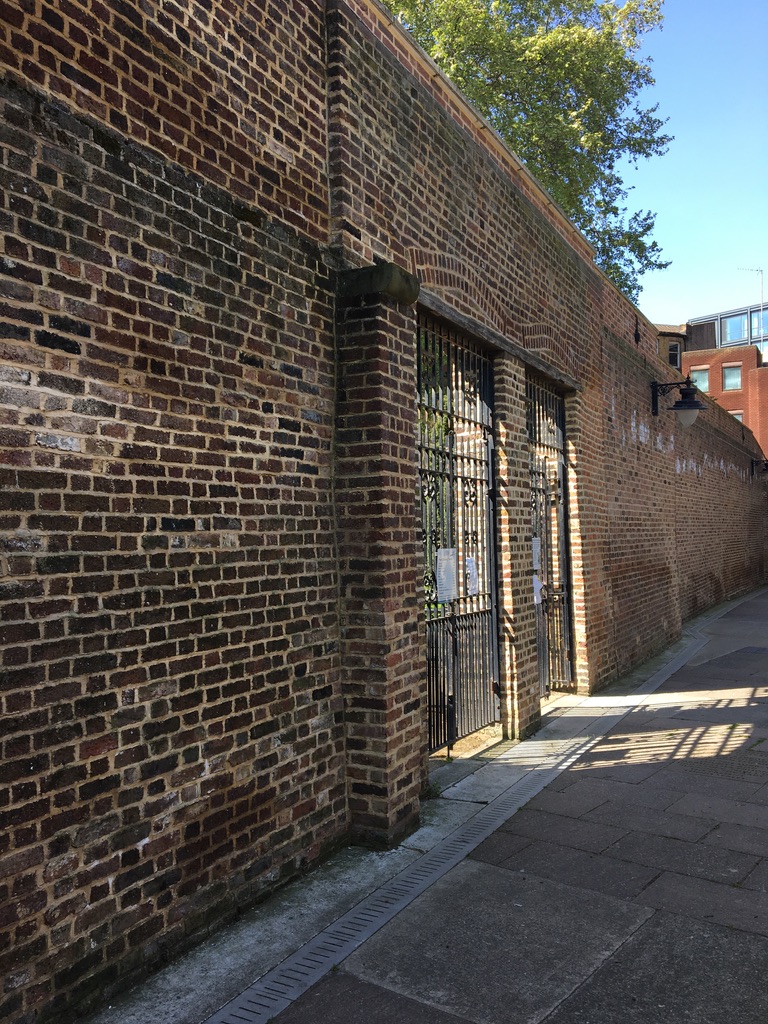
It struck me as an appropriate spot to escape briefly the confinement of lockdown London. Only one wall, with a Historic Southwark plaque, remains from the prison compound that was finally shut down in 1842. Tucked away in a narrow alley off the Borough, you could blink and miss it.

Today, there were just two homeless men lounging in the small churchyard nearby, one chugging on a family-size plastic bottle of some indeterminate liquor.

Much as I love London, there is a dark streak at the heart of its psychogeography, from the remnants of the Malshalsea, to Newgate and the Bloody Tower.

And what other city would boast among its top visitor attractions an equivalent of the Jack the Ripper tours that follow the trail of the unknown serial killer who eviscerated his women victims around Whitechapel.

Not far from the Marshalsea is the Clink, the site of another prison, dating from the 12th century, whose name entered the London vernacular, as in: “Ain’t seen Bill lately.” “He’s in clink.”

The old warehouse that replaced the jail is now the Clink Museum, a long-running tourist attraction dedicated to torture and imprisonment. There is even a mouldering skeleton in an iron cage above the door.

Then there is the pub at Tower Hill, once a regular spot for executions. The Hung, Drawn and Quartered has a sign outside on which the words of the 17th century diarist, Samuel Pepys, celebrate one of those who died there.

“I went to see Major General Harrison hung drawn and quartered,” Pepys wrote. “He was looking as cheerful as any man could in that condition.”

Another tourist venue, the London Dungeon, a kitsch compendium of fake blood and gore, has mercifully been shut down by the pandemic.

And then there’s Scotland Yard’s Black Museum, and the pathology museum at Guy’s Hospital, where some exhibits are so gross only registered medics are allowed to see them.

Now, don’t let me put you off visiting London. There’s plenty of other more cheerful stuff. But, beware a dark night down by the river, or getting lost in some back street in the East End, or straying into Angel Lane towards remnants of the Marshalsea…

The London Museum has a gallery dedicated to War, Plague and Fire. Let’s just hope they don’t add a coronavirus wing.