London lockdown: Don’t mention the war!

WITH depressing predictability the old wartime comparisons have been wheeled out to show how the British are uniquely qualified to confront the coronavirus crisis.

“Queen invokes blitz spirit,” trumpeted the Sunday Telegraph, leading the charge ahead of an address to the nation by Elizabeth II.

Boris Johnson compared the challenge to a “war” before he went into Covid-19 purdah, since when we haven’t heard much from him.

Johnson is not alone in his judgment. The UN Secretary General António Guterres has also warned the world is facing its greatest challenge since World War II.

Pandemics can be just as destructive as wars. The Spanish flu of 1919 killed more people than the world war that preceded it.

The myth of wartime pulling together and bravely standing alone is uniquely strong in Britain and particularly irritating now, coming after four years of the same blether over Brexit.

The Brexiters peddled so much rhetoric about the war that you would almost think they’d been there. In fact, the Queen, 94 this month, is one of a dwindling band actually old enough to remember it.

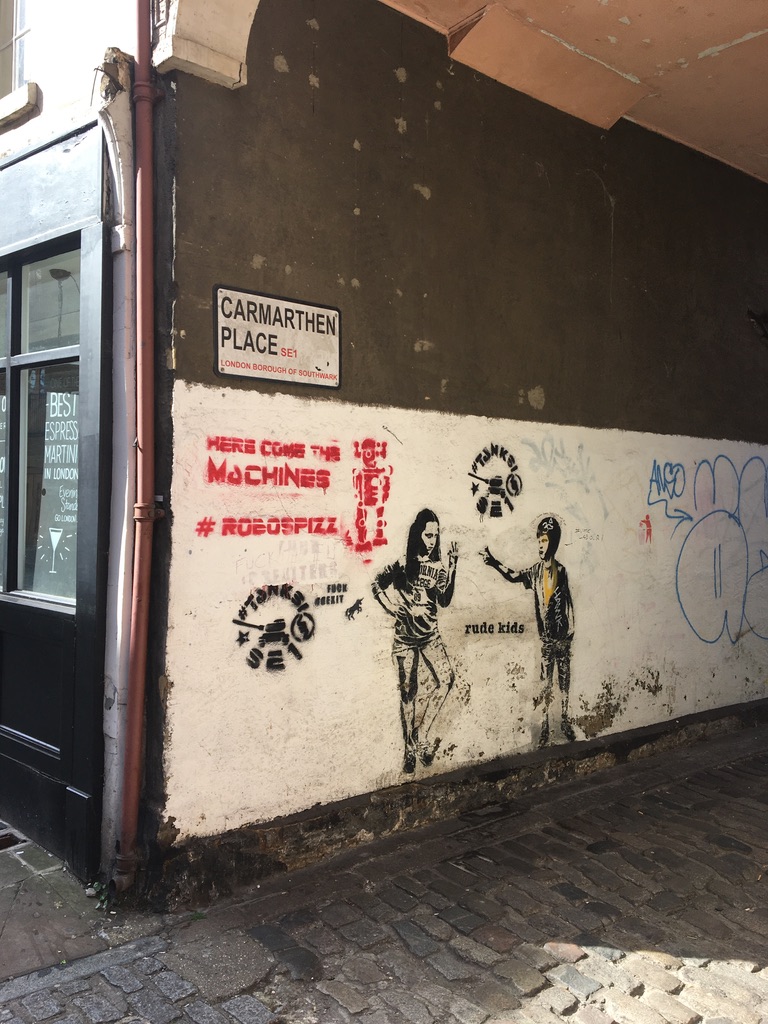
One significant difference between then and now is that no one is dropping bombs on our heads. Back in 1940-41, my part of London, near the docks and a major rail terminal, was a major target of the blitz.

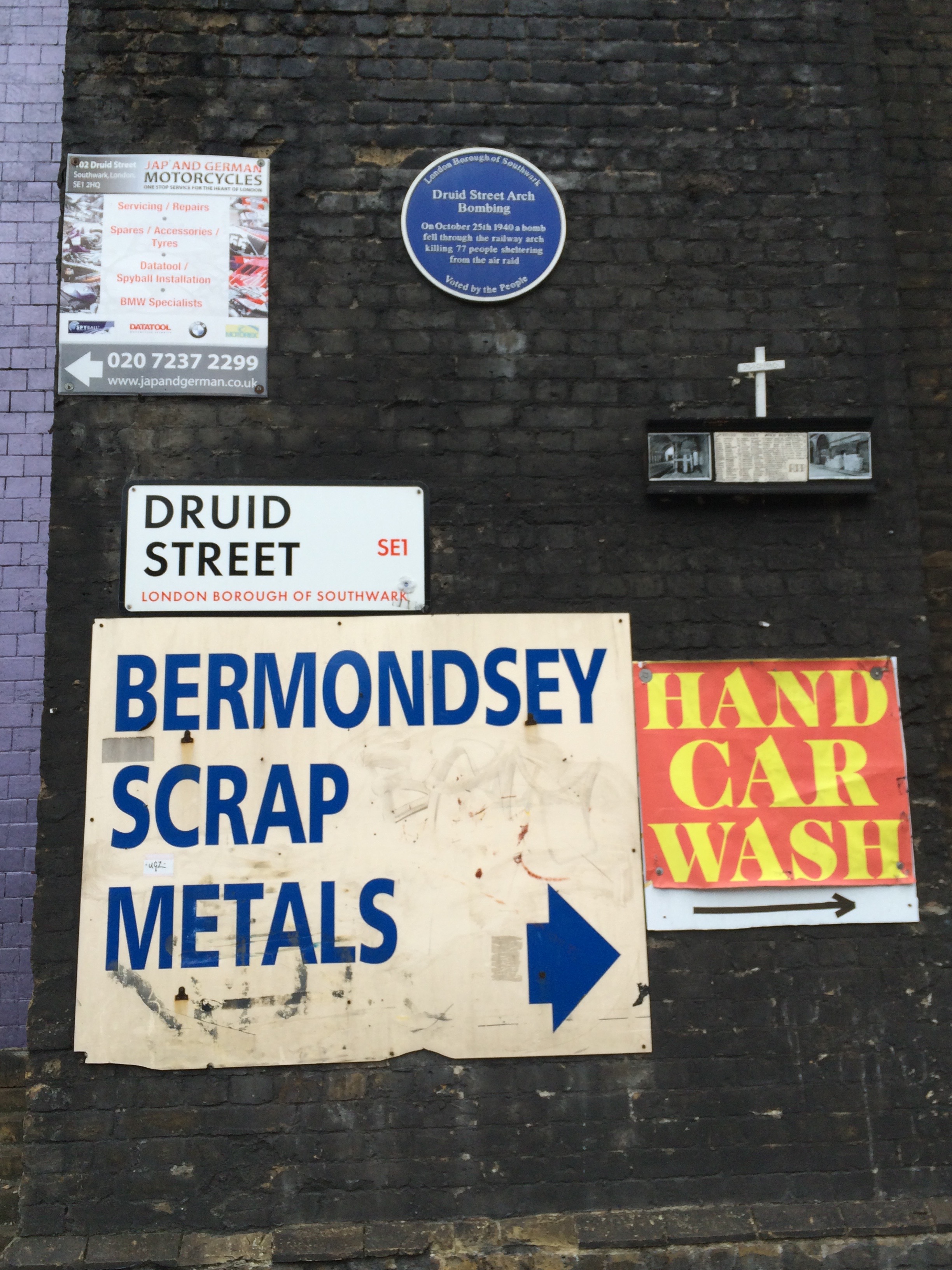
There is a blue plaque under the railway arch at Druid Street to commemorate the 77 who died while sheltering there during a 1940 air raid. The working class communities that lived near the docks and the railways and the factories were particularly vulnerable to the bombs.

When Elizabeth’s mother visited the working class East End with her husband, the king, there were boos as well as cheers.

There were plenty of examples of individual heroism from community wardens, firemen, the police. But there were also plenty of black-marketeers – yesterday’s version of supermarket hoarders – and burglaries went up courtesy of the blackout.

The myth-making started right after the war. Those of us born just after it spent long Sundays listening to relatives reminiscing about how people were much nicer during the war – pulling together, sharing what little they had, putting others first. Soldiers who actually fought tended to have much less rosy recollections.

The Brits did not have to face mainland Europe’s painful memories of occupation and collaboration.

The mythologising was encouraged by a range of British films that replayed the conflict over and over again with a familiar cast of plucky little Brits at home and abroad beating the Nazis pretty much single-handed.

As late as the 1970s, the TV series Dad’s Army showed us the quiet, comic gallantry of a group of south coast home guards. It’s still a favourite on the catch-up channels.

The rosy memories of the home front might also have been fostered by the fact that British life remained bleakly austere right up to the mid-1950s.

Maybe when this is all over, we’ll have to face a decade of cinematic replays of the present crisis with its heroes and its villains.

Perhaps, when extended families can get together again, children yet unborn will have to endure those endless Sundays of their parents and aunts reliving the dark days of the pandemic.

At least it will make a change from Brexit.
Pandemic? It’s all Greek to me

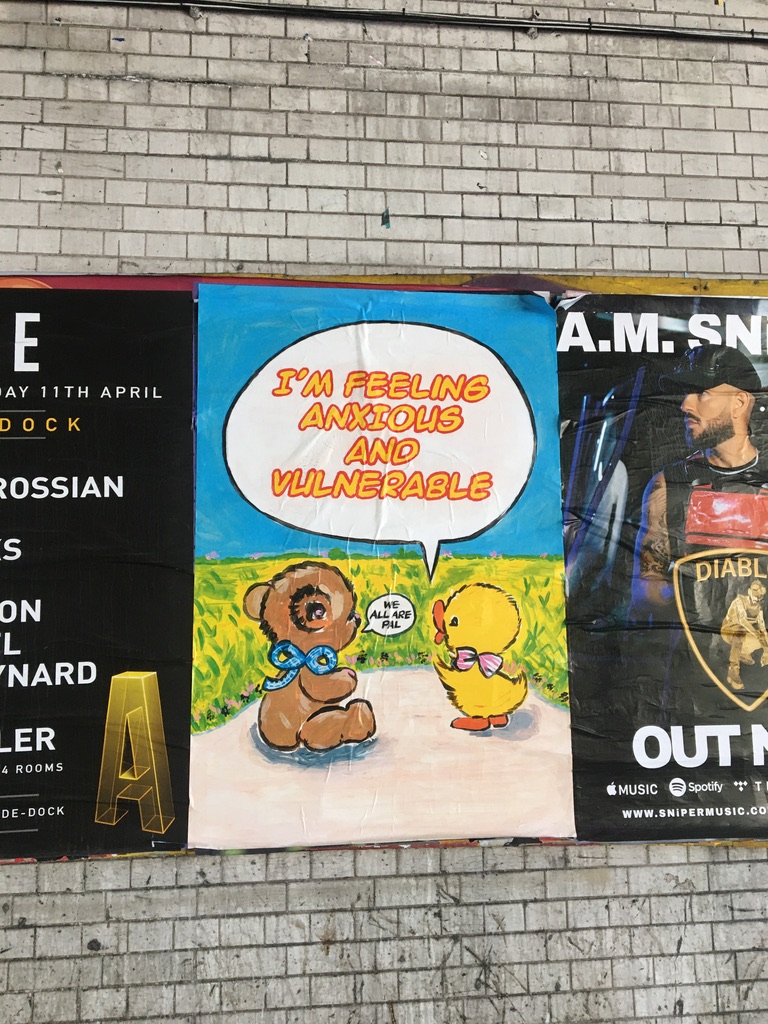
BORED already with Netflix box sets? Daunted by daily disaster updates? Exhausted from the online pilates and the online pub quizes? Why not learn a language?

That’s the gist of the unsolicited ads that have been tumbling into inboxes in the last couple of weeks as the language-learning entrepreneurs seek to make a buck out of the present lockdown by promoting their apps.

Have you ever tried one? They are sometimes fronted by a seemingly friendly cartoon rabbit, or is it a squirrel?, whose AI brain encourages you to keep going with phrases like “You’re doing really well!” or “Try again! Getting it wrong is part of learning.”

However, the avatar soon adopts a more hectoring tone, warning you that, if you don’t keep up the daily regime, you will lose your place in the virtual league table.

So you can end up burning the midnight oil to try to beat the daily deadline as you struggle to remember the Dutch or the Mandarin for cryptic phrases such as “The bear has eaten my mouse” or “The children are unable to eat salt”.

It gets addictive. A recent cartoon pictured a mourner standing by a coffin, saying: “He leaves behind a loving family and a 239-day Duolingo streak.”

On a normal Friday evening, we’d be off to the Hellenic Centre in Marylebone for our weekly dose of Greek. Housed in a classic London Portland stone and red-brick block off Marylebone Lane, it offers night classes to people of more than 40 nationalities.

Our little class has been soldiering on for almost three years, inspired by a charming but indulgent teacher. She never lectures us about getting the class work in on time. A phrase I learnt early on was “ο σκύλος μου έτρωγε την εργασία μου – the dog ate my homework.”

Since the onset of the pandemic – from the Greek for “We’re all doomed” – teaching has gone online and the virtual assistant at our Google hangout has adopted the aggressive tone of the language app rabbit, sending daily reminders for us to get the homework done.

That’s one reason I miss the weekly trips to Marylebone. It’s a charming neighbourhood with which I have another loose connection. My father was born above his father’s fish and chips shop in Marylebone Lane in 1911 before the family moved on to Pimlico and then New Cross Gate.

Marylebone and Pimlico have been massively gentrified since then. But both retain some aspects of their Edwardian charm. Marylebone Lane still has a rather upmarket fish shop. New Cross, as a friend who lives there tells me sardonically, is “still up-and-coming”.

The first two neighbourhoods have been affected by being so close to the always chintzier Mayfair and Westminister. But they were always cosmopolitan, even in the old days. So was New Cross come to think of it.

This is, after all, London. More than a third of Londoners are now foreign born and the city includes every nationality and language, Greek included.

Now we’re all locked down together and making the best of it. As the Greek philosophers say: “τι να κάνουμε; τίποτα – what can we do about it? Nothing.”

Pandemic update from feral London

5D89653A-EA4E-46B6-95F0-F8CE65F52AA3_1_105_c

Where have all the seagulls gone?

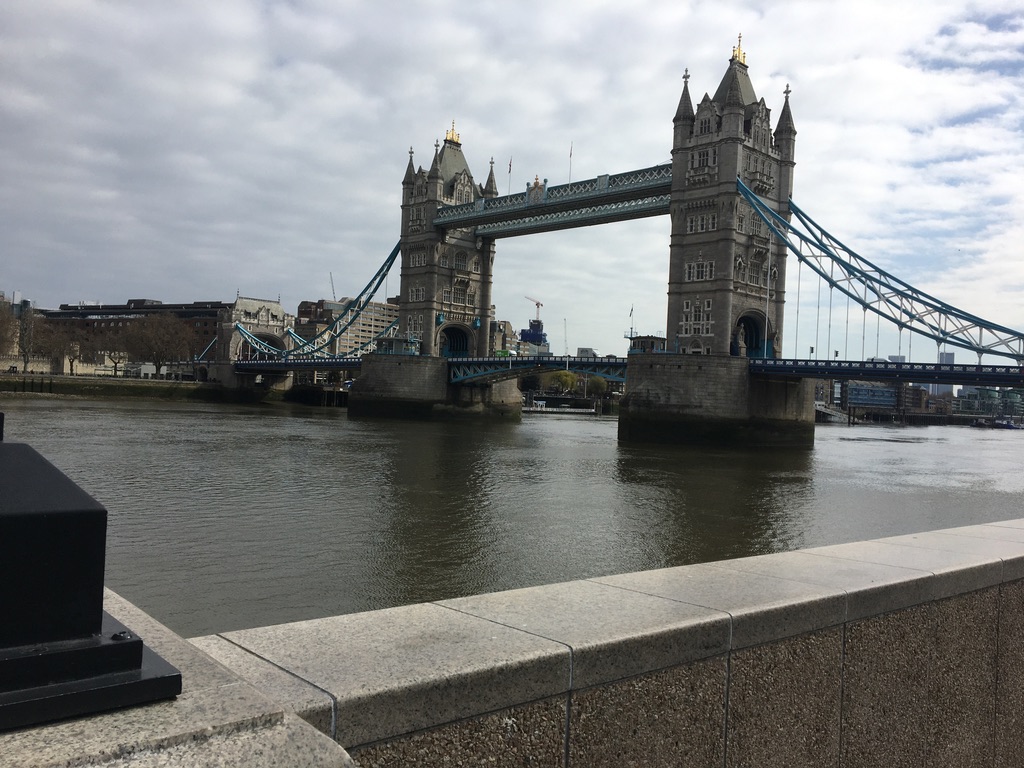
The lockdown has only been going for just over a week but every last one of them has decamped from the river wall at Tower Bridge. Maybe they’ve followed the refuse barges down the river to the recycling plants at the Isle of Dogs or Greenwich.

They normally outnumber even the tourists at London’s third most photographed sight. Their trick is to have one seagull perch on the wall and pose for a tourist’s selfie while the others swoop down to nick the snapper’s sandwich or chips.

Seagulls, as the name implies, used to live at sea or by the coast. Now they’ve become the city’s principal feral menace, particularly since ex-mayor Ken Livingstone declared war on its pigeons in 2003.

At dawn, they are sometimes loud enough to wake you up as they scrap outside the window like a mob of Millwall fans. That’s our local, rough-and-tumble football team. Its fans are best known for fighting among themselves if they can’t get near the opposition, and for their slogan: “No one likes us, we don’t care!”

I once told the football-mad former Israeli foreign minister Silvan Shalom that it would be a great slogan for his country. He agreed. But that’s another story.

Meanwhile, back in feral London, the foxes also seem to have made themselves scarce. That said, I usually bump into them late at night on the way back from a drink with my wrinklie posse but currently the pubs are shut.

The fox will stand in the middle of the road or on the pavement and fix you with a “who do you think you’re looking at?” stare before then adopting a bored expression and wandering off.

The rats are presumably still around although you rarely see them. According to the urban myth, you are never more than six feet from a rat. Rodent expert Professor Rob Smith from Huddersfield University said it might derive from an old public heath announcement from the Ministry of Agriculture. A government department, promoting myths! Shocking!

Curiously, six feet is the recommended gap for social-distancing when you’re out for a walk these days. So, if you don’t know what six feet looks like, presumably you just imagine you’re looking for the nearest rat.

Give it time and other species might move in to replace London’s absent seagulls.

Over in Llandudno in north Wales, a herd of goats has moved in and is roaming the now deserted streets.

Abroad, gangs of wild turkeys have been spotted on the streets of Oakland, California and a puma broke the curfew in Santiago, Chile, to take to the streets.

Sadly, the story about drunken elephants staggering around in China, where the pandemic started, turns out to be a fake.

In London, Livingstone’s despised pigeons appear to be thriving. No one’s feeding them breadcrumbs these days, so they’ve taken to swarming along the river to forage away from the usual beaten track.

There’s a increasingly bold blackbird nesting on the rooftop opposite us but he hasn’t quite summoned up the courage yet to venture on to the kitchen balcony for scraps.

Viral politics: Accelerationists need to slow down

F3D77F6B-589C-4EAF-8DCA-39931C3CEF61_1_105_c

I GOT to within almost coughing distance of Westminster today but ventured no further for fear of the scourge that the virus has wreaked among the denizens of Downing Street.

Boris Johnson was one of the first to fall victim, having glad-handed his way through the early weeks of the crisis. Health minister Matt Hancock swiftly followed him into self-isolation after testing positive.

Then came the news that Dominic Cummings, the prime minister’s chief adviser, last seen scurrying around the back of Downing Street, had hidden himself away after experiencing symptoms.

Cummings, one of the key architects of Brexit, is known as a disrupter who would like to sweep away the messy compromises of the state. If he wanted disruption, he’s certainly got it now and has fallen victim to his own medicine, or should that be disease.

He’s well known for favouring “weirdos” over experts.

The Cummster, and his American friend Steve Bannon, have much in common with the self-styled Accelerationists, a self-regarding little cult that blossomed on the fringes of British academia at the turn of the century. Warwick University was a hotspot as was Goldsmiths College, just down the road from here at New Cross.

The Accelerationists believe that high-tech and aggressive capitalism should be sped up rather than restrained, leading to a brave, new and robotic world sometime in the future.

To get there, they would like to scrap regulation of business and drastically scale back the power of the state. They also embrace any tech advance that leads to a merger of the digital and the human.

It’s a movement that started on the fringes of the left – Karl Marx is frequently claimed as the first Accelerationist – but it now embraces a wide range of political weirdos from barely reformed Stalinists to crypto-fascists and white supremacists.

For these apostles of disruption, the worldwide coronavirus must make them feel like Christmas has come early.

In the US, Joshua Fisher-Birch, a member of a terrorism watchdog, warned: “Extreme right-wing accelerationist and neo-Nazi Telegram chats and channels have increased their frequency of calling for violence related to the coronavirus since the president’s declaration of a national emergency on March 13.”

“As more Americans have been reported as infected in the past few days and stock exchanges have fallen, the administrators of these chats and channels seem to have realised that this is a moment to increase their calls for disorder and advocacy for violence,” according to Fisher-Birch.

It could never happen here, as we Brits like to say. But who knows? The father of British accelerationism, Nick Land, a favourite of the right-wing Breitbart news outfit once run by Cumming’s mate Bannon, remains a figurehead of the so-called Dark Enlightenment.

Nick did a runner to Shanghai a while back after a breakdown – too much sci-fi, punk and drugs? – where he fell in love with what he sees as the Accelerationist tendencies of the Chinese state.

Anyway, enough of all that. You’ll be wanting to know about today’s walk.

To borrow the knowlege vocabulary of London’s black cabbies: it was “left Potters Field; forward Queens Walk; forward London Eye; left Waterloo; forward Stamford Street; forward Southwark Bridge Road; left St Thomas Street; forward Tooley Street; and then a walk through the park.”

It was quiet. There were more pigeons than people. A couple wanted money for dog food but I didn’t have change on me.

The homeless Lithuanian at the Tower Bridge steps said they hadn’t found him an emergency flop yet. Maybe tonight. For some reason, he addresses everyone, or at least the men he encounters, as “Señor”.

Sign up for the Covid-19 pub quiz


5553247A-A5AF-4D36-9E39-31031B7C9E81_1_105_c

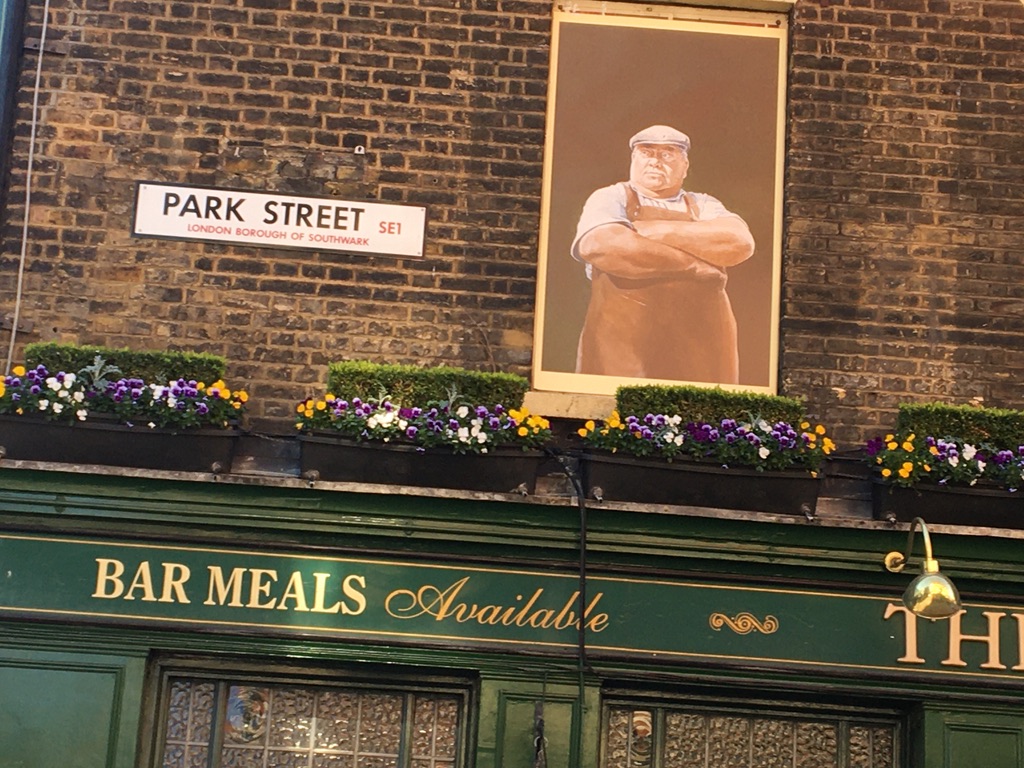
MANY of the districts of London are named after their local pub even when, as in the case of the Bricklayers Arms, the eponymous boozer is but a distant memory.

In the 1970s, the area around it was trashed to make way for a vast, oversized roundabout and concrete flyover at one of the city’s most historic crossroads.

The Brick was replaced by a now rather forlorn old folk’s home that was looking more forlorn than ever this morning as only a few virus-avoiding locals scuttered past to the local shops.

Six of the stops on the London underground are named after local pubs, among them the Angel, Royal Oak, Swiss Cottage.

Just north of the Bricklayers Arms is the Elephant and Castle district, where a pale version of the original local that gives it its name survives in an area that’s become a hangout for the city’s Latin American community.

The Brick was at a junction of the Dover Road from London. Chaucer and his pilgrims would have taken it on the way to Canterbury without the benefit of the flyover. There had been inns on the site for 600 years until the philistines in charge of London knocked the last one down.

Stan Blake, who’d been a colonel in the East African Rifles and a champion army boxer, was the last landlord. He moved on to run the Five Bells pub in New Cross just down the Old Kent Road road. (More of him and it in later columns).

Anyway, you may well ask: “what’s all this that got to do with coronageddon?”

I’ll tell you: PUBS.

When a city names its neighbourhoods after pubs rather than, say, churches or palaces, you can see where its priorities lie. The closure of the boozers has been perhaps the single biggest blow of the present emergency.

Thankfully, the government stepped in to add off-licences – liquor stores – to the list of essential retailers.

Some people have taken to having virtual pubs online. That has its advantages. You don’t have to buy a round and you don’t have to stagger from the bar carrying five pints in two hands. (Note to foreign friends: Our pubs don’t do table service.)

Another advantage of the pubs closure is that you don’t have to listen to the loudmouth pub bore explaining that the virus panic is a. overblown, b. a Chinese plot or, c. an opportunity to witness the leadership qualities of Boris Johnson.

Sadly, London’s boozers may never recover. The Brick disappeared back in the 70s and in the same part of South London and in the rest of the city pubs have been closing at the rate of knots.

Many have been turned into bijou central London pied-à-terre by developers who clearly never buy their round. A pint now costs an hour’s wages. And you can’t smoke in them any longer!!!

Covid-19 could be the final blow. We may decide we like being stuck at home with our immediate families and no longer feel the need to “nip down the pub” to see our mates of an evening.

Get real, people! Is that really the scenario that you want to offer future generations.

Once this is over, we should all head straight to the nearest pub and, here in South London, we should campaign for the reopening of The Bricklayers Arms. Who needs a concrete flyover anyway?

Believe it or not, even as we hunker down at home, there’s a campaign afoot to have a new London tube station named after it!

Social distancing in Ripperland

54B86E4C-9118-4C6B-A21B-568DF394BBFA_1_105_c


SPITALFIELDS Church is a creepy spot at the best of times and is even more eery in the present ghost town of the East End. If Jack the Ripper was a chuchgoer, this would have been his local.

Christ Church is one of seven designed by Nicholas Hawksmoor under a Tory parliamentary act of 1711 to celebrate the fall of the rival Whigs.

It is a bit like Tory Prime Minister Boris Johnson, currently self-confining at Downing Street, presiding over a spend-spend-spend budget to celebrate the recent victory over anti-austerity Labour.

In the early-18th century, law and order in London’s impoverished inner suburbs were thought to be under threat from the lack of churches. These days, it’s a lack of toilet paper.

In his 1985 novel Hawksmoor, Peter Ackroyd uses the London churches as the setting for his tale of a modern-day Hawksmoor, a police detective who investigates a series of mysterious murders in or around them and reveals a hidden Satanic network.

Anything by Ackroyd, the best modern chronicler of London and its darker side, is worth getting hold of if you’re running out of books in the current lockdown.

Christ Church has put up a sign at the gate saying the churchyard will stay open for the duration so that locals can enjoy some fresh air. Today, I was the only one there and, given the psychogeography of the place, I wasn’t tempted to linger.

Nearby Petticoat Lane market was deserted and shuttered. So you’ll have to be patient if you need to restock on cheap Asian fabrics, knock-off perfumes or other assorted toot.

The streets leading there have been a bit hipsterised in recent years as a new set has moved in to succeed centuries of incomers – Huguenots, Jews, Bangladeshis.

I see the trendy vegan cheese shop has had to shut down. Every cloud has a silver lining.

Back at Downing Street, Johnson is sweating and coughing from a mild dose of coronavirus and facing the flak over having failed to take his own advice on avoiding infection.

Tom Peck at The Independent was among those who castigated Johnson for having carried on as usual, “swanking about Westminster because, you know, as long as the little people stop spreading the virus”.

“Woah woah woah woah, you might say – you’re not actually laughing at getting the coronavirus, are you? Yes, I’m afraid to report, we are,” he chortled on Friday.

Never fear. Johnson says that “thanks to the wizardry of modern technology,” he will still be able to spearhead the current counter-attack. By wizardry, he presumably means the phone, that cutting edge late-19th century technology he used to ring the Queen this week.

In the coming days – weeks! – I’ll be bringing you more dispatches from this part of London’s East End. It’s comfortable walking distance, so I’m not breaking any no-public transport rule.

It’s an opportunity to indulge in a bit more psychogeography. That’s a concept of urban rambling that “has links to the Letterist and Situationist Internationals, revolutionary groups influenced by Marxist and anarchist theory, as well as by the attitudes and methods of Dadaists and Surrealists,” according to Wikipedia.

But don’t be alarmed. I plan to focus on the sites and avoid the mumbo jumbo.

Social distancing and the Tower ravens

GetAttachmentThumbnail

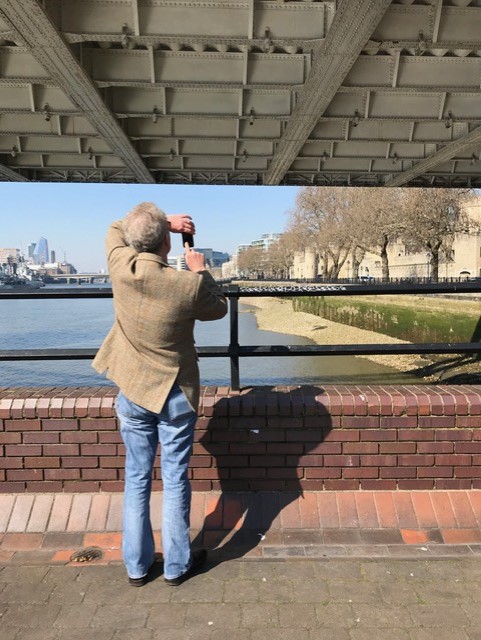
Snapping the Tower Walk from above Dead Man’s Hole

TO THE Tower! Two hundred and fifty yards across the river from my front door and it’s full-on Hilary Mantel.

Her latest opus The Mirror and the Light is on the radio right now – episode 9: Bloody Chamber.

The Tower of London is where Anne Boleyn and her nemesis Thomas Cromwell both got the chop, the latter for failing to measure up in a crisis. There’s a thought. We could bear it in mind for the present lot if they screw up the latest business.

As Mantel writes of Henry VIII’s first minister before his fall in 1540: “The Tower is like a small town and its morning routine clatters on around him, the guards and the men from the Mint greet him, and the keeper of the king’s beasts trots up to say it’s dinner time — they eat early, the beasts — and does he want to see them fed?”

There wasn’t much clatter this morning. They’ve shut the gate at the southeast entrance and there wasn’t a Beefeater in sight. More ominously, there weren’t any ravens.

You know the old myth: “The kingdom and the Tower of London will fall if the six resident ravens ever leave the fortress.” They even clip their wings as an insurance policy that that never happens.

There are actually seven ravens – six and a spare – so maybe they’ve stuck them in cages somewhere for the duration because Jubilee, Harris, Gripp, Rocky, Erin, Poppy and Merlina were nowhere to be seen.

If they have any sense, which apparently ravens do, they may just have hiked off to the country to get away from Coronavirus-Central. If any of them resurfaces, please keep to the Covid-19 two-metre advice on social distancing. “These magnificent birds respond only to the Ravenmaster and should not be approached too closely by anyone else,” according to the people at the Tower.

The courtyards and the river walk over Traitor’s Gate are usually jam-packed with tourists but these are now as absent as the birds.

William the Conqueror built the fist part of the Tower in the 1070s. I’ll never forget walking past a French couple looking at it across the river from the south bank. He was expounding on how it was yet another testament to French style and innovation. Chapeau, mon vieux!

The French in London are one of our most significant communities – at many as 300,000 it’s reckoned. I’m not sure how many of them might have chosen to head back to France in the current emergency. Apparently Paris is locked up even tighter than London, so they are all welcome to hang on here.

The Français à Londres website has explained to its followers that when Emmanuel Macron banned travel to non-EU countries, of course he didn’t mean Britain. “Cette disposition,” it explained with caps for emphasis “NE S’APPLIQUE PAS AU ROYAUME-UNI.”

The Brits may have opted to turn their backs on Europe, but what are the next door neighbours supposed to do. They’re stuck with us, and we with them, in this latest time of crisis.

It was the same in Henry VIII’s time. When Cromwell was already on the slide, Henry confided to the French ambassador that his minister was “a good household manager, but not fit to meddle in the affairs of kings”.

Well, I’m sure we can all think of a few other bigwigs like that.

Day 2: Dispatch from Codpiece Lane

B33F4B1E-7877-499B-8E6D-0DCF199E3C25_1_105_c Day 2 and the sun is shining. It’s amazing how perverse the British weather can be. No attempt at pathetic fallacy.
To combine the twin obligations of shopping and a bit of exercise, I headed to the local Borough Market next to London Bridge.

The former wholesale potato market turned foodie heaven has shut down the fast food stalls – “venison offal paté with a quince drizzle, anyone?” – but most of the traders are there, distance-selling fruit, veg and meat.

(A word to the wise, while I’m at it: yes, you can go out for a short, brisk walk and combine it with some food shopping. But stay two metres from others, particularly people like the market traders who are keeping things going. You don’t want to catch the bug and neither do they. End of lecture.)

We all have to accept sacrifices in these difficult times, but Nescafe should not be one of them. Thankfully, Monmouth Coffee was open and I managed to pick up a kilo of an amusing little Fazenda Santa Lucia from Brazil.

The Monmouth staff have helpfully chalked circles on the pavement outside so everyone can queue at a safe distance. They should think of keeping them once the crisis is over. There’s nothing worse than standing in the regular queue behind some tosser whose droning on about the subtle cinnamon notes of the Guatemalan expresso roast he ends up not buying.

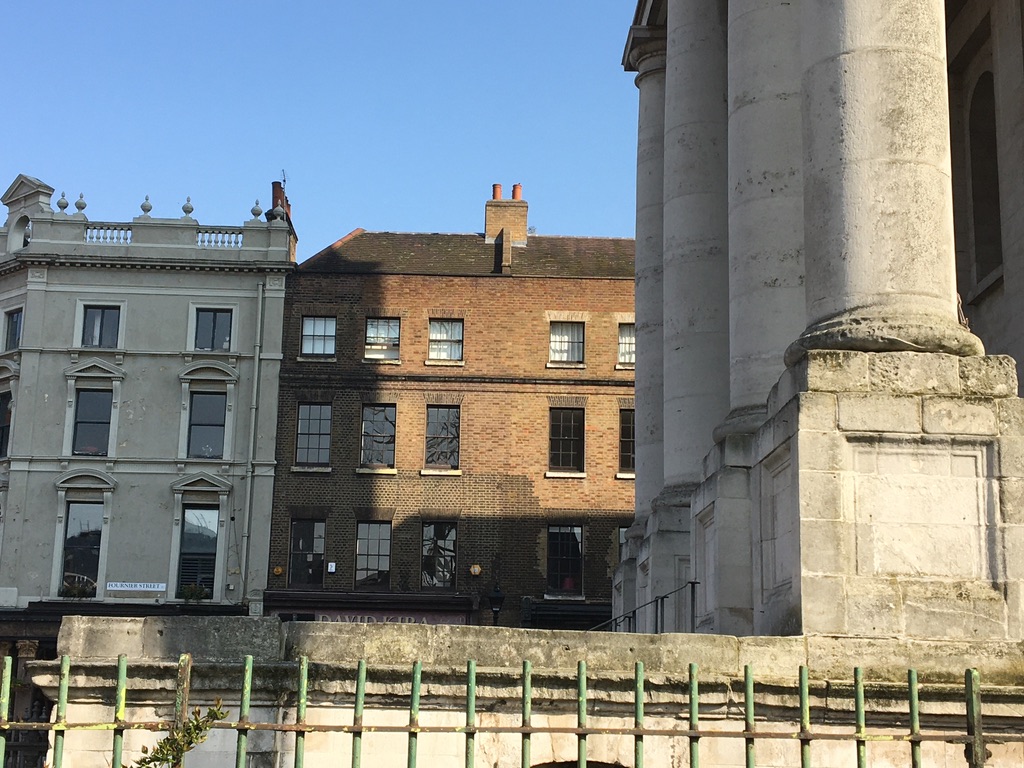
The market’s had to endure other crises. It was shut down for weeks in 2017 while police and forensic teams dealt with the aftermath of the London Bridge terror attack. Some of the victims were stabbed outside the Market Porter which you can see in today’s picture. The day it reopened it was as packed as ever.

The Cross Bones graveyard across the road, a memorial to the thousands of prostitutes who lived and died in Southwark in the days when the Bishop of Winchester was the landlord of the area’s many brothels, is also thought to have been used as a plague pit in the Great Plague of 1665.

Borough Market was already at least 200 years old when bubonic plague struck in 1348.

As Paul Slade wrote in The Black Death: “The filthy state of Southwark in those days ensured other disease was quick to spread there too. The Borough’s streets were still unpaved and there were no sewers. Residents who were out and about relieved their bladder (and bowels) in any quiet alleyway, while stay-at-homes emptied their brimming chamber pots at the nearest window.

“The informal street names coined by the locals give us a clue to what their lives were like. The area’s sex trade gave it place names like Codpiece Lane, Cuckold Court and Sluts’ Hole, while the sheer amount of filth in its streets christened Dirty Lane, Foul Lane and Pissing Lane.”

This March 23, Southwark secured the unenviable title of being the London Borough hardest hit by coronavirus in a city which is the epicentre of the UK outbreak.

But locals shouldn’t panic that its dark history is about to repeat itself. Southwark has given its name to a sprawling metropolitan area that now stretches for miles and is home to around 320,000 people.

It houses two of the country’s top hospitals, including Guy’s, not far from where King Edward II founded the Lock Hospital for “lepers” in 1321.

Southwark’s cleaned up its act since the old days. It’s safe to walk there now. Locals and vital workers only for the time being of course. Just keep it short and keep your distance.

Johnson said ‘Take a walk’ so I took a walk

Jacob’s Island

At this time of global crisis, the editorial team has decided to revive Idle Thoughts on London Walks, not least because a daily constitutional has now been officially mandated by the highest organ of the state, to wit Boris Johnson.

This periodical was launched in those quaint days before Year Zero when we were facing what was cast as an epoch-changing decision on our future in Europe.

Four years on and it’s a case of Sic Transit Gloria Brexit, as Johnson might say. The word that now startles us awake on the clock radio is no longer the B-word but rather the C-word. So much for taking back control.

Anyway, the government, advised by the boffins, has decided we should all stay in unless we have to all go out for some legit reason or another. These include shopping, working – as long as you do something useful, and having a daily run/cycle/walk.

(I’m writing this on Day 1 of the lockdown, so by the time you read it we may all be nailed under the floorboards being fed through straws.)

I’ve opted for option 3 as it involves no equipment and little exertion.

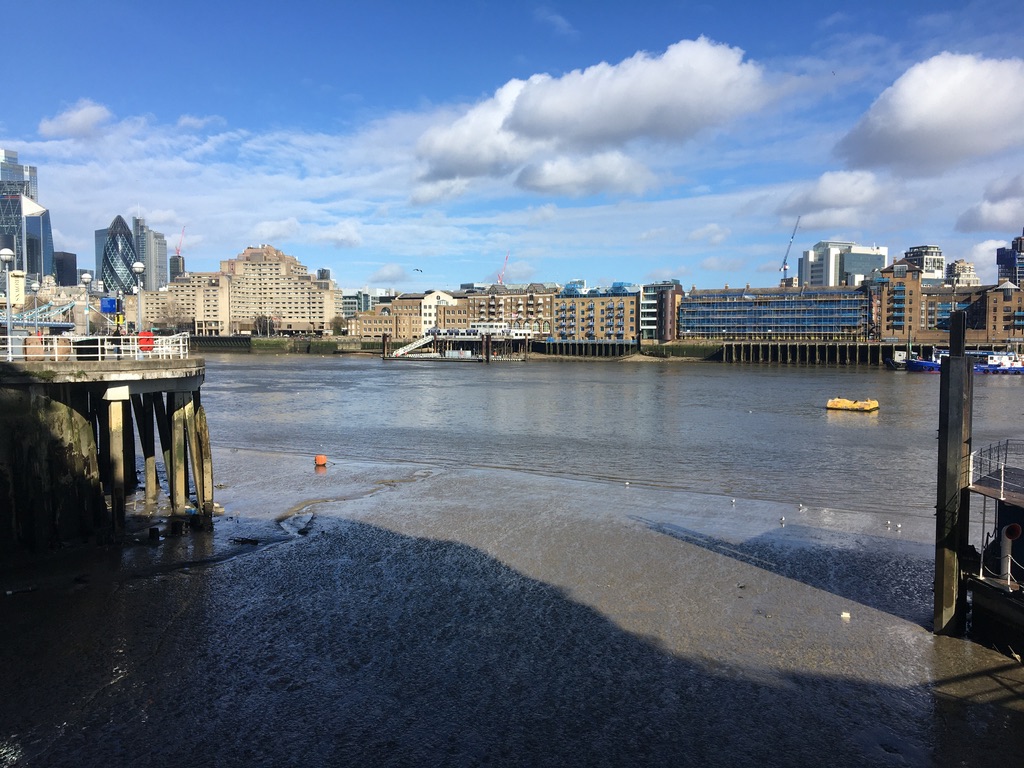
The powers that be have urged us not to wander off too far, so today I just took a stroll eastwards along the Thames via Jacob’s Island. Once a fetid part of the Bermondsey shore, it was a backdrop to what Current Archaeology mag has described as Dickens’ “blockbusting London slum story, Oliver Twist.”

The villain Bill Sykes is on the run and takes shelter there after fleeing North London (we South Londoners have all shared THAT experience!) Dickens provides directions: “… beyond dockhead in the Borough of Southwark, stands Jacob’s Island, surrounded by a muddy ditch, six or eight feet deep and fifteen or twenty wide when the tide is in, once called Mill Pond, but known in the days of this story as Folly Ditch…”

When he gets there, Bill finds: “Rooms so small, so filthy, so confined, that the air would seem too tainted even for the dirt and squalor which they shelter; wooden chambers thrusting themselves out above the mud, and threatening to fall into it, as some have done; dirt-besmeared walls and decaying foundations; every repulsive lineament of poverty, every loathsome indication of filth, rot, and garbage.”
Not exactly a spot to self-isolate, then.

They’ve since cleaned it up, of course, and even repaired the foot bridge that crosses the mouth of the Neckinger.

The shops in Shad Thames were shut but there were a few walkers, although frankly no fewer than usual in the quiet backstreets.

London flaneurs are already well-equipped for walks in the time of coronavirus: even in normal times we don’t talk to each other, hold our breath as we pass and never approach within two metres.

I made it as far as the Tesco’s in Tooley Street but, as I didn’t need anything, I didn’t go in. I know. Weird, eh?

Tomorrow, I might venture a little further – (within the recommended margins, in case the virus police are reading this) – and will report back from the frontlines.

Meanwhile, follow all the government’s advice. No, I’m serious.

Don’t, however, follow the Trumpster’s. After he recommended the “very powerful” drug chloroquine to treat Covid-19, the price went through the roof in Nigeria where three people have already overdosed on it. A man in Arizona died after taking a chloroquine substitute.

I never thought I’d say it, but it’s one time you’re probably better off listening to our own highest organ of state.

J’accuse! The Bermondsey manifesto

IMG_1390

One of my regular routes is what I call the “Southeast London Sink Estates Walk”. It takes in the Aylesbury, the Heygate and North Peckham. Or, that’s to say, it used to. Thanks to former Mayor Johnson and his cronies, the Heygate, for one, has been given over to the sort of market-value redevelopment that is turning the Elephant and Castle area into hedge-fund heaven.

I saw it go up in 1974, around the time of the last Euro-referendum, and now I’ve seen it come down. It was set up to provide affordable housing for the “industrous working class” and then became, in Daily Mail-speak, a “mugger’s paradise” when social housing was designated as a dumping ground for the capital’s most vulnerable inhabitants.

According to lazy regional demographics, anyone living south of the Wash belongs to a cosseted class of effete cosmopolitans, ready to sell out their country for a half decent bottle of Burgundy. Anyone north of the line belongs to a loyal, patriotic English folk-tribe that would no more surrender its sovereignty than it would castrate the family whippet.

It’s not really that simple. There are are lot of poor people in London, despite the efforts of Johnson and his friends to conspire in the city’s social cleansing. He clearly intended to make London a place “fit for rich people” but it’s an exercise in progress. In the meantime, in the London borough with the highest level of social housing – Southwark, 3 out of 4 voters opted for “remain” in the June 23 referendum on EU membership.

The Heygate was at the tail end of a programme of post-war social interventionism that also produced the NHS and free schooling (er, up to a point). Watching it go up, many were horrified by its inhuman neo-brutalism. But it did provide housing for 3,000 people.

Maybe London has always been a bit more “chillaxed” about the rest of the world than Sunderland or Hook Norton. Round at the King’s Arms in Tooley Street today, a slightly inebriated Frenchwoman was shouting “Allez! Allez! Allez!” as her team knocked in its second goal against the Republic of Ireland. She was a stone’s throw from the capital’s poorest estates.

It could be that the north-south, rich-poor divide is a bit of a fiction, a product of what, in our pre-Gove primary school textbooks, we would have recognised as “divide and rule”. Thanks to the Brexiteers, we are certainly divided, but nobody rules.

In the last couple of depressing days, it’s been interesting that those who have leapt to the defence of the inalienable right of the working classes to fuck themselves have tended to come from the ever-patronising middle classes, whose closest connection with the proletariat is no doubt via their sub-minimum wage cleaning lady.

I know from long experience that the working class are as capable of stupidity as are the toffs. On the other hand, the vast majority know when they’re being conned – particularly if they are crafty Cockneys.

So this is a warning to all those Englanders out there who might be tempted to screw with London. We’re not gonna take it any more. There’s no defined plan yet. But, then again, you have no plan for how best to plunge us into the abyss.

The proposal is this: that we establish a “sane” movement, which will not be based on past party allegiance but will embrace those who can put the power of logic over the folly of emotion. It may be that diehard lefties, Greens, Libs etc will even have to compromise and find common cause with the non-loony wing of the Tory party to preserve our country. You owe it to the Heygate!