I’M IN a quandary.
I had planned a column on the benefits of London’s parks in these challenging times and, in the process, to defend Matt Hancock’s decision to head off to his own local patch of green at the weekend for a kick-around with the kids.
If anyone needs a breath of fresh air to clear the cobwebs, it’s the Mattster.
Now it turns out our hard-pressed health minister has been pinged by the track-and-trace app after coming near to an unidentified plague carrier and will have to self-isolate for the rest of the week.
I just hope his too-close-for-comfort moment didn’t occur in crowded Queen’s Park on what the pops have dubbed “muddy Saturday” after boss Boris Johnson told Matt and all the rest of us to stay at home. The last thing we need is BoJo shutting down the parks.
Believe it or not, good old London is one of the world’s greenest cities. Its 35,000 acres of public parks, woodlands and gardens amount to 40 per cent of its surface area. It’s got so many trees, one for every Londoner, that it meets the UN definition of a forest.
Better still the greenery isn’t all in one place but democratically spread around, so that we all get to experience rus in urbe right on our doorsteps.
I don’t know Queens Park, where Matt was described by a witness as “covered head to toe in mud”. But it sounds fairly typical: trees, grass, a bandstand, flower gardens, a playground with a paddling pool.
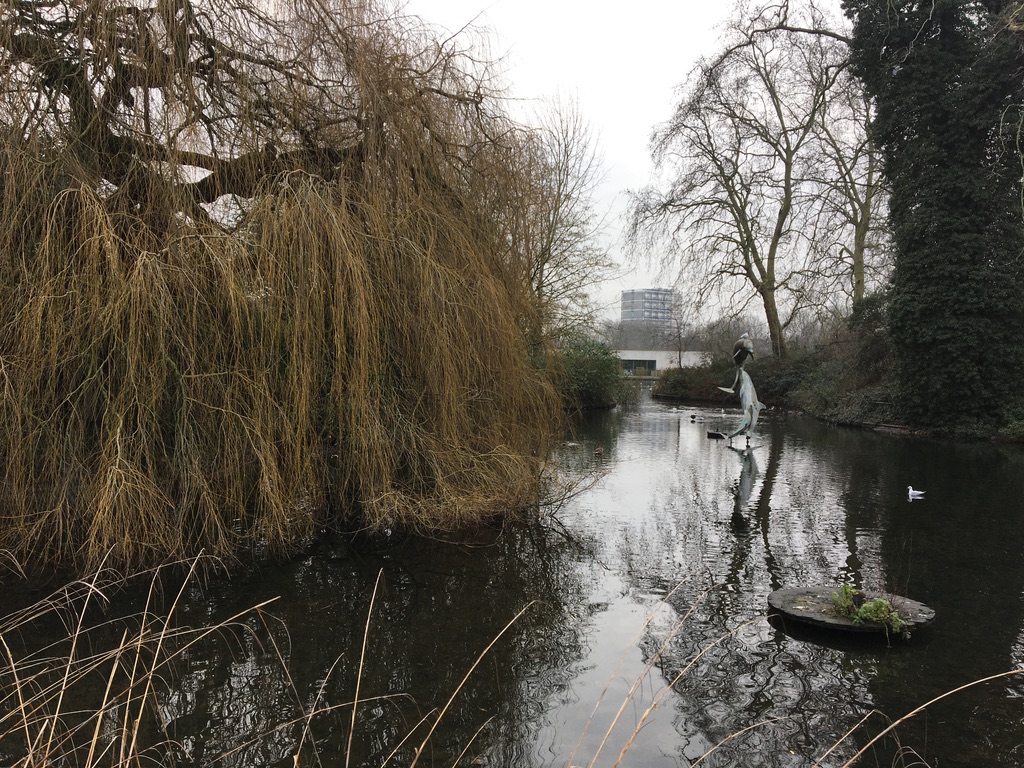
Southwark Park, where I just took a lockdown stroll, ticks most of those familiar boxes. Plus it has a recently restored lake, populated by demanding wild fowl – ducks, coots, geese, swans and a solitary heron – all within 100 yards of the Lower Road pollution hotspot.
Potential visitors might like to know that it’s never crowded, most of the new-fangled outdoor gym gear lies largely idle at this time of year, and the jogger threat is low to moderate.
Many of London’s open spaces have been there forever. Invading Vikings once camped at what is now Greenwich Park, one of eight Royal parks, where Elizabeth I used to go hunting. Green Park was once a swamp that served as a burial ground for mediaeval lepers.
Other parks, however, are a more recent London legacy of the Victorians, along with the sewers, the bridges and the railways.
Southwark Park opened in 1869 on 63 acres to the west of Surrey Docks and south of the Thames at Rotherhithe. It’s got a running track, a bowling green, football pitches and the inevitable cafe.
There’s a memorial garden for Ada Salter, the Quaker and social reformer, whose husband Alfred set up a free health service in the area, a forerunner of the NHS as I’m sure Hancock would be interested to know.
It’s the sort of local park where generations of unaccompanied schoolkids were once allowed to run wild, in the days before anxious modern parents began to imagine that a paedophile or a drug-pusher lurked behind every bush.
Contrary to this paranoia, police stats show that crime in London parks is relatively low. Southwark Park’s last “brutal daylight revenge slaying” was more than two years ago.
In the old days, the kids and the criminals – often one and the same – were kept in check by Gestapo-like park keepers (they even wore brown uniforms) who would try to stay one step ahead of the miscreants.
Like most of modern life, London’s neighbourhood parks are now actually more sedate than they used to be and more geared to the keep-fitters and the “consumers”. There is an unwelcome trend to rent them out for music festivals and other events that squeeze out the locals.
Southwest Londoners have protested about plans to stage festivals in Brockwell park. “Brockwell Park is the beating heart of our community,” said one irate local. “It’s our living, open, green space. To take that away from us is wrong. To do that without the consent of the community is worse.”
The trouble is that too many politicians these days are uncomfortable with the idea of any communal facility that is either not owned by someone or fails to generate a profit. For them, a park is just so much unexploited development acreage.
We’re safe for now. But the price of freedom is eternal vigilance. When it comes to your local London park, it might be a question of use it or lose it.
 Idle Thoughts on London Walks
Aren’t Londoners lucky to have so many green spaces. My Mum’s favourite playground was Greenwich Park. When we first arrived back in the UK we lived on the Westcombe Park side of Black Heath. Our children also played in Greenwich Park.
LikeLike
Whilst Greenwich Park and Blackheath were favourites for adventure the Park at the top of Pepys Road in New Cross was more accessible and near school. Oh happy days!
LikeLike
Indeed! Telegraph Hill
LikeLike