IT’S barely a century since Limehouse occupied the popular imagination as a snakepit of drugs, degeneracy and vice overseen by sinister and ruthless Chinese immigrants, a vanguard of the so-called Yellow Peril.
Western paranoia had been growing throughout the 19th century that the Chinese would one day wake from their slumber to challenge the white man for world supremacy. Sound familiar?
Limehouse, a one-time seafaring enclave on the Thames northern shore, wedged between Wapping and what is now Canary Wharf, had attracted Chinese settlers over the years.
The 1921 census revealed that by that year their number had risen to 337, no doubt an underestimate but nevertheless somewhat short of an invading horde.
That did not deter the Daily Express from concluding, beneath the headline “The Yellow Peril in London”, that there was “a vast syndicate of vice” at work in the East End.
The Yellow Peril myth had received a boost in the inter-war years thanks to the British writer Sax Rohmer, creator of the sinister oriental mastermind Dr Fu Manchu who runs a worldwide criminal empire from his Limehouse HQ.
He claimed his character was inspired by a visit to Limehouse for a magazine article. Rohmer went in the footsteps of the fictional Sherlock Holmes, who had gone there in search of opium. Dickens was another early adopter of the Limehouse myth.
The reality of London’s first Chinatown was more mundane than either Rohmer or the Daily Express suggested. The local Chinese were more likely to run a laundry than an opium den.
Hence George Formby’s 1932 lyric: “Mr Wu, what shall I do? I’m feeling kind of Limehouse Chinese laundry blues.” Not to be confused with the 1922 Limehouse Blues: “In Limehouse where yellow chinkies love to play/ In Limehouse where you can hear those blues all day.” The lyrics have since been sanitised.
Apart from the laundries, there were Chinese shops and lodging houses for the itinerant Chinese seamen who made up much of the street population. They would meet at the local coffee shops to exchange news from home.
Many of the old slums and alleys began to be demolished in the 1930s at the same time as a slump in maritime trade. The blitz did the rest. By the end of World War II, the Chinese community had faded away, many to the emerging Chinatown south of Soho.
If the Limehouse of legend ever existed, it’s certainly gone now, although the Chinese heritage is recalled in names such as Canton Street, Pekin Street and Amoy Place.
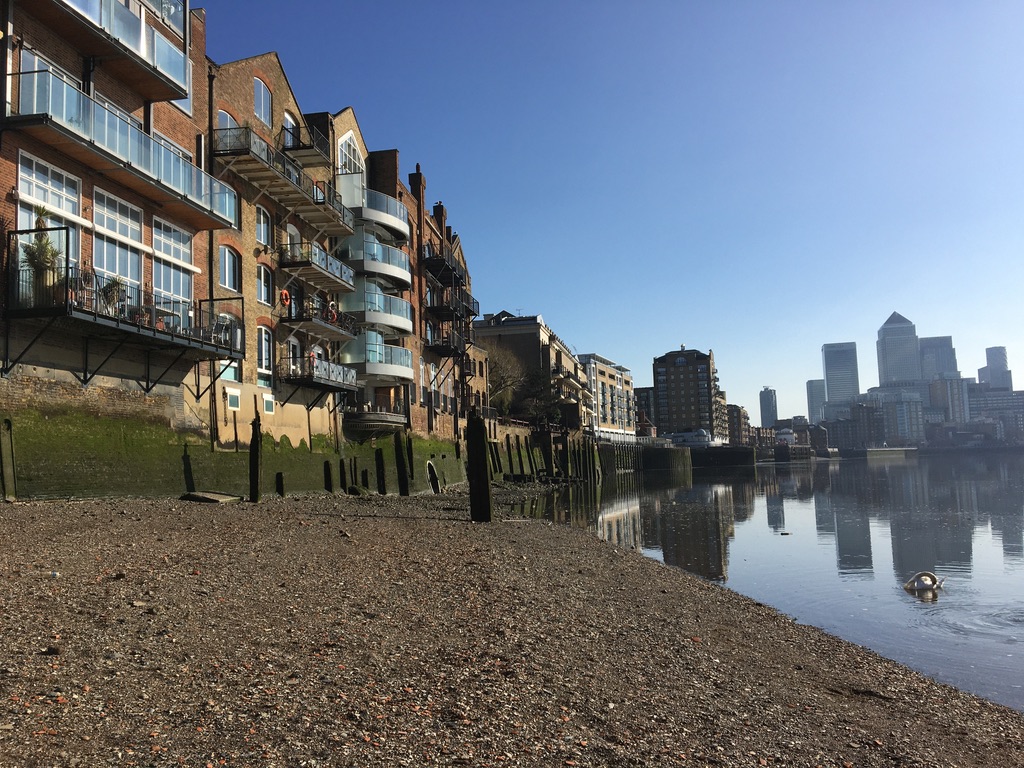
The shipping has weighed anchor, the Sailors’ Mission has been turned into flats, and the old slums have made way for swish apartment buildings. Celebrity chef Gordon Ramsay runs a restaurant in Narrow Street, while thespian Ian McKellen and Evgeny “Baron” Lebedev run the local pub, The Grapes.
The estate agents’ blurbs don’t even mention the Chinese connection. “Limehouse is known for its picturesque views of the Thames and a walk around the Limehouse Basin is one of the most distinguished in the capital,” runs a typical example. A lot of homes are expensive “but there are some more affordable ex-council properties”. That’s alright then.
I agree about the Basin though. The former Regent’s Canal Dock is now a yacht haven surrounded by luxury flats. But it still has a whiff of the old docks and the open sea. It’s at the mouth of a canal that stretches all the way to Paddington via Bow and Islington. Try walking the towpath sometime.
Limehouse was still a bit of a slum when bold gentrifying pioneers such as the Labour politician David Owen moved in to tart up the abandoned riverside buildings (today’s pic from the foreshore). It was at his home that the so-called Gang of Four Labour rebels sealed their breakaway from the party with the 1981 Limehouse declaration.
Who knows what Clement Attlee, the former prime minister and Limehouse MP, would have made of it. Attlee was born in the same year as Sax Rohmer and outlived him by a few years.
Rohmer wasn’t all bad – he was blacklisted by the Nazis – but his Limehouse fantasies reflected the casual racism of the day. The author lived to see his character serialised on TV in The Adventures of Dr Fu Manchu.
He died in 1959, a victim of the Asian ‘flu.
 Idle Thoughts on London Walks
David and I walked along the towpath from our place in Islington to Limehouse Basin back in the late 1980s. Not very gentrified then. Excellent piece Harvey.
LikeLiked by 1 person
A great walk!
LikeLike